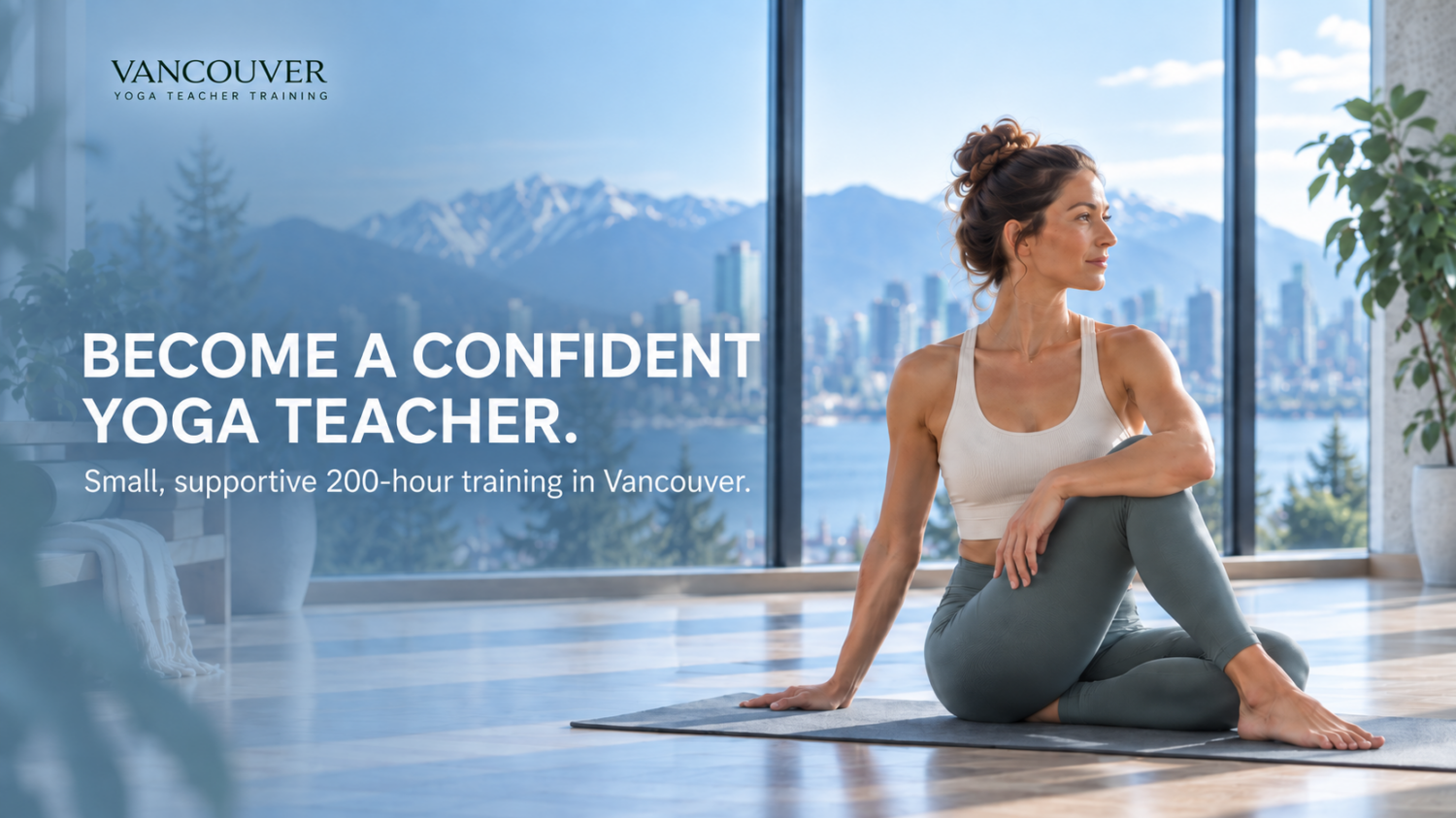
 Why Vancouver Is a Unique Place for Yoga Teacher Training

Vancouver offers a rare blend of nature, wellness culture, and diverse yoga styles. Many aspiring teachers flock here seeking authenticity, community, and depth. The mild Pacific climate supports year-round practice outdoors, on beaches or forest trails. That connection with nature strengthens introspection, which many teacher training programs in Vancouver emphasize.
A strong training in Vancouver often integrates local wisdom, Indigenous land awareness, and eco-conscious practices. You’ll find studios that value environmental ethics, sustainable materials, and community service. Vancouver’s yoga ecosystem includes both large, established studios and smaller community hubs. That diversity lets you experience many teaching approaches in your training.
Also, Vancouver’s multicultural community exposes teachers to varied students—beginners, seniors, prenatal, trauma-informed, adaptive yoga. A great training in Vancouver equips you to teach across that spectrum. Many schools here include therapeutic yoga, restorative, yin, and trauma-sensitive modules.
Because many people in Vancouver value health, meditation, nature, and introspection, the standard is high. Your training must deliver more than posture instruction. It must foster leadership, integrity, and deep wisdom. In short: a Vancouver yoga teacher training must stand out in content, community, and transformational impact.
Core Pillars of a Great Yoga Teacher Training
A strong teacher training rests on a few core pillars: curriculum, faculty, mentorship, and community. Each pillar must be robust for the program to succeed.
Curriculum
The syllabus must span anatomy, alignment, safety, philosophy, ethics, pranayama, meditation, and teaching methodology. It should follow Yoga Alliance or equivalent standards (e.g. 200-hour, 300-hour). Wikipedia+2Clara Roberts-Oss | Vinyasa Yoga Teacher+2 Sequencing skills, injury modification, and class planning are vital. Strong programs also include business skills and marketing for yoga teachers. East+West Yoga+2Vancouver Yoga Teacher Training+2
Faculty
Experienced, diverse instructors raise the bar. A great training offers both senior master teachers and younger instructors for relatability. Faculty should represent multiple lineages and approaches. Instructors must teach from personal experience, not just theory. They must offer authentic modelling, adjust, mentor, and support deep questions.
Mentorship & Feedback
You need ongoing, personalized feedback during practice teaching. Hands-on adjustment, guided critique, and peer teaching build confidence. whistleryogacara.weebly.com+2Vancouver Yoga Teacher Training+2 Mentorship extends beyond the training—alumni support, community groups, and guidance matter.
Community & Integration
A cohort community fosters trust, accountability, and deep learning. Rituals, shared practice, group discussions, and local immersion (forest, nature, ceremony) help solidify transformation. In Vancouver, connecting with local wellness groups, Indigenous practices, or forest retreats can amplify your learning.
If any pillar weakens, the training will feel shallow. A truly great yoga teacher training weaves strong curriculum, expert faculty, mentorship, and community into a coherent whole.
Key Qualities to Evaluate in a Vancouver Yoga Teacher Training
When you research, ask questions. Evaluate these key qualities to distinguish excellent training.
Accreditation & Standards
Check whether the program is registered with relevant bodies (Yoga Alliance, local certifying institutions). That registration ensures minimum hours, ethics, and instructional standards. westvancouverschools.ca+2East+West Yoga+2
Class Schedule & Format
Does the schedule allow deep immersion (daily practice, weekend intensives, retreats)? Or is it too spread out and disjointed? A balance of in-studio and home practice is ideal. Some hybrid or modular models also work if delivered carefully.
Location, Space & Environment
Training in Vancouver should ideally offer access to clean, open studio spaces, outdoor practice sites (beach, forest), and quiet retreat centers. Location influences your capacity to step away and inward.
Teaching Load & Practice Teaching
You should teach many classes during training under supervision. Practice teaching builds confidence. The program should require you to plan, lead, and receive critiques. Without that, you may finish uncertified in teaching capacity.
Small Student-Teacher Ratios
Smaller cohorts (say 15-25 students) allow more individual mentor attention, deeper conversations, and safer adjustments. Large cohorts reduce intimacy.
Post-Training Support
A great program offers alumni networking, continuing education, job placement, workshops, and mentorship after graduation. That helps sustain your growth.
Integration with Vancouver’s Yoga Scene
Does the training connect with local studios, teacher networks, yoga festivals, and community outreach? That context strengthens your chance to teach locally.
By vetting these qualities, you ensure your training is not just on paper, but alive and potent.
How to Align Your Training with New Google & SEO Trends
A modern yoga teacher training blog or website must work in concert with Google’s evolving algorithms. Here’s how to do that smartly.
Focus on People-First, Helpful Content
The June 2025 core update emphasized rewarding useful, original content over manipulative SEO. Search Engine Land+2Coalition Technologies+2 Write for your reader, not search engines. That aligns with Google’s direction.
Embrace Answer Engine Optimization (AEO) & Generative SEO
As AI and generative search features grow, structure content to address direct questions (e.g. “What makes great yoga teacher training in Vancouver?”). That helps AI systems cite your content. Wikipedia+2Wikipedia+2
Use Clear Subheadings, Schema, and Structured Data
Mark up FAQs, curriculum outlines, mentor bios, course schedule. That helps search engines and AI overviews parse your content. Google’s Search Generative Experience favors clear structure and answers.
Earn Backlinks & Outbound References
Link to high-quality external sources (studies, Yoga Alliance, Vancouver wellness orgs). Also, attract inbound links from yoga blogs, wellness magazines. That builds authority in Google’s eyes.
Publish Fresh Updates & Evergreen Content
Refresh the post yearly with new teacher training dates, curriculum changes, and testimonials. That helps maintain relevance to search engines.
Speed, Mobile, Accessibility
Ensure your blog loads fast on mobile, images optimized, and accessible layout. Google favors good UX.
By aligning your content strategy with Google’s core updates, AEO, structured data, and people-first ethos, your blog stands a better chance in 2025 and beyond.
Example Outline for a Vancouver Training That Hits the Mark
Here’s a model outline for an ideal yoga teacher training in Vancouver, demonstrating what “great” looks like in practice.
-
Foundational Phase (Weeks 1–4): Daily asana practice, alignment, anatomy, pranayama, Sanskrit basics.
-
Philosophy & History: Teach Yoga Sutras, Upanishads, lineages, contemporary ethics.
-
Teaching Methodology: How to sequence, teach cues, adjust, motives, class flow.
-
Practice Teaching & Mentorship: Each student leads mini-classes; mentors provide feedback.
-
Therapeutics & Special Populations: Prenatal, restorative, trauma, seniors.
-
Business Skills & Ethics: Marketing, branding, pricing, studio relationships, code of conduct.
-
Retreat/Immersion Week: Offsite location in nature, silence, group process, meditation, deep integration.
-
Capstone Teaching & Evaluation: Final teaching, peer review, feedback, assessment.
-
Ongoing Alumni Support: Workshops, community, mentorship, teaching opportunities.
This structure balances theory, practice, mentorship, and community. It weaves in local Vancouver context (nature, Indigenous learning, community engagement). If a yoga teacher training in Vancouver mirrors that outline, it stands out.
Testimonials, Outcomes & Sustainability
A great program shows real graduate outcomes: many alumni teaching locally, leading retreats, crafting niches. Ask for case studies and testimonials. Verify that graduates have been hired in Vancouver studios, run their own classes, or led workshops.
Sustainability matters: does the school use eco materials, carbon offset, source fair trade props, support local communities? A great training models integrity—for breath, body, earth. Vancouver students often expect that alignment between values and execution.
Also check retention and completion rates. If many drop out or fail to graduate, something is off (too intense schedule, weak mentorship, mismatch of expectations). The school should provide support, remedial help, and clarity about time demands, prerequisites, and self-care expectations.
A final indicator is community health: do graduates stay connected? Does the school host alumni events, further training, or continuing education? Does it partner with Vancouver studios for guest teaching or yoga events? A training that builds not just teachers but community is truly great.
How to Choose Your Ideal Vancouver Yoga Teacher Training
Choosing the right training is personal. Start with your priorities: style (Vinyasa, Iyengar, Yin, Hatha, therapeutic), schedule (full immersion vs weekends), location (urban, rural, coastal, forest), teacher mentorship style, cost, and personal goals (studio teaching, healing, retreats).
Next, make a shortlist and ask key questions:
-
How many contact hours vs home study?
-
What is student-teacher ratio?
-
What is post-training support like?
-
Can I visit or attend a sample class?
-
How do graduates fare?
Visit open houses, speak with alumni, and take trial classes at the studio. That gives you feel for the teaching vibe and culture.
Trust your intuition: if something feels superficial or overly salesy, move on. A great training should feel aligned, expansive, and grounded.
Finally, logistics: cost, payment plans, schedule compatibility, accommodation or commuting feasibility. Do your homework early—availability in top Vancouver trainings can fill fast.
If you choose wisely, your training becomes a launchpad—not just a credential.
Conclusion: What Makes a Great Yoga Teacher Training in Vancouver?
To recap: What Makes a Great Yoga Teacher Training in Vancouver? It blends strong curriculum, expert faculty, mentorship, and community in a local, nature-inspired context. It aligns with Google’s evolving content demands through people-first writing, structure, authority, and freshness. It supports graduates with outcomes, sustainability, and ongoing growth. If you seek a transformational, rather than transactional, training—use this guide to choose wisely.