
Our Philosophy
Most people come to a yoga teacher training for practical reasons.
Some want to become certified teachers. Others want to deepen their personal practice. Many are simply looking for a reset — a structured period of time to step away from daily routines, reconnect with themselves, and build something stronger.
All of those reasons are valid.
A good yoga teacher training should absolutely teach you how to lead a class safely and competently. You should understand sequencing, alignment, anatomy, cueing, and the responsibilities that come with teaching others. A professional training should prepare you to step into a room and confidently guide students.
But if that is all a training offers, something important is missing.
At its best, a yoga teacher training is more than a certification. It is a rare opportunity to pause long enough to look honestly at your life and ask deeper questions: What matters? What kind of person do you want to be? What kind of presence do you bring into a room?
These questions sit quietly at the heart of yoga.
In the modern world, people move quickly from one obligation to the next. Work, responsibilities, social expectations, and constant digital noise leave very little space for reflection. Many people arrive at a teacher training carrying years of momentum that has never been examined.
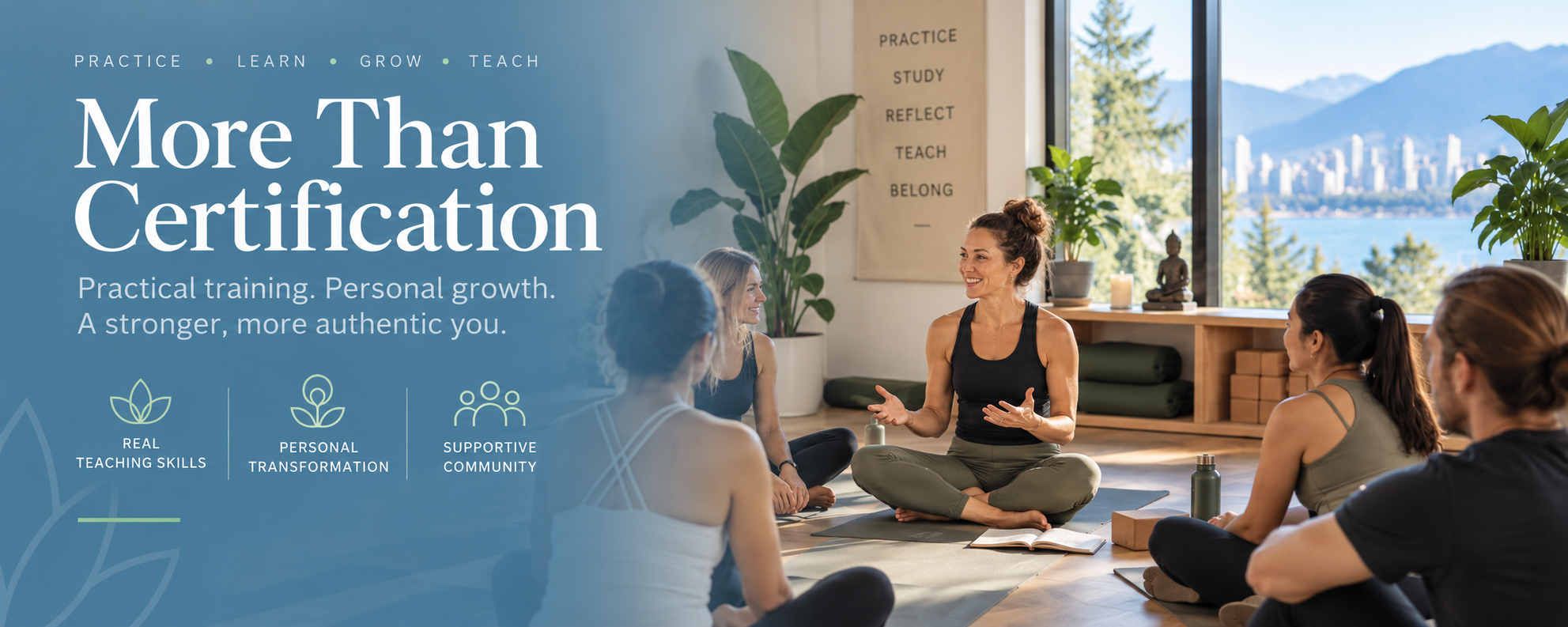
The training becomes a chance to slow that momentum down.
Over the week(s) of the program, students spend time practicing, learning, questioning, and observing themselves in ways that everyday life rarely allows. They begin to notice patterns — how they react to challenge, how they communicate, how they show up when they are tired, uncertain, or inspired.
This process changes people.
Not through pressure or ideology, but through experience.
One of the guiding ideas behind this training is simple: people learn best when they are respected as individuals. Every student arrives with a different background, personality, and reason for being here. Some will feel energized by group discussion and leadership exercises. Others will prefer to observe quietly and absorb the material in their own way.
Both approaches are welcome.
This is not a training that tries to force people into a particular personality or teaching style. The goal is not to produce identical instructors. The goal is to help each student discover their own voice as a teacher.
That voice matters.
Students don’t remember yoga teachers because they performed perfect poses. They remember teachers who were present, grounded, and authentic in the room. People are drawn to instructors who are comfortable being themselves and who create an environment where others feel safe to explore their own practice.
Developing that kind of presence takes time.
Throughout the training, we focus on building practical teaching skills while also creating space for reflection and growth. Students learn how to structure classes, give clear cues, and understand the physical aspects of yoga. At the same time, they are encouraged to pay attention to something deeper: how their own mindset and energy influence the room around them.
Teaching yoga is not only about what you say.
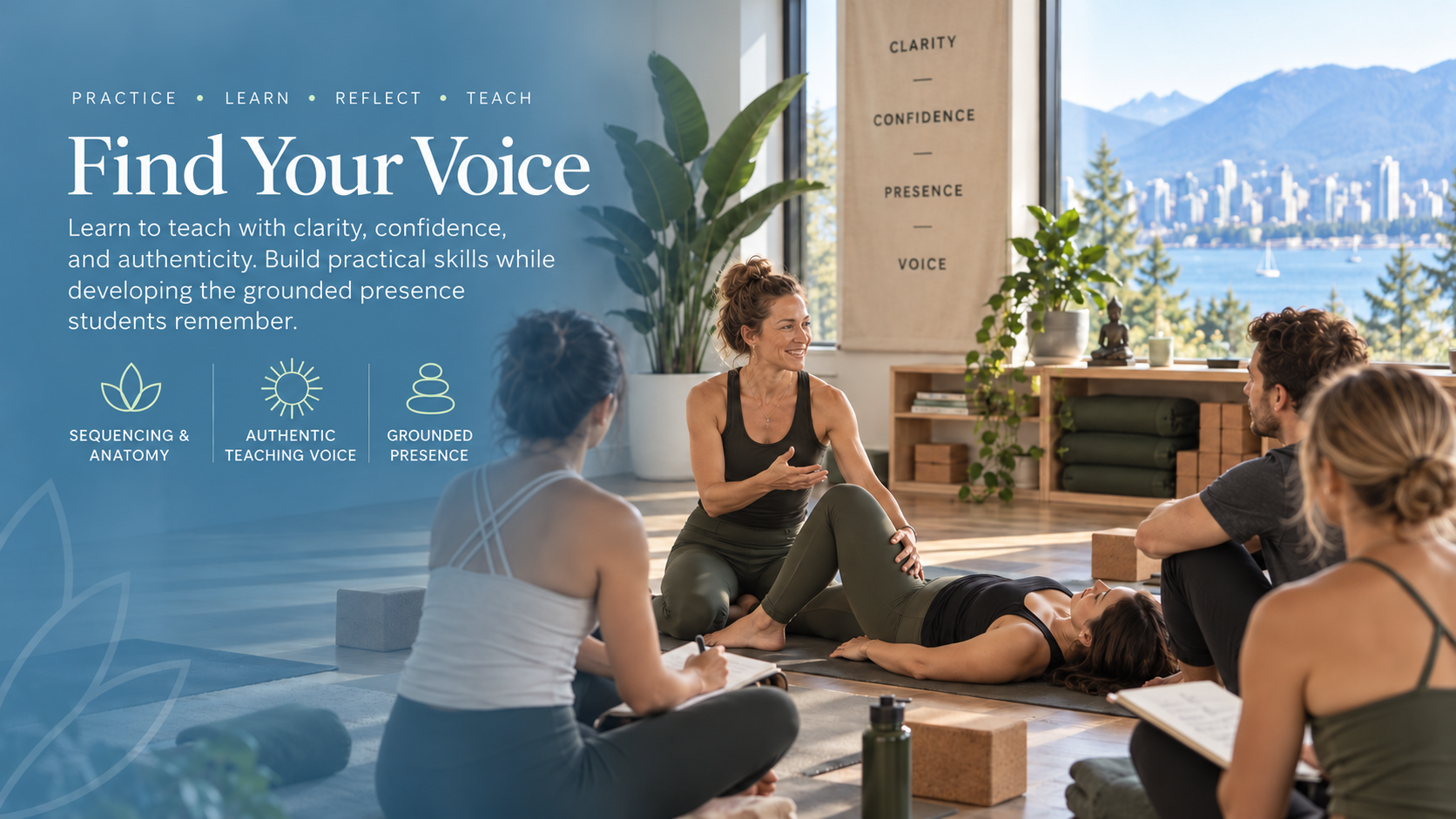 It is also about how you show up.
Many graduates discover that the most meaningful part of the training is not the certification itself, but the shift that happens during the process. Confidence grows gradually. Self-trust strengthens. Students begin to understand their own habits, strengths, and blind spots more clearly.
By the end of the program, people often feel calmer, more grounded, and more capable than when they began.
For some, this leads directly to teaching. They start offering classes, building communities, and sharing yoga with others. For others, the impact shows up in different ways — in their careers, relationships, and daily decision-making.
Both outcomes are valuable.
Yoga teacher training is not only about preparing people to teach yoga. It is about helping people reconnect with their own direction and potential.
That is why this program is designed to be both accessible and serious about quality. The training is affordable and structured so that committed students can participate without unnecessary barriers, while still receiving a thorough education in the craft of teaching yoga.
Students leave with the knowledge and certification required to teach, but also with something more important: a clearer sense of who they are and how they want to move forward.
Whether you are here because you want to teach, deepen your practice, or simply challenge yourself to grow, the training is designed to support that journey.
The skills you learn will help you guide others.
The experience itself may change how you guide your own life.