Why Take Yoga Teacher Training in Vancouver
Vancouver stands out as one of the most aligned cities in the world to do a 200 hour yoga teacher training, not because it markets itself that way, but because the lifestyle naturally supports everything yoga is trying to develop. When you look at the structure of the city, the access to nature, and the cultural emphasis on health, it becomes clear that Vancouver offers more than just a place to complete a certification. It offers an environment where the principles of yoga can actually be lived day to day. You are not confined to a studio-based experience. Instead, your practice can extend into your daily routines, whether that is walking along the ocean, hiking in the mountains, or simply moving through a city that prioritizes outdoor activity.
The yoga community in Vancouver is also broad and diverse, which is important during training. You are not being exposed to a single teaching style or philosophy. Instead, you are surrounded by a range of approaches, from traditional systems to modern adaptations. This diversity forces you to think more critically about your own teaching voice and how you want to develop it. It also gives you a clearer understanding of what exists in the real world once you graduate. For many students, this becomes one of the most valuable aspects of training, because it prevents a narrow or overly rigid view of yoga.
Another factor that makes Vancouver particularly strong for training is the balance between structure and freedom. Programs themselves are structured and demanding, but outside of that, the city encourages exploration. You are able to integrate what you are learning into real-life situations almost immediately. That combination accelerates growth. Instead of learning concepts in isolation, you are constantly testing them against your own experience. Over time, this leads to a deeper level of understanding that goes beyond memorization or theory.
Types of Yoga Teacher Training in Vancouver
When considering yoga teacher training in Vancouver, it is important to understand that not all programs are structured the same way, even if they share similar labels. The most common entry point is the 200-hour yoga teacher training, which serves as the foundational certification. This program introduces students to the core elements of yoga, including posture alignment, basic anatomy, philosophy, and teaching methodology. It is designed to take someone from being a practitioner to being capable of leading a class, even if that transition feels challenging at first. The emphasis at this level is on building confidence, understanding sequencing, and learning how to communicate clearly.
Beyond the 200-hour level, there is the 300-hour advanced training. This is typically taken after completing the foundational certification and is focused on refinement rather than introduction. Students explore more complex sequencing, deeper anatomical concepts, and often begin to specialize in certain areas such as therapeutic yoga or advanced teaching techniques. The combined 500-hour pathway, which includes both the 200 and 300-hour training, is often viewed as a more complete professional track, although it is not required for everyone.
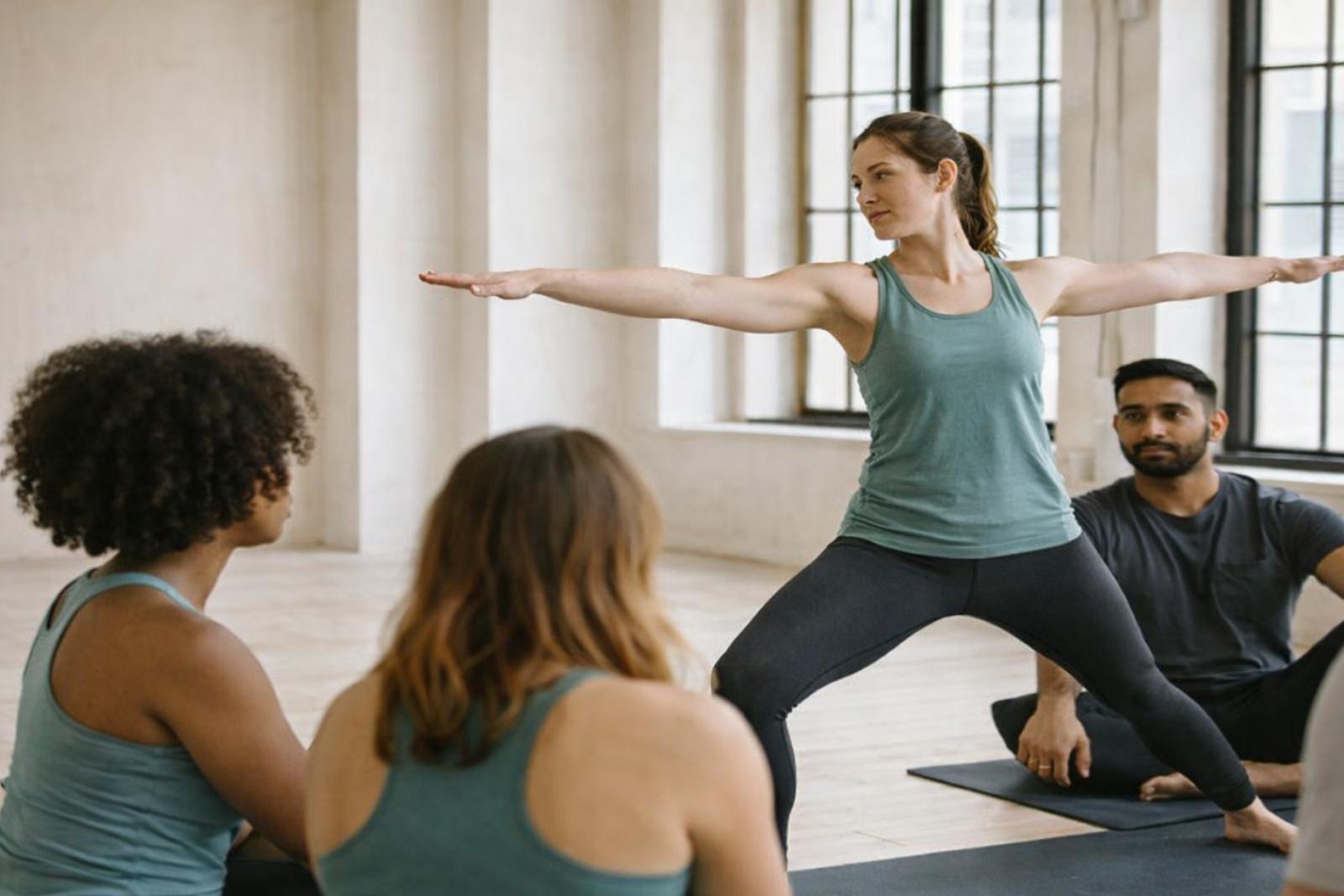 The format of training also plays a significant role in the experience. Intensive programs compress the entire training into a short period, often three to four weeks of full-time study. These are immersive and can create rapid transformation, but they require a high level of physical and mental stamina. Part-time programs, on the other hand, spread the training over several months, usually on weekends. This allows for integration between sessions, giving students time to absorb what they are learning and apply it gradually.
In recent years, hybrid models have also become more common. These combine online coursework with in-person training, offering flexibility while still maintaining some level of direct instruction. While this can be appealing, it is important to consider how much hands-on teaching experience you want. In-person programs tend to provide more immediate feedback and real-time correction, which can be critical in developing teaching skills.
For those interested in how training standards are structured globally, you can explore organizations like , although many modern programs are moving toward more flexible and competency-based approaches.
Cost of Yoga Teacher Training in Vancouver
The cost of yoga teacher training in Vancouver is often one of the first considerations for prospective students, and it is understandable given the range of pricing that exists. A typical 200-hour program will fall somewhere between $2,500 and $4,500 CAD, while a 300-hour program can range from $3,500 to $6,000 CAD. These numbers can vary depending on the school, the experience level of the instructors, and what is included in the training package. At first glance, the difference in pricing can seem significant, but it is important to look beyond the surface and understand what you are actually paying for.
Many programs include not only the hours of instruction but also training manuals, structured curriculum, and access to experienced teachers who have spent years developing their approach. Some programs go further by offering mentorship, ongoing support after graduation, and additional workshops that extend the learning experience. When you factor these elements in, the price begins to reflect more than just the number of hours. It reflects the depth and quality of the training itself.
That said, higher cost does not always guarantee a better experience. There are programs that focus on accessibility and still deliver strong outcomes, particularly those that emphasize practical teaching skills and clear communication. The key is to evaluate whether a program aligns with your goals. If your objective is to teach confidently and effectively, then the structure of the program, the opportunity for practice teaching, and the quality of feedback you receive become far more important than the price alone.
Another factor to consider is the long-term value of the training. A well-structured program can provide a foundation that supports you for years, whether you choose to teach professionally or simply deepen your personal practice. In that sense, the investment is not just financial. It is also an investment in your time, energy, and long-term development.
 What to Expect From a Vancouver Yoga Teacher Training
Yoga teacher training is often misunderstood as simply an extension of regular yoga classes, but the reality is that it is a structured and demanding process that challenges you on multiple levels. From the first day, you are placed in an environment that requires both physical engagement and mental focus. A typical day may begin with a morning practice that includes asana and breathwork, followed by lectures on anatomy or philosophy, and then move into teaching methodology and practice teaching sessions. This structure is repeated consistently, creating a rhythm that builds both familiarity and discipline.
One of the most significant shifts that occurs during training is the transition from being a participant to becoming a teacher. This involves learning how to observe others, communicate clearly, and guide a group through a sequence in a way that feels coherent and safe. For many students, this is initially uncomfortable. Speaking in front of others, giving instructions, and receiving feedback can feel unfamiliar. However, this discomfort is also where much of the growth happens. Over time, repetition and feedback begin to build confidence, and what once felt difficult becomes more natural.
The physical demands of training should also not be underestimated. Practicing for multiple hours a day can be taxing, particularly if you are not accustomed to that level of intensity. However, this is balanced by the development of awareness. You begin to understand how to manage your energy, when to push, and when to step back. This awareness becomes one of the most valuable tools you carry forward, both as a practitioner and as a teacher.
Beyond the physical and technical aspects, there is also a personal component to training that is often unexpected. As you engage more deeply with the material, you may notice changes in how you think, communicate, and respond to situations. This is not something that is explicitly taught, but it emerges naturally through the process. For many people, this internal shift becomes just as important as the certification itself.
The Yoga Lifestyle in Vancouver
One of the defining features of completing yoga teacher training in Vancouver is the lifestyle that surrounds the experience. The city itself acts as an extension of the training environment, providing opportunities for movement, recovery, and reflection that go beyond what happens inside a studio. This is where Vancouver distinguishes itself from many other locations. The practice of yoga is not confined to scheduled classes. It becomes integrated into daily life in a way that feels natural rather than forced.
The presence of landmarks such as the offers a simple but powerful example of this integration. The seawall provides a continuous path along the ocean where you can walk, run, or cycle. For many trainees, this becomes a daily ritual, a way to reset after training sessions or to start the day with movement. The combination of fresh air, open space, and consistent physical activity supports both mental clarity and physical recovery.
 Similarly, locations like the introduce a different kind of challenge. The steep incline and intensity of the climb push physical limits and require focus and endurance. For yoga trainees, this complements the practice by building strength and resilience in a different context. It also reinforces the idea that yoga is not isolated from other forms of movement but can coexist with them.
Kitsilano Beach adds another dimension to the lifestyle. During warmer months, it becomes a gathering place for outdoor activity, including informal yoga sessions and community events. This environment highlights the social aspect of practice, showing how yoga can function as both an individual discipline and a shared experience. The accessibility of nature throughout the city, supported by resources like , further expands these possibilities. Whether it is hiking in the mountains or walking through forested areas, the opportunities for movement are constant.
What ties all of this together is the overall culture of the city. Vancouver places a strong emphasis on health, activity, and balance. This creates an environment where maintaining a consistent routine is not only possible but supported. For someone in yoga teacher training, this alignment between the program and the surrounding lifestyle can significantly enhance the overall experience.
Who Should Take Yoga Teacher Training
Yoga teacher training is often associated with those who want to become professional instructors, but in reality, it serves a much broader range of individuals. Many people enter training with the intention of deepening their personal practice rather than teaching. For these individuals, the program provides a structured way to explore yoga beyond the surface level. It offers a deeper understanding of alignment, breath, and philosophy, which can transform how they approach their practice.
For beginners and intermediate practitioners, training can also serve as a turning point. While it may seem counterintuitive to begin teaching before feeling fully confident in your own practice, the structure of the program is designed to build that confidence over time. You are not expected to arrive with all the answers. Instead, you are guided through a process that gradually develops your understanding and ability to communicate it.
There are also those who approach training from a career perspective. For them, the goal is to transition into teaching or to integrate yoga into an existing profession, such as fitness, coaching, or wellness. In these cases, the training provides both the technical skills and the credibility needed to begin working with others. However, it is important to recognize that teaching is not solely about certification. It requires ongoing practice, refinement, and a willingness to continue learning.
Out-of-town students often find Vancouver particularly appealing because of the immersive experience it offers. Being in a new environment allows them to step away from their usual routines and focus entirely on the training. Local students, on the other hand, benefit from being able to integrate the training into their existing lives, creating a balance between study and daily responsibilities. Both approaches have their advantages, and the right choice depends on individual circumstances.
Career Opportunities After Training in Vancouver
Completing a yoga teacher training opens the door to a variety of opportunities, although the path forward is not always linear. Many graduates begin by teaching in studios, leading group classes and gaining experience in a structured environment. This can be an effective way to develop confidence and refine teaching skills, as it provides regular interaction with students and consistent feedback.
 Private sessions offer another avenue, allowing teachers to work one-on-one with clients. This format often provides greater flexibility and the ability to tailor sessions to individual needs. It can also lead to higher income per session, although it requires building a client base and developing strong communication skills.
The rise of online platforms has expanded the possibilities even further. Teachers can now offer virtual classes, create content, and reach a global audience. This has shifted the landscape of yoga teaching, making it possible to build a presence beyond a single location. However, it also introduces new challenges, such as standing out in a crowded space and maintaining engagement in a digital format.
Additional opportunities exist in areas such as workshops, retreats, and corporate wellness programs. These can provide variety and allow teachers to explore different aspects of their practice. In a city like Vancouver, where wellness is a significant part of the culture, these opportunities are present but require initiative and consistency to access. Success in this field often depends less on the initial certification and more on the ability to continue developing skills and building connections over time.
Yoga Teacher Training Vancouver: FAQs
One of the most common questions is how long it takes to complete a yoga teacher training. The answer depends on the format. Intensive programs can be completed in three to four weeks, while part-time programs may take several months. The choice between these formats often comes down to personal preference and availability.
Another frequent question is whether prior experience is necessary. While having a basic familiarity with yoga is helpful, it is not a requirement for most programs. Training is designed to build knowledge from the ground up, and many students begin with only a few months or years of practice.
A key concern for many is whether they can teach after completing a 200-hour certification. In most cases, the answer is yes. This level is generally accepted as the entry point for teaching, although confidence and skill will continue to develop with experience.
There is also the question of whether training is worthwhile for those who do not intend to teach. For many, the answer is still yes. The personal growth, increased awareness, and deeper understanding of yoga can make the experience valuable regardless of career intentions. Ultimately, the decision to take training depends on what you are hoping to gain from the process.
Start Your Yoga Teacher Training in Vancouver
Choosing to begin yoga teacher training is less about making a perfect decision and more about committing to a process. Vancouver provides an environment where that process is supported on multiple levels, from the structure of the programs themselves to the lifestyle that surrounds them. The combination of these factors creates a setting where growth is not only possible but likely, provided you engage with the experience fully.
The next step is to explore the options available and determine which program aligns with your goals. This involves looking at schedules, formats, and teaching styles, as well as considering how the training will fit into your current life. There is no single path that works for everyone, but there is usually a clear direction once you begin to evaluate your priorities.
From there, the focus shifts from planning to action. Training requires effort, consistency, and a willingness to step into unfamiliar territory. However, it also offers the opportunity to build a foundation that can support both personal and professional development over the long term. Whether your goal is to teach, deepen your practice, or simply experience something new, the process itself becomes the value.