 Yoga Teacher Training in Vancouver for Beginners: What to Expect in Your First Week
Starting yoga teacher training feels like a leap. You sign up, pay the deposit, and then the doubts arrive. Will you keep up? Will everyone else already know Sanskrit? Will your hamstrings betray you on day one? These worries are normal. They also fade fast once you actually walk into the studio.
This guide walks you through Yoga Teacher Training in Vancouver for Beginners: What to Expect in Your First Week. You will learn what your schedule looks like, what your teachers will cover, what your body and mind will go through, and how to prepare so the experience feels exciting rather than overwhelming. Vancouver has a strong, well-established yoga community, and the city’s training programs reflect that depth. Knowing what is coming makes the first week feel less like a test and more like an invitation.
Why Vancouver Is a Strong Place to Begin Your Training
Vancouver has built a reputation as one of North America’s most yoga-friendly cities. The studio culture here is mature, varied, and welcoming to newcomers. You will find Iyengar studios that focus on alignment, Ashtanga shalas with traditional Mysore-style practice, hot yoga schools, and trauma-informed spaces that emphasize gentle, accessible movement. This variety matters when you train. It means your teachers have likely studied with many lineages, and your fellow trainees will bring a wide range of backgrounds into the room.
The city also sits inside a larger wellness ecosystem. The Yoga Alliance registry includes many Vancouver schools, which means their 200-hour programs meet recognized international standards. Graduating from a Yoga Alliance-registered school lets you register as an RYT-200 (Registered Yoga Teacher) after you finish, which most studios look for when they hire.
Vancouver’s natural setting plays a role too. Mountains, ocean, forest, and seawall paths are all minutes from most studios. Trainees often spend breaks walking the Stanley Park seawall or hiking up to a viewpoint in Pacific Spirit Park. The environment supports the inward work the training asks of you. Fresh air, water, and time outside become part of how you process what you are learning. By the end of week one, most trainees say the city itself feels like part of the curriculum.
Choosing the Right Program Before You Start
Your first week begins long before you set foot in the studio. It begins when you choose your program. Beginners often skip this step, sign up for whichever school looks closest, and then realize the style or schedule does not fit them. Take time to look at three or four options.
Ask each school what style they teach. Hatha is a slower-paced, alignment-focused option that suits most beginners well. Vinyasa flow is more dynamic and breath-linked. Ashtanga is rigorous and structured. Yin and restorative trainings focus on long-held passive poses and the connective tissue system. Some Vancouver schools blend several styles into one 200-hour curriculum, which gives beginners broad exposure.
Look at the schedule too. Intensive trainings run daily for three to four weeks and require time off work. Weekend-format trainings stretch across three to six months and let you keep your job. Both formats are valid. The right one depends on your life. Resources like YogaTrail and BookYogaTeacherTraining list and compare programs, which helps you scan options quickly.
Finally, read the lead teacher’s bio carefully. How long have they been teaching? Who did they study with? Do they teach group classes you could try first? Most Vancouver schools welcome prospective trainees to drop into a public class with the lead teacher before committing. Take that offer. One class tells you more than ten brochures.
 What to Pack and Prepare for Day One
Showing up prepared lowers your stress on the first morning. Most programs send a welcome email with a supply list, but a few items deserve attention regardless of what your school recommends.
Your mat matters. Borrowed studio mats are fine for occasional classes, but you will be on yours for six to eight hours a day during training. A quality mat with good grip protects your wrists, knees, and confidence. Brands like Manduka, Lululemon, and Jade Yoga are widely available in Vancouver and well-regarded.
Bring two water bottles. Studios get warm, and you will sweat more than you expect. Pack a light snack like nuts, fruit, or an energy bar for the breaks between morning practice and afternoon lectures. Many trainees forget to eat and crash mid-afternoon. Layered clothing helps too. You will warm up in asana practice and cool down quickly during seated philosophy discussions.
Notebook and pen still beat laptops for most trainees. Writing by hand helps you remember anatomy terms, Sanskrit names, and reflections from journaling exercises. If your program issues a manual, bring tabs or sticky notes so you can find sections quickly.
On the personal side, prepare your schedule. Tell family, partners, and friends that you will be less available for the next few weeks or months. Stock easy meals at home. Block off recovery time. The training is not just classroom hours. It includes practice, reading, and rest. Going in with realistic expectations protects your energy for the work itself.
The Structure of a Typical First Day
Your first day usually starts with a welcome circle. You sit together with the other trainees, the lead teacher, and any assistant teachers. Everyone shares their name, why they signed up, and what they hope to gain. This circle does more than break ice. It builds the small community you will rely on for the next several weeks. Vancouver trainings often draw a mix of locals and international students, which makes these introductions especially interesting.
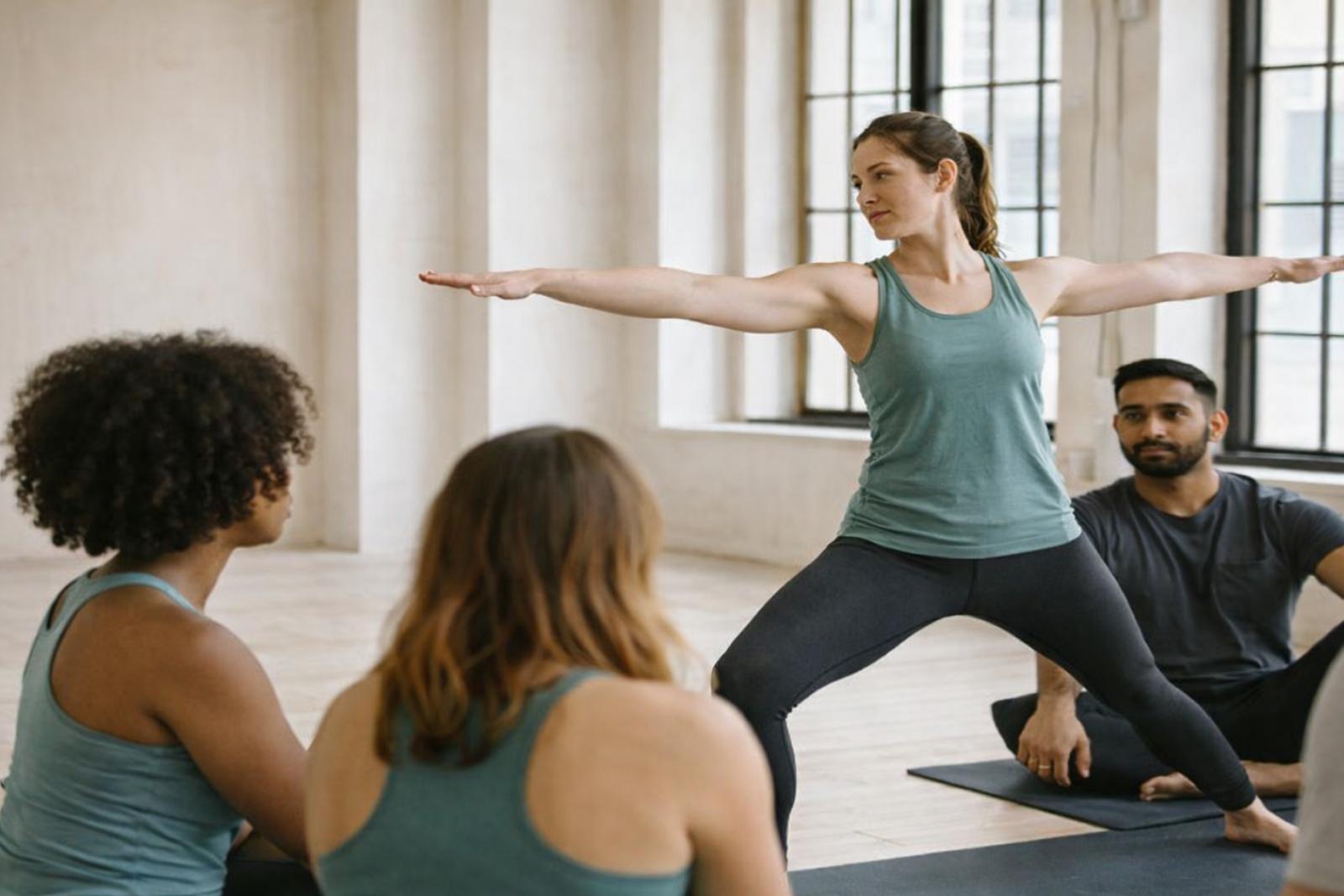
After the circle, most programs move into a foundational asana practice. This is usually gentler than a regular studio class. Teachers want to see how their students move and where everyone is starting from. Expect basic standing poses, simple sun salutations, and seated forward folds. No one expects you to nail crow pose on day one.
The afternoon typically shifts to lecture and discussion. Topics might include the history of yoga, the eight limbs of yoga from the Yoga Sutras, or an overview of the curriculum ahead. Your lead teacher will likely walk you through the manual and explain the assignments. Some schools assign a journaling practice for the entire training, starting day one.
The day usually ends with a closing practice, often a short meditation or savasana. You leave tired but lit up. Most trainees describe day one as the moment the abstract idea of “becoming a yoga teacher” becomes real. You stop wondering what training is. You start living inside it.
What You Will Learn About Anatomy and Alignment
Anatomy surprises beginners. Many sign up expecting mostly spiritual content and discover that a serious chunk of training focuses on muscles, bones, joints, and how the body moves. This is good news. Understanding anatomy is what separates a competent teacher from a charismatic one.
In your first week, expect to cover the basic skeletal structure, the major muscle groups, and the planes of movement. You will learn the difference between flexion and extension, abduction and adduction, internal and external rotation. These terms sound dry on paper. They come alive when your teacher asks you to feel hip flexion versus extension in your own body while standing in warrior poses.
Resources like Yoga Anatomy by Leslie Kaminoff and the work of Bernie Clark are commonly referenced in Vancouver programs. Some schools issue their own anatomy manuals. Either way, you will start building a vocabulary for the body.
Alignment training begins immediately. Your teachers will break down foundational poses one at a time. Mountain pose looks simple, but most people stand with collapsed arches, locked knees, or a tilted pelvis. Learning to feel the difference between a habitual stance and an aligned one takes time. By the end of week one, you will probably notice your own posture all day long, in line at the grocery store, in your office chair, on the bus.
This new awareness is the foundation of teaching. You cannot guide a student into a pose you do not understand in your own body. The first week plants those seeds.
 Your First Experiences with Pranayama and Meditation
Most beginners arrive thinking of yoga as physical postures. The first week of training widens that view fast. You will encounter pranayama, which means breath regulation, and structured meditation practices that may be new even to seasoned practitioners.
Common pranayama techniques introduced early include three-part breath (dirga), equal breath (sama vritti), ocean breath (ujjayi), and alternate nostril breathing (nadi shodhana). Each one has a different effect on the nervous system. Three-part breath calms anxiety. Ocean breath builds heat and focus. Alternate nostril breathing balances energy and clears the mind. Your teacher will walk you through each one slowly. You will likely feel awkward at first. That is normal. Breath practices feel strange because most of us have never paid sustained attention to our breath before.
Meditation in your first week is usually guided and short. Five to fifteen minutes is typical. You might sit in silence, follow a body scan, or focus on a mantra. Insight Timer is a free app many trainees use to support their personal practice between sessions.
These practices can stir up emotion. Sitting still with your own mind, sometimes for the first time, brings up everything you have been outrunning. Restlessness, sadness, irritation, even unexpected joy can surface. Your teachers will normalize this. Trainings are designed to hold space for it. By week’s end, most trainees feel calmer overall, even when individual sessions are uncomfortable.
How Your Body Will Feel by Mid-Week
Honest truth: by Wednesday or Thursday of your first week, your body will probably ache. Six to eight hours of yoga and lecture each day, even when the practices are gentle, asks more of your body than your regular life. Muscles you have never noticed will speak up. Hamstrings, hip flexors, shoulders, and the deep core are common culprits.
This is not a sign you are failing. It is a sign your body is responding to consistent practice. Plan recovery into your week before training starts. Epsom salt baths help. Vancouver has dozens of registered massage therapists who specialize in working with yoga practitioners. Semperviva Yoga, YYoga, and Open Door Yoga are well-established Vancouver studios, and many have partnerships with bodyworkers in the area.
Sleep matters more than you think. Aim for eight hours a night during training, even if that means saying no to social plans. Hydration is just as important. Vancouver tap water is excellent, and refilling a bottle several times a day is one of the simplest ways to support recovery.
Foam rolling and gentle self-massage between sessions can ease tightness. Avoid pushing into pain during practice. Beginners sometimes feel pressure to match more flexible trainees. This pressure leads to injury fast. Your teachers will repeat this often: stay with your own breath, your own edges, your own body. The point of training is not to perform. It is to learn.
By Friday, most trainees notice that the soreness shifts. Acute aches fade and a steady, low-grade fatigue takes their place. That fatigue is meaningful. It is the byproduct of real change happening in your muscles, your nervous system, and your awareness.
The Emotional Arc of Week One
Yoga teacher training affects your emotions as much as your body. This catches many beginners off guard. You signed up to learn poses and earn a certificate. By Wednesday, you are crying in savasana for no reason you can name.
There are several reasons this happens. Sustained physical practice releases stored tension. Sitting in meditation forces you to face thoughts you usually push away. Spending long days with strangers in a vulnerable setting creates intimacy that does not exist in regular life. The Yoga Sutras and other philosophical texts your teachers introduce may also raise questions about how you live, work, and relate to others.
Most trainees move through an emotional arc that looks something like this. Day one is excitement and nerves. Day two and three bring overwhelm as the volume of new information sinks in. By mid-week, fatigue and emotion can spike. Toward the end of the first week, something settles. You start to find your rhythm. You begin to recognize your fellow trainees as friends. The work becomes less foreign.
Vancouver’s training culture tends to honor this arc. Lead teachers and assistants are trained to hold space for emotional release. Many programs include partner exercises, dyads, or sharing circles where you can talk through what is coming up. The Yoga Outreach society, a Vancouver-based non-profit, has shaped much of the local trauma-informed training approach, and you may notice that influence in how your teachers handle vulnerable moments.
Be gentle with yourself. If you need to step out of a session, step out. If you need to cry, cry. Your training is not a performance. It is a practice in being human, fully, with other humans doing the same thing.
 Building Connections With Your Cohort
The people in your training will become some of the most important relationships of your year. Beginners often underestimate this. You walk in focused on the curriculum. You walk out with a group of friends, teachers, and future collaborators.
Vancouver trainings tend to draw a diverse mix. You will likely train alongside teachers, healthcare workers, retirees, students, parents, athletes, and complete career-changers. Ages typically range from early twenties to late sixties. People come from across British Columbia and beyond. Some are deepening a long personal practice. Others have only been doing yoga for a year or two.
Lean into this variety. Ask questions. Pair up willingly during partner exercises. Eat lunch with someone new each day in the first week. The trainees who isolate themselves often struggle more, both academically and emotionally. The trainees who connect tend to thrive.
Many cohorts create a group chat or shared document to coordinate carpools, study sessions, and resource sharing. These connections often outlast the training itself. Vancouver’s yoga community is networked enough that fellow trainees become future colleagues, substitute teachers when you start teaching, and friends you call when you need advice on a difficult class.
The relationships you build in week one set the tone. Show up open. Listen more than you talk in those first few days. Notice the people whose values align with yours. Trust takes time, but the foundation forms quickly in this kind of intense shared experience.
Homework, Reading, and Independent Practice
Yoga teacher training is not just contact hours. Your first week will introduce assignments that continue throughout the program. Beginners are sometimes shocked by the workload. Going in prepared helps.
Expect a reading list. Common texts include the Bhagavad Gita, the Yoga Sutras of Patanjali, and Light on Yoga by B.K.S. Iyengar. Some schools add modern works on anatomy, teaching methodology, or trauma-informed practice. Your school will give you a reading schedule. Stay on top of it. Falling behind in week one snowballs.
Most programs also assign daily personal practice. This usually means twenty to sixty minutes of self-led asana, pranayama, or meditation outside class. Keep a practice log if your school requires one. Even if it does not, logging helps you notice patterns.
Journaling is common. You may receive prompts each day to reflect on your practice, your reactions, or your reading. These journals are not graded for grammar. They are for you. Be honest. The teachers asking you to journal want you to develop self-awareness, which is essential for teaching others.
Some schools assign observation hours. You attend public yoga classes at studios around Vancouver and write reflections on the teaching styles you observe. This is one of the most valuable assignments in the curriculum. Watching skilled teachers in real settings teaches you cues, sequencing, and presence in ways the manual cannot.
Block time in your weekly schedule for homework before training starts. Two to four hours outside contact hours is realistic for most weeks. Treating training like a serious commitment, not a hobby, is the difference between graduating exhausted and graduating prepared.
What to Do When You Feel Like Quitting
Most trainees hit a moment, often in week one, when they want to quit. The doubt sounds something like this: I am too old, too inflexible, too tired, too quiet, too loud, not spiritual enough, too spiritual, not athletic enough, not academic enough. The voices vary. The wave is universal.
Recognize it for what it is. The first week of any serious training brings up resistance. Your nervous system is adjusting to new demands. Your ego is being asked to step back. Your old identity is being gently disrupted. Of course you want to run.
Do not run yet. Sit with the discomfort for at least a few days before making any decision. Talk to your lead teacher. Most are deeply familiar with this moment and can help you understand what is underneath it. Talk to your cohort. You will likely find that several others are feeling the same way, even the ones who look confident from the outside.
Sleep on it. Take a long walk. Eat real food. Many doubts dissolve once the body is rested and fed. If, after a few days, the desire to leave persists and feels grounded rather than reactive, talk to your school about pausing or transferring to a later cohort. Reputable Vancouver programs often allow this.
For most beginners, though, pushing through week one is the right call. The training becomes easier as your body adapts and the material starts to click. The first week is the hardest. By week two, you will likely look back at your day-three self with affection and a little disbelief.
Setting Yourself Up for a Strong Week Two
By the end of week one, you have made it through the steepest part of the learning curve. Take a moment to acknowledge that. Then set yourself up well for what comes next.
Review your notes from the week. A short Sunday review session locks in the anatomy terms, Sanskrit names, and philosophy concepts you covered. Without review, the next week’s material will build on a shaky foundation.
Restock your supplies. Replace anything that ran out. Wash your yoga clothes. Refill your snacks. Small logistics protect your energy during the actual training hours.
Tell the people in your life what you need from them in the coming weeks. Maybe that is more quiet evenings. Maybe that is help with childcare. Maybe that is fewer social invitations. Communicating clearly now prevents resentment later.
Schedule one fun, low-effort thing for the weekend. A movie, a meal with a friend, time outside. Vancouver’s parks, beaches, and walkable neighborhoods make this easy. Recovery is not just about rest. It is also about pleasure that has nothing to do with yoga.
Reflect on what surprised you in week one. What did you love? What was harder than expected? What questions are you carrying into week two? Bringing curiosity, rather than performance pressure, into the next chapter of training keeps the work alive.
Conclusion
Yoga Teacher Training in Vancouver for Beginners: What to Expect in Your First Week is, in the end, a journey of small surprises. You arrive thinking you will learn poses and leave knowing how to teach them. What actually happens is bigger. You learn how to pay attention. You learn how to be honest with yourself in a room full of other people doing the same thing. You learn the names of muscles you never noticed, the rhythms of breath you have ignored your whole life, and the texts that have guided practitioners for thousands of years.
The first week is the hardest week. Your body adapts. Your mind stretches. Your emotions move. The structure of the days, the relationships with your cohort, and the guidance of your teachers all combine into an experience that most trainees describe as transformative, even when it is uncomfortable.
The main takeaway is this: come prepared, stay open, take care of your body, lean on your cohort, and trust the process. Vancouver gives you one of the best possible settings to begin. The studios are strong, the teachers are seasoned, the natural surroundings support inward work, and the community welcomes beginners with genuine warmth. By the end of week one, you will not be a teacher yet. But you will know, in your bones, that becoming one is possible.