 200-Hour Yoga Teacher Training in Vancouver: What You Actually Learn
You’ve practiced yoga for a few years. Maybe longer. The poses feel familiar, your breath has changed, and something inside you wants to go deeper. Now you’re considering a 200-Hour Yoga Teacher Training in Vancouver, and you want to know what you actually learn before you commit your time and money.
This guide walks you through the real curriculum. Not the marketing copy. Not the vague promises about transformation. The actual skills, knowledge, and experiences you gain during a Yoga Alliance-registered 200-hour program in one of Canada’s most vibrant yoga cities. Whether you want to teach professionally, deepen your personal practice, or simply understand yoga at a level most practitioners never reach, this breakdown shows you what’s waiting on the mat.
Vancouver offers something unique. The city sits between ocean and mountains, attracts teachers from around the world, and hosts studios that range from traditional Ashtanga shalas to modern hot yoga spaces. Your training environment matters, and Vancouver delivers options that few cities can match.
Understanding the Yoga Alliance 200-Hour Standard
Before you choose any program, you need to understand what makes a 200-hour training legitimate. Yoga Alliance is the largest nonprofit registry of yoga teachers and schools in the world. When a school is registered with Yoga Alliance (RYS 200), it follows specific educational standards across five categories.
The five required areas cover techniques, training, and practice (100 hours minimum), teaching methodology (25 hours), anatomy and physiology (20 hours), yoga philosophy, lifestyle, and ethics (30 hours), and practicum (10 hours). The remaining 15 hours are flexible and distributed across these categories based on the school’s focus.
This structure exists for good reason. It ensures graduates leave with balanced knowledge. You won’t spend 180 hours on poses and 20 hours skimming everything else. A proper program treats anatomy, philosophy, and teaching skills with the seriousness they deserve.
In Vancouver, most reputable schools exceed these minimums. Many offer 220 to 250 hours of contact time while still calling it a 200-hour program. Ask about contact hours versus self-study hours when you compare schools. Contact hours mean time with qualified teachers. Self-study means reading and homework you complete alone.
You should also verify a school’s Yoga Alliance registration directly on their website. Some schools claim affiliation without holding current status. Verification takes thirty seconds and protects your investment.
 Asana: Learning Poses From the Inside Out
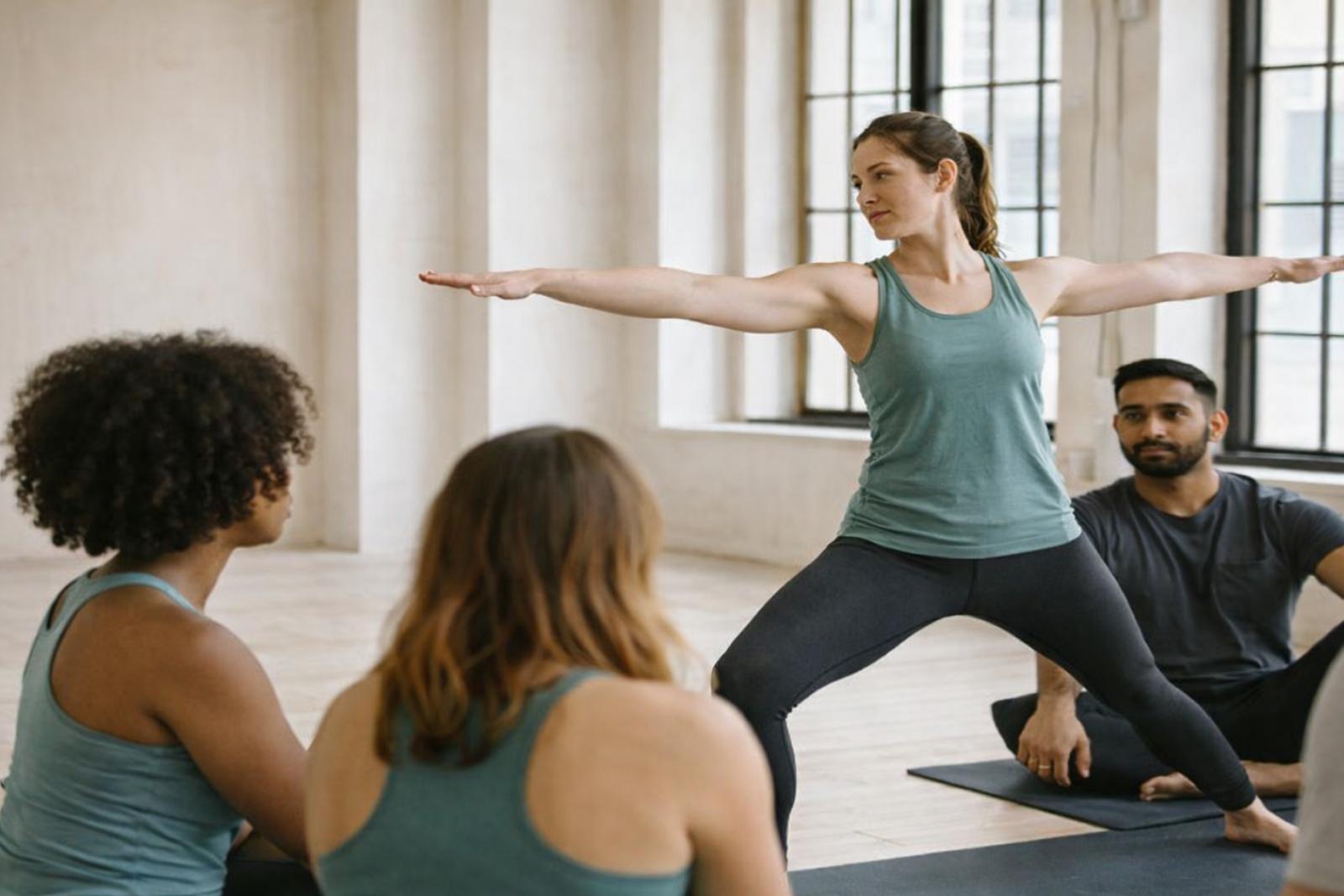
Most students enter teacher training thinking they already understand asana. They’ve held warrior two hundreds of times. They can balance in tree pose. Then training begins and they realize they’ve been performing shapes without understanding architecture.
The asana component teaches you to deconstruct every major pose. You learn the foundational actions: rooting through the feet, engaging the legs, stabilizing the pelvis, lengthening the spine, organizing the shoulders, and finding ease in the neck and face. These principles apply whether you’re teaching warrior one or a complex arm balance.
You study the family groupings. Standing poses build strength and stability. Forward folds calm the nervous system and stretch the posterior chain. Backbends open the front body and stimulate energy. Twists detoxify and improve spinal mobility. Inversions shift perspective and challenge balance. Each family has principles, common misalignments, and contraindications you must understand before teaching them safely.
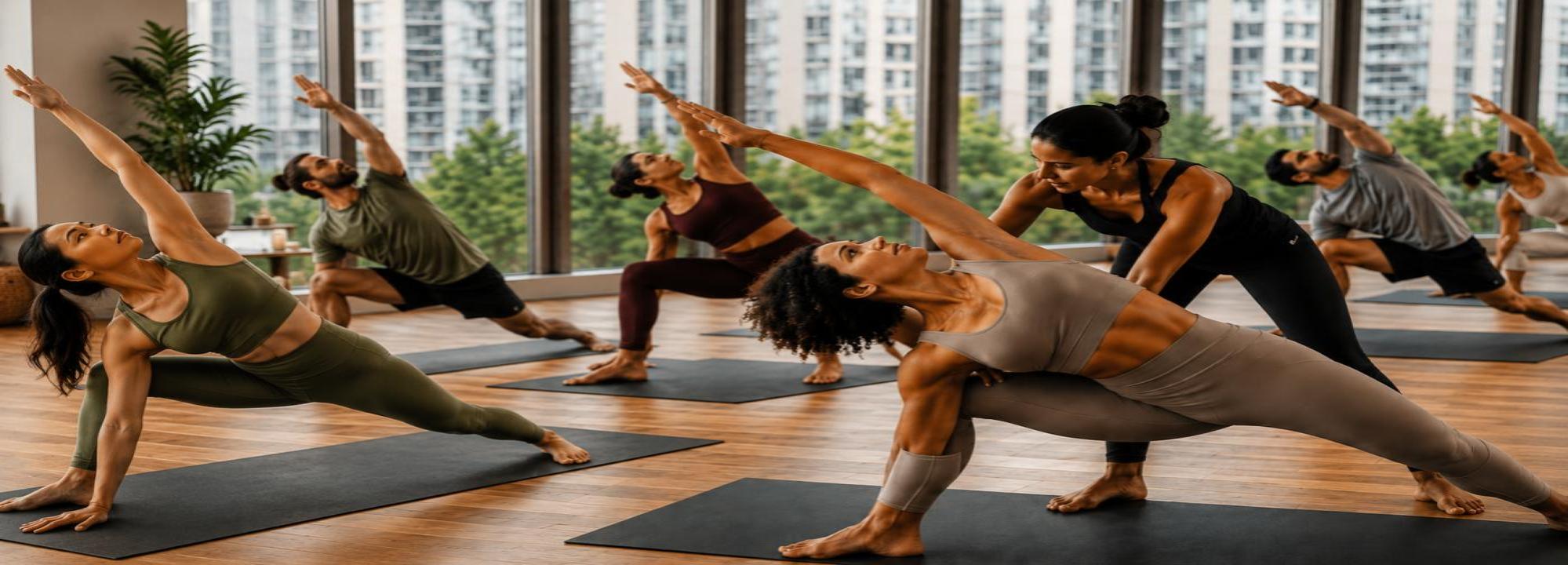
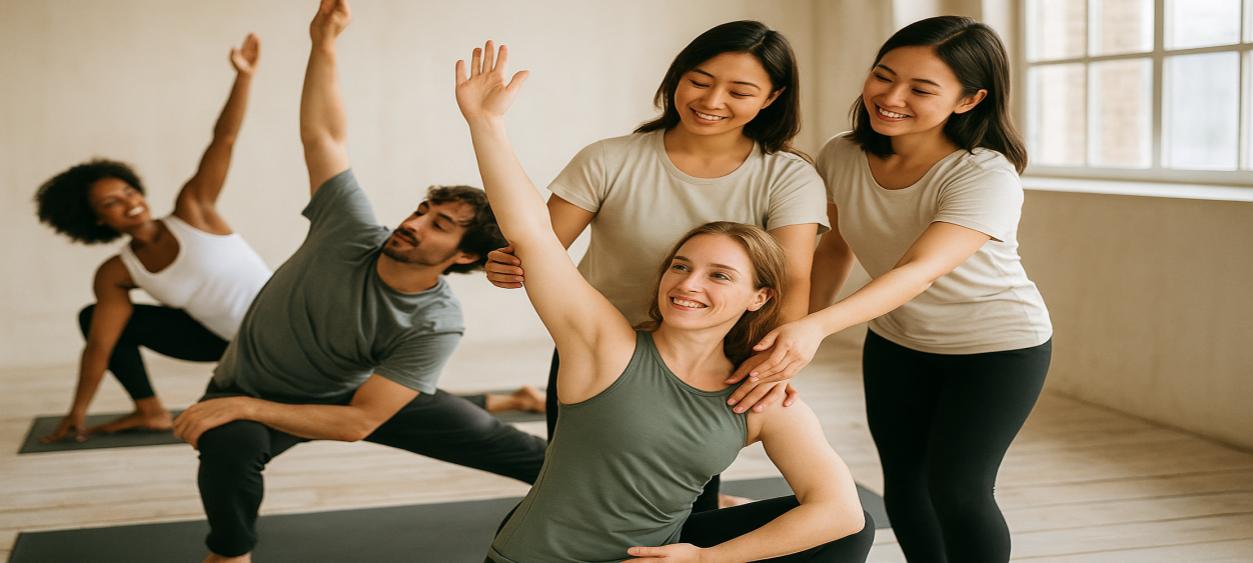
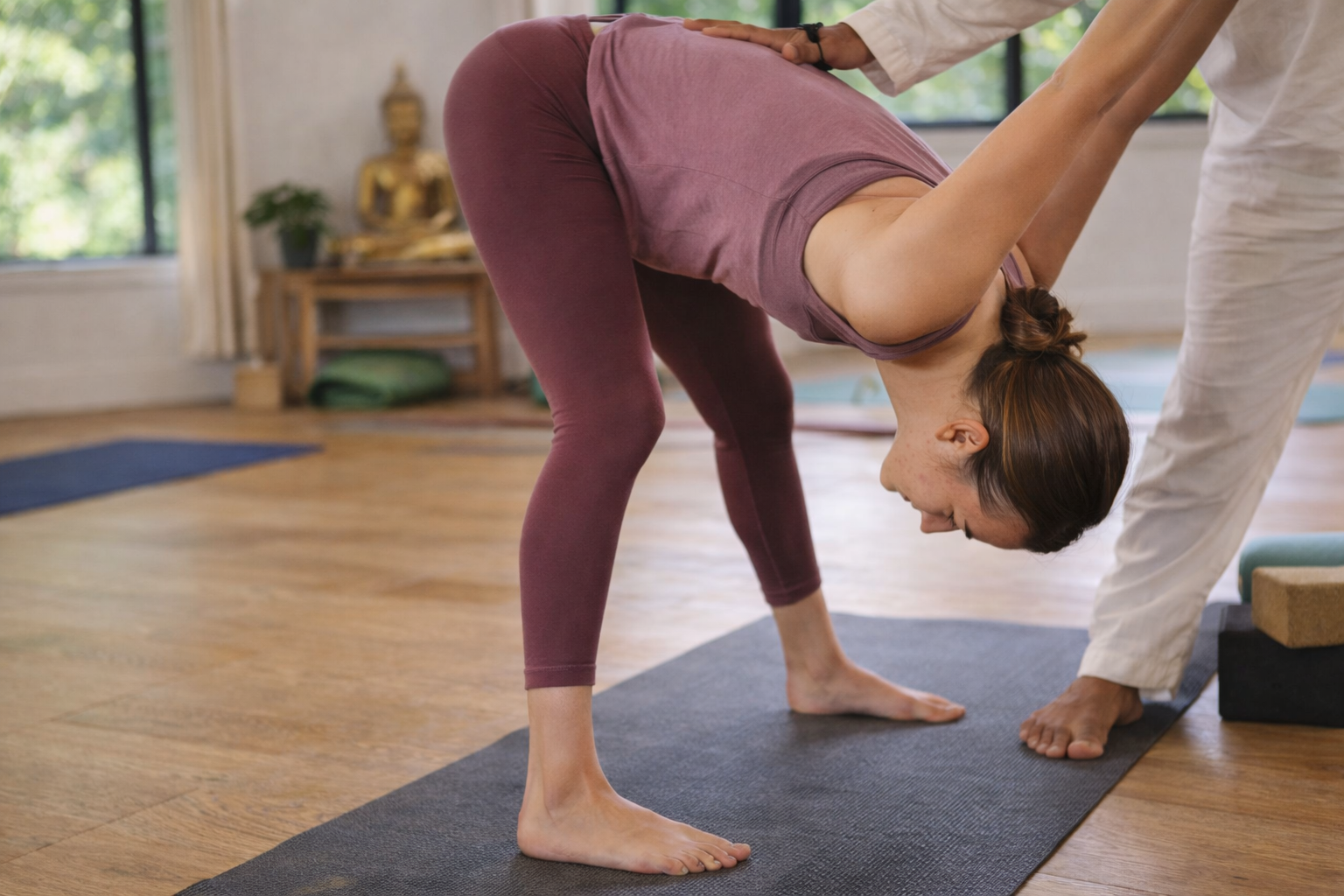
Hands-on adjustments form a significant portion of this training, though many modern schools now emphasize verbal cues and consent-based touch over physical assists. You learn to read bodies without touching them. You see the subtle differences between a student who needs to back off and one who needs encouragement to deepen.
Modifications and props become second nature. You learn how a block changes a pose, how a strap extends reach, and how a bolster supports restorative postures. Teaching to one body type is teaching to almost no one. Real teachers adapt poses for pregnant students, beginners, injured practitioners, and bodies that simply don’t fit the textbook shape.
By the end of training, you stop seeing poses. You see bodies moving through poses, each one unique.
Pranayama and the Science of Breath
Breath work is where many students discover yoga’s deeper power. Pranayama means extension or control of the life force, and Vancouver trainings typically dedicate significant hours to this practice.
You learn the mechanics first. The diaphragm, intercostal muscles, and accessory breathing muscles all play roles. Most adults breathe shallowly into their chest, using a fraction of their lung capacity. Training rewires this pattern. You practice three-part breathing, learning to fill the belly, ribs, and chest in sequence.
From this foundation, you move into specific techniques. Ujjayi breath creates the soft ocean sound that accompanies vinyasa practice. Nadi shodhana, or alternate nostril breathing, balances the nervous system and is often used to reduce anxiety. Kapalabhati involves rapid, forceful exhalations that energize the body. Bhramari uses humming to calm the mind. Each technique has specific effects, indications, and contraindications.
You also study the research. Modern science increasingly validates what yogis have known for millennia. Research published through institutions like Harvard Medical School shows that slow, controlled breathing activates the parasympathetic nervous system, lowering heart rate and blood pressure while reducing stress hormones.
Teaching pranayama requires sensitivity. Some techniques are inappropriate for students with high blood pressure, heart conditions, or anxiety disorders. You learn when to recommend a practice and when to redirect a student to something gentler. This discernment separates a teacher from someone who simply reads instructions from a script.
Most graduates report that pranayama becomes the most powerful tool they carry from training. Asana keeps the body strong. Breath work keeps the mind clear.
 Anatomy and Physiology for Yoga Teachers
You don’t need to become a doctor, but you do need to understand the body you’re teaching. Vancouver programs typically dedicate 25 to 40 hours to functional anatomy, often exceeding the Yoga Alliance minimum.
The musculoskeletal system gets the most attention. You learn the major muscle groups, their actions, and how they work together in poses. The hip joint receives extensive study because hip mobility limitations affect nearly every pose. You learn the difference between bone-on-bone compression and muscular tightness, and why some students will never achieve certain poses regardless of how long they practice.
The spine gets equal attention. You learn its natural curves, common pathologies like scoliosis and disc issues, and how to teach safely around them. Backbends performed without proper preparation cause real injuries, and as a teacher you bear responsibility for guiding students intelligently.
Beyond the musculoskeletal system, you study the nervous system in depth. Understanding the sympathetic and parasympathetic branches helps you sequence classes that either energize or calm your students. You learn how trauma can be stored in the body and why certain poses, particularly hip openers, can release unexpected emotions.
Resources like Leslie Kaminoff’s Yoga Anatomy and Bernie Clark’s work on biomechanics typically appear on reading lists. These authors changed how the modern yoga world understands the body, and serious programs draw heavily from their research.
The goal isn’t memorization. The goal is biomechanical literacy. When a student says their knee hurts in pigeon, you should know why and what to do about it.
Yoga Philosophy and the Roots of the Practice
This is where many students are surprised. They expected stretching and ended up reading Sanskrit texts that are thousands of years old. Yoga philosophy forms the spiritual and intellectual foundation of everything you’ll teach.
Patanjali’s Yoga Sutras receive primary attention in most programs. These 196 short verses, compiled around 400 CE, outline the eight-limbed path of yoga. You study the yamas and niyamas, the ethical guidelines for how to live in the world and how to relate to yourself. You explore concepts like ahimsa (non-violence), satya (truthfulness), and santosha (contentment). These aren’t abstract ideas. They become tools for navigating modern life.
The Bhagavad Gita often appears alongside the Sutras. This sacred text, set on a battlefield, addresses questions of duty, action, and devotion. Different translations emphasize different aspects, and your teacher will likely recommend specific versions.
You also encounter the chakra system, the koshas (layers of self), and the gunas (qualities of nature). Some programs cover Ayurveda basics, the sister science to yoga that addresses health through dosha-specific lifestyle choices. The National Ayurvedic Medical Association maintains educational resources if you want to explore this thread further after training.
Philosophy classes typically involve discussion, journaling, and personal reflection. Your teachers won’t tell you what to believe. They’ll present the teachings and ask you to test them in your own life. This is the traditional approach. Yoga philosophy is meant to be lived, not memorized.
 The Art and Science of Teaching
Knowing yoga and teaching yoga are different skills. Many excellent practitioners struggle when they first stand in front of a class. Vancouver training programs dedicate substantial time to the methodology of teaching.
You start with voice. Your speaking voice as you order coffee differs from the voice you’ll use to guide a savasana. You learn to project without straining, to slow your speech, and to use silence intentionally. New teachers fill every moment with words. Experienced teachers know when to stop talking.
Cueing receives heavy focus. There are different types of cues: directional (“step your right foot back”), alignment (“stack your shoulder over your wrist”), action (“press the floor away with your hands”), and energetic (“imagine roots growing from your feet”). You practice each type until they become natural. You also learn to cue without looking at the bodies in front of you, since your eyes need to remain on your students.
Sequencing is its own discipline. A well-sequenced class has an arc. It begins gently, builds intelligently, peaks at the appropriate moment, and winds down with care. You learn the logic of preparing the body for advanced poses, often called peak pose sequencing. A class building toward king pigeon requires different preparation than one building toward handstand.
Class management skills round out this section. You learn to handle latecomers, manage room temperature, position students who arrived without mats, and respond to injuries or medical emergencies. You practice teaching to mixed-level groups, since most public classes contain everyone from beginners to advanced practitioners.
You also learn what not to do. Don’t demonstrate every pose. Don’t touch students without permission. Don’t play favorites. Don’t use yoga as a platform for unrelated personal views. Professional standards exist, and good programs make them explicit.
Meditation and Mindfulness Training
Meditation deserves its own section even though it weaves through every part of training. Most Vancouver programs include daily meditation, ranging from ten minutes to over an hour depending on the school’s lineage.
You learn multiple techniques. Concentration practices focus the mind on a single object: the breath, a mantra, a candle flame, or a body sensation. Open awareness practices, sometimes drawn from Mindfulness-Based Stress Reduction traditions developed at the University of Massachusetts, observe whatever arises without selecting or rejecting. Loving-kindness practices cultivate compassion through specific phrases directed toward yourself and others.
You also study why meditation works. Research from neuroscience now demonstrates measurable changes in brain structure among regular meditators. Areas associated with attention and emotional regulation strengthen. The amygdala, which processes fear, often shows reduced reactivity. Studies cataloged by the American Mind & Life Institute continue to expand what we know about contemplative practices and their effects.
Teaching meditation requires care. You learn to introduce practices in accessible language, avoiding spiritual jargon that intimidates beginners. You practice leading meditations of varying lengths and styles. You learn to handle the inevitable challenges: the student who falls asleep, the student who weeps unexpectedly, the student who can’t sit still.
Many graduates carry meditation forward as their personal practice even when they stop teaching asana publicly. The skills you develop here outlast everything else.
The Practicum: Actually Teaching People
Theory means nothing without practice. The practicum portion of training is where you transition from student to teacher. This is often the most stressful and most rewarding part of the entire experience.
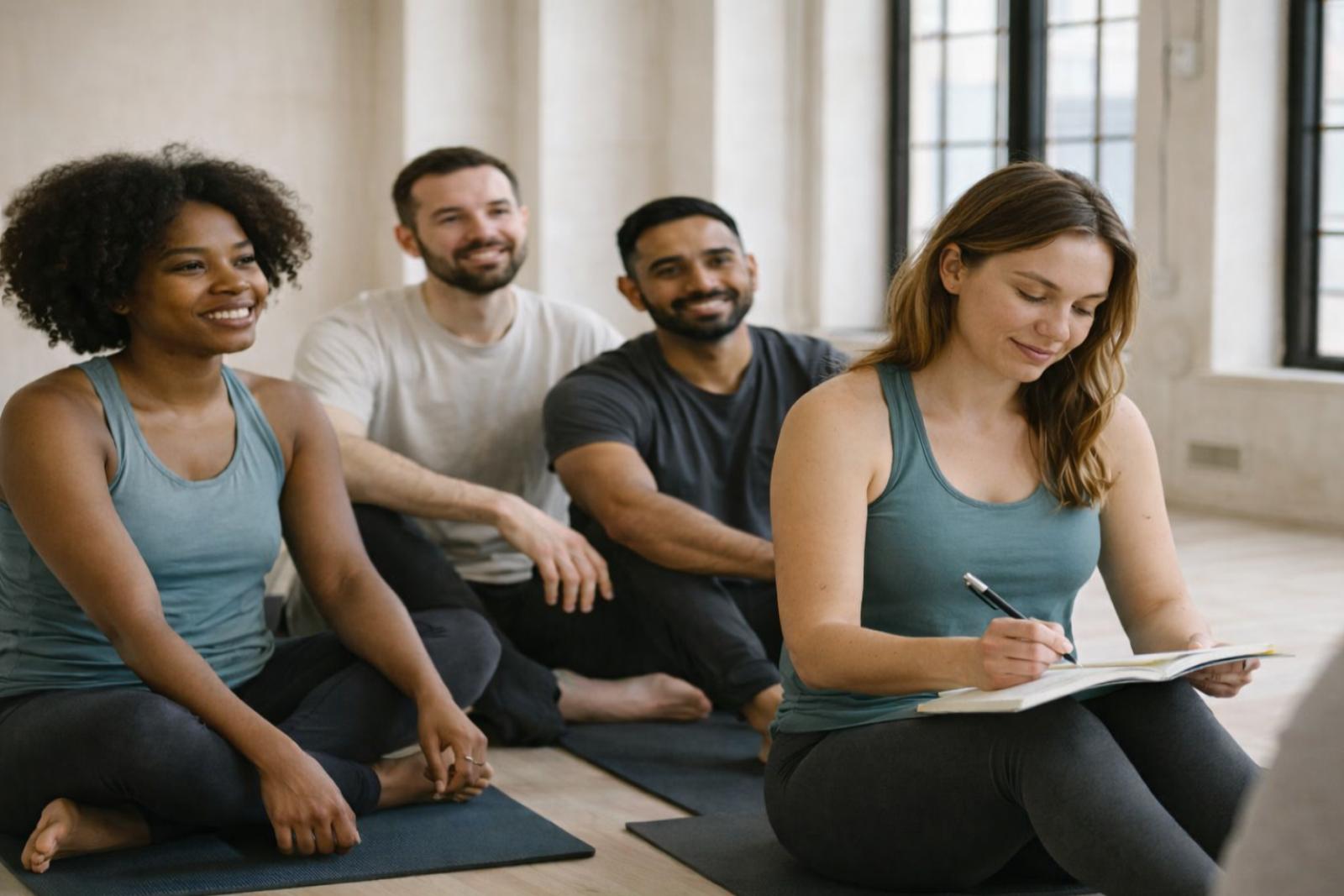
You begin by teaching small segments to your fellow trainees. Maybe just sun salutation A. Maybe a five-minute opening sequence. Your peers and lead teachers offer feedback, and you watch yourself on video. Watching yourself teach is uncomfortable, but it accelerates learning faster than anything else.
As training progresses, you teach longer segments. Eventually you lead full classes, first to other trainees and then to outside students who agree to attend community classes. Many Vancouver studios offer karma classes or community classes specifically to give trainees real teaching experience. The City of Vancouver’s community centers also host yoga classes, and some accept new teachers building their resumes.
You receive feedback at every step. Some of it stings. Your sequencing was unclear. Your voice dropped at the end of sentences. You forgot to cue the left side. You stood in one spot the entire class. This feedback is the gift of training. The teacher you become is forged through these uncomfortable moments.
You also observe experienced teachers regularly. Watching a master teacher work a room teaches lessons no textbook can convey. You see how they read the energy of the room, how they adjust mid-class, and how they hold space without forcing anything.
By the final teaching practicum, most students surprise themselves. They’ve become teachers.
 The Business of Yoga: What Most Programs Don’t Cover Enough
Here’s a hard truth: many 200-hour programs barely touch the business side of being a yoga teacher. If you plan to teach professionally, this gap matters.
Better Vancouver programs now include modules on building a teaching career. You learn about studio compensation models, which typically range from a flat per-class rate to a percentage of student attendance. Some teachers in Vancouver earn $35 per class while others earn over $100, depending on experience and the studio’s structure.
You learn about marketing yourself without becoming a caricature. Building an email list, maintaining a professional social media presence, and developing your unique teaching voice all factor into a sustainable career. Platforms like Mindbody dominate the studio software space, and learning to navigate them as a teacher saves time later.
Insurance comes up rarely but matters enormously. Professional liability insurance for yoga teachers is available through several Canadian providers and typically costs a few hundred dollars per year. You should never teach a paying student without coverage.
Self-employment taxes catch many new teachers off guard. In Canada, you’ll need to track income and expenses carefully if you teach as a contractor rather than an employee. The Canada Revenue Agency provides guidance for self-employed workers, but many new teachers benefit from a single consultation with an accountant before their first tax year.
If your training doesn’t address these topics, you’ll need to learn them independently. The romantic vision of being a yoga teacher quickly meets the reality of running a small business.
Choosing the Right Vancouver Training for You
Not all programs suit all students. Vancouver hosts dozens of teacher trainings annually, and they vary in style, length, philosophy, and cost.
Format matters first. Some programs run intensively over three to four weeks, requiring you to clear your schedule entirely. Others spread across three to six months on weekends, allowing you to maintain your job and life. Weekend programs give content more time to integrate, but intensive programs build deep community among trainees who share the experience without distraction.
Style is the next consideration. A vinyasa-focused training will differ significantly from a yin-focused training or a more traditional Hatha-based program. Yin yoga programs emphasize long holds and connective tissue, while power-style programs emphasize strength and flow. Match the training to the practice you want to teach.
Lead teachers matter enormously. Read their bios, take their classes if possible, and ask about their teaching lineage. A teacher’s lineage tells you who shaped them and which traditions inform their work. Trainings with rotating guest teachers expose you to multiple perspectives, while trainings with a single lead instructor offer deeper consistency.
Cost in Vancouver typically ranges from $2,800 to $4,500 for a quality 200-hour program. The cheapest option isn’t always the worst, and the most expensive isn’t always the best. Ask about what’s included: manuals, mats, props, mentorship hours, and post-training support all factor in.
Finally, talk to graduates. Ask them what they wished they’d known. Ask what they got and didn’t get. Most former trainees will share honest feedback if you reach out respectfully.
What Happens After You Graduate
Receiving your certificate is not the end. It’s the beginning of an ongoing journey, and your real education starts when you teach paying students who don’t know your name.
You’ll likely teach community classes, sub for established teachers, and slowly build a regular schedule. Many new Vancouver teachers piece together a living from multiple studios, private clients, and corporate gigs. It takes time. Most teachers don’t earn a full-time living from teaching alone for two to three years, if ever.
Continuing education becomes essential. Yoga Alliance requires registered teachers to complete 75 hours of continuing education every three years to maintain their status. Workshops, advanced trainings in specific styles, and specialty certifications like prenatal yoga or yoga therapy all count.
Your personal practice will change. Many new teachers stop practicing as much during their first teaching year, exhausted by the energy of leading classes. Reclaiming your own practice is essential to sustaining a long career. The teacher who stops practicing eventually has nothing to give.
Some graduates discover they don’t want to teach professionally at all. That’s a valid outcome. The training transforms how you understand your body, your mind, and the tradition you’ve entered. That alone is worth the investment for many students, regardless of whether they ever stand in front of a class.
Conclusion
The 200-Hour Yoga Teacher Training in Vancouver delivers far more than the ability to lead a yoga class. You leave with biomechanical literacy, philosophical depth, breath mastery, meditation skills, and the practical experience to teach real humans in real rooms. You also leave with a transformed relationship to your own practice and a community of fellow trainees who often become lifelong friends.
The main takeaway is this: what you actually learn in a quality Vancouver training is not just yoga. You learn how to see bodies, how to hold space, how to teach with integrity, and how to keep growing long after the certificate is in your hands. Choose your program carefully, show up fully, and the training will give you everything it promises and more.
Vancouver remains one of North America’s best cities to undertake this journey. The teachers, the studios, and the landscape itself support the inner work required. If you’re ready, the mat is waiting.