
 200-Hour YTT Vancouver: Can You Train While Working Full-Time?
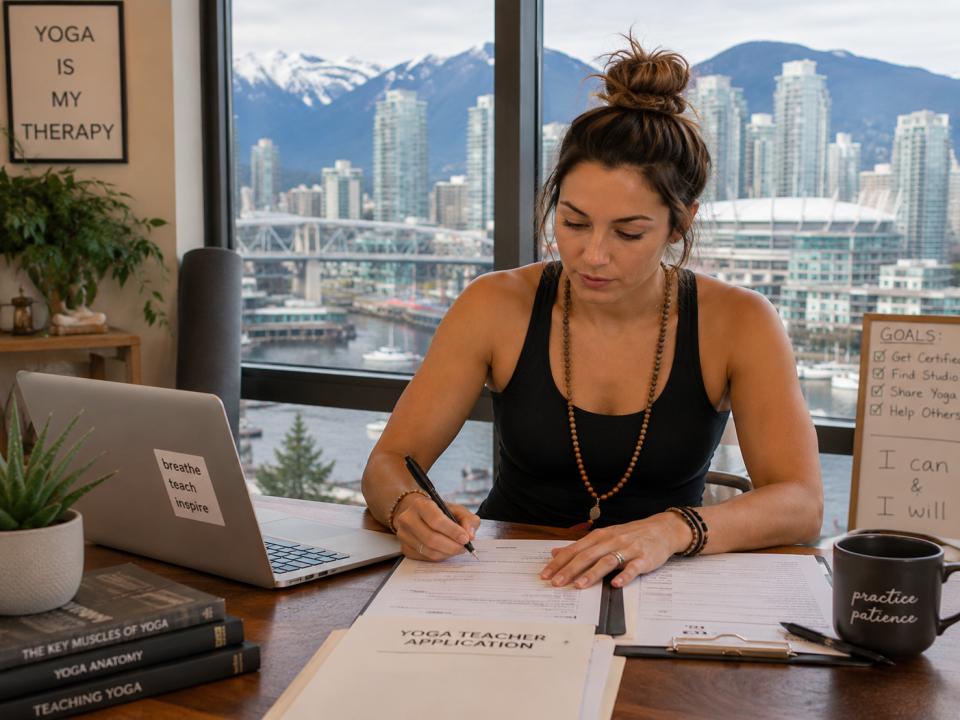
You love yoga, and you’ve started wondering whether you could teach it. But you also have a full-time job — one with deadlines, meetings, and a paycheck you’re not ready to give up. That brings us to the question this guide answers: 200-Hour YTT Vancouver: Can You Train While Working Full-Time?
The short answer is yes. Every year, working professionals across Metro Vancouver complete 200-hour yoga teacher training (YTT) programs without putting their careers on pause. They do it by choosing a training format that fits their existing schedule, treating that schedule as a real commitment, and being honest about the time involved from the start.
This guide walks through what a 200-hour YTT actually covers, how the hours break down in practice, which formats work best for people with full-time jobs, what training costs while you’re earning a regular income, and what life looks like after certification. By the end, you’ll have a clearer picture of whether — and how — this fits into the life you’re already living.
What Does a 200-Hour YTT Actually Cover?
A 200-hour YTT is the foundational certification for yoga teachers. Most Vancouver programs follow the curriculum standards set by Yoga Alliance, the largest nonprofit association for the yoga profession. Schools that meet these standards can register as a Registered Yoga School (RYS 200), and graduates can register individually as RYT-200 teachers.
The curriculum covers several core areas. Techniques, training, and practice make up the largest share of hours. This is where you build your own asana (postures), pranayama (breathwork), and meditation practice, and learn how to guide others through the same material. Anatomy and physiology teaches you how the body moves, how joints and muscles work together, and where common injuries happen. Yoga philosophy and humanities cover the history, ethics, and philosophical roots of the practice. Professional essentials include teaching methodology — how to cue, sequence, and manage a class of students with different abilities and experience levels. Practicum is where you actually teach. You lead real students, receive feedback, and refine your voice as an instructor.
Every Registered Yoga School designs its own syllabus within these categories. Two 200-hour programs can look quite different day to day, even though both meet the same overall standard. Some lean heavily into one style, such as Hatha or Vinyasa. Others take a broader, multi-style approach. When you compare programs, ask how the hours break down across these categories. That breakdown often tells you more about a program’s character than its marketing copy does.
How Many Hours Will You Really Spend on Training?
The number “200” refers to structured curriculum hours, as defined by Yoga Alliance’s standards. It doesn’t represent everything you’ll actually do during the program.
Plan for time outside those 200 hours. Most programs assign reading, written reflections, and practice-teaching sessions with friends, family, or fellow trainees. You’ll also want to keep up your own daily practice — partly because programs expect it, and partly because it’s what makes the material click. Add it all up, and many students find their total time investment lands closer to 250 to 300 hours once homework and personal practice are included.
Yoga Alliance allows up to 40 of the 200 hours to be completed in a virtual classroom, with the remaining 160 hours delivered in person. For someone working full-time, this matters. It means a meaningful portion of your coursework — recorded lectures, readings, written assignments — can happen on your own time, instead of only during scheduled sessions.
Here’s the practical takeaway. Don’t divide “200 hours” by the spare time you think you have each week. Instead, look at how a specific program structures those hours across its timeline. How many weekends does it require? How many evenings? How much is independent study? Compare that structure to your actual calendar for the next several months. Two programs can both list “200 hours” and feel completely different to live through.
 Training Formats That Fit Around a Full-Time Job
Vancouver yoga schools generally offer a handful of formats for 200-hour training, and each one suits a different kind of schedule.
The first is the full-time immersive. This format runs daily for several weeks straight, often with sessions from morning to late afternoon. It’s intensive, fast, and builds strong group bonds. It’s also the format that’s hardest to combine with a full-time job, since it usually requires an extended leave of absence.
The second is the weekend immersion. Training happens over one weekend a month — often Friday evening through Sunday — spread across several months. Weekdays stay free for work. This is the most common format for working professionals in Vancouver, and the next section looks at it closely.
The third is the hybrid model. Online coursework, including lectures, readings, and written assignments, happens during the week, on your own schedule. In-person sessions, usually concentrated into weekends, cover hands-on practice, adjustments, and teaching practicum.
Some schools also run an evening-and-weekday combination: two or three weeknight classes plus occasional weekend modules, spread over a longer overall timeline than a monthly weekend format.
None of these formats is universally “best.” The right choice depends on your job’s flexibility, your commute, your family obligations, and how quickly you want to finish. Before enrolling, hold the program’s calendar up against your actual life for the next several months. If you can picture yourself showing up on the specific dates listed — not just in theory, but on those exact weekends or evenings — you’ve found a format that can work.
The Weekend Immersion Model: Vancouver’s Go-To Format
The weekend immersion model is the backbone of working-professional YTT in Vancouver, and it’s worth understanding in detail.
Training typically happens about one weekend a month, often Friday evening through Sunday afternoon. A common pattern runs Friday from around 5 or 6 p.m. to 9 p.m., then Saturday and Sunday from roughly 9 a.m. to 5 or 6 p.m. Spread across four to six months, sometimes longer depending on the school, this covers most of the in-person hours the certification requires.
This format has clear advantages for people with full-time jobs. Your weekday schedule stays exactly as it is. You don’t need to negotiate time off for most of the program. Between training weekends, you have a few weeks to absorb what you learned, work through reading, and practice teaching sequences on your own time.
It also comes with real demands. For four to six months, your weekends largely belong to training. That means fewer weekend trips, less unstructured time with family or friends, and a need to plan other commitments around the training calendar well in advance. If a wedding, family event, or planned vacation falls on a training weekend, check the program’s attendance policy before you enroll. Most schools build in some flexibility, but missing too many sessions can affect your ability to complete certification on schedule.
Energy management matters too. A full day of asana, lecture, and practice teaching after a five-day work week is genuinely tiring. Many students find it helps to keep the Friday before a training weekend light — an early dinner, an early night — so they arrive at Saturday’s session rested instead of running on empty.
One practical step makes a big difference: block the entire training calendar in your personal calendar the day you enroll. Treat those dates the way you’d treat a work commitment you can’t move. This single habit prevents most of the scheduling conflicts that derail people partway through a program.
Hybrid Learning: Online Coursework Meets In-Person Practice
Hybrid programs split your training into two parts: independent online learning, and in-person sessions where you practice alongside a teacher and a group.
Online components typically cover yoga philosophy, anatomy and physiology lectures, history, and written assignments. You might watch a recorded lecture, complete a reading, then submit a short written reflection. None of this requires a fixed time slot. You can work through it during a lunch break, after dinner, or, if you commute by transit, during the ride itself. TransLink connects most of Metro Vancouver, and a SkyTrain or bus journey is a realistic window for a short lecture or a reading assignment.
In-person sessions focus on what genuinely can’t be taught through a screen: guided asana practice, hands-on adjustments, group dynamics, and practice teaching in front of real students. These sessions are usually concentrated into weekend blocks, which keeps weekday evenings free for the independent portion.
For working professionals, hybrid formats offer a useful trade-off. You gain more control over when you tackle the reading-heavy material, but you still show up in person for the parts that need a room full of people and a teacher’s direct feedback on your alignment and cueing. The total in-person time is often similar to, or only slightly less than, a pure weekend immersion. What changes is where the lecture-style content lives — in a scheduled classroom session, or folded into your own week.
If you read efficiently and learn well independently, a hybrid program can reduce the number of full training weekends required, without cutting corners on the hands-on instruction that matters most for becoming a competent teacher.
 Evening and Weekday Formats: A Different Rhythm
Not everyone wants to give up their weekends for months at a time. Some Vancouver programs offer an alternative: regular weeknight classes, often two evenings a week, sometimes paired with a smaller number of weekend modules spread across the program.
This format suits people whose weekends are already committed — to family, to coaching a kid’s sports team, or simply to protecting two days a week that have nothing to do with work or study. It also suits people with a predictable Monday-to-Friday schedule, where you know by 5 or 6 p.m. that your workday is done, and you can get to a 6:30 p.m. class without rushing or rescheduling.
The trade-off is time. Spreading roughly 160 in-person hours across weeknight sessions of two to three hours each takes more total weeks than a monthly weekend immersion. A program that finishes in four or five months as weekend immersions might take seven or eight months as twice-weekly evening sessions.
There’s also the question of energy. Evening classes happen after a full workday. Some people find this genuinely useful. Yoga becomes a structured way to shift out of work mode and into something physical and present. Others find it harder to concentrate after eight hours at a desk, in meetings, or on their feet.
If you’re weighing this format, be honest about what your typical Tuesday actually looks like, not what you’d like it to look like. If you’re often working late, stuck in meetings that run over, or simply too drained by early evening to focus, a format with fixed weeknight start times may create more friction than it removes. A weekend-based or hybrid format might serve you better.
Practical Strategies for Balancing Work and Training
Format is only part of the equation. How you manage the months around your training matters just as much.
Start by talking with your manager before you enroll, especially if your chosen format includes occasional weekday sessions, or if you’ll need a day off around a longer training weekend. Most employers respond well to advance notice and a clear, limited request. That conversation is far easier to have early than as a last-minute scramble.
Block your calendar as soon as you receive the training schedule. Add every session as a recurring commitment, the same way you’d add a recurring work meeting. This makes the commitment visible to you, and to anyone who shares your calendar or your household.
Reduce decision fatigue during training months. If your sessions fall on weekends, batch-cook meals the Sunday before or during the week leading up to a training block. Simplify your routine elsewhere during this period. It’s not the season to also start a major home renovation or train for a marathon.
Protect recovery time. After a full training day, the following morning goes more smoothly if you don’t also have evening plans that night. Build in this buffer, especially during the first month or two while you’re adjusting to the new rhythm.
Watch for signs of overload. Adding a structured training program on top of full-time work is a real increase in workload, and it can contribute to burnout if left unmanaged. Mayo Clinic describes job burnout as a state of physical or emotional exhaustion linked to ongoing stress, and notes that recognizing early signs makes it easier to adjust before things become unmanageable. If you notice persistent exhaustion, irritability, or dread about either work or training, treat that as a signal to talk with your program coordinator about options, not as evidence that you’ve failed.
Finally, remember that a 200-hour YTT is a temporary, defined commitment, typically four to nine months depending on format. Treat it like a project with a clear end date, because it is one.
What Does It Cost to Train While Employed?
Cost is a real factor, and it’s worth planning for before you commit to a program.
In Vancouver, 200-hour YTT programs commonly range from roughly $2,900 to $5,500 CAD, depending on the school, the format, and what’s included. Some programs bundle manuals, props, or additional workshops into the price, while others charge separately for these extras. Many schools offer payment plans, splitting the total cost into monthly installments that align with a regular paycheck.
This is one area where working full-time during training is a genuine advantage. You’re not drawing down savings to cover months without income, the way you might if you traveled abroad for a full-time immersive program. Your paycheck continues as normal, which makes a monthly payment plan far easier to absorb into your existing budget.
Beyond tuition, budget for a few extras. You may need your own yoga mat, blocks, and a strap if you don’t already own them, though many studios provide props for use during class. Some programs require specific textbooks. If part of the program includes a retreat-style weekend outside the city, something a few Vancouver-area schools offer, factor in transportation and accommodation costs separately.
After certification, ongoing costs typically include liability insurance if you plan to teach, often available through professional yoga associations for a modest annual fee, plus any continuing education needed later for advanced credentials.
When comparing programs, ask for a full breakdown of what’s included in the listed price. A program advertised at a lower headline cost but with several add-on fees can end up costing more overall than a program that includes everything upfront. A clear, itemized answer to this question is also a useful signal about how a school operates more broadly.
 Why Vancouver Works Well for Working Professionals
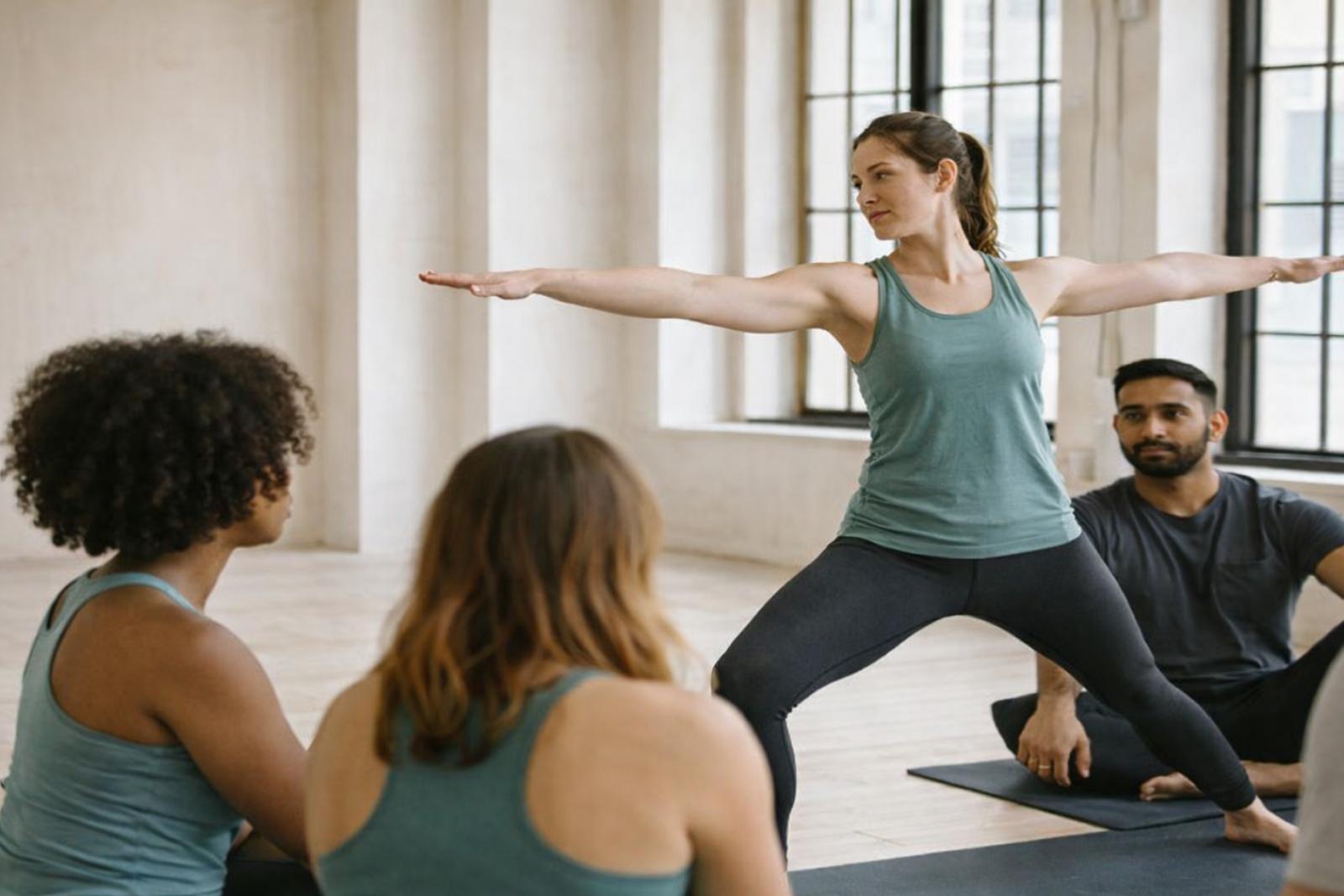
Vancouver has some practical advantages if you’re trying to fit yoga training around a full-time job.
The city has a genuinely large wellness community, and Destination Vancouver highlights the outdoor lifestyle that draws so many people here in the first place, including easy access to the Seawall, beaches, and nearby mountains. This matters for YTT students because so much of the training is about embodiment, not just information. Being able to walk along the water or sit in a park between sessions gives you somewhere to process what you’re learning, without needing to travel far or carve out extra time.
There’s also genuine choice in formats. Because Vancouver supports a large number of yoga schools and studios, you’re rarely limited to a single program with a single schedule. If a weekend immersion doesn’t fit your job, a hybrid or evening-based program is usually available somewhere in the city. That range of options also tends to keep quality and transparency reasonably high, since schools know prospective students are comparing.
Studios are spread across neighborhoods, including downtown, Kitsilano, Mount Pleasant, and the North Shore, which means most people can find a training location within a reasonable distance of either home or work. That shortens the gap between finishing a workday and arriving for an evening or weekend session, and it reduces the friction of an already busy week.
None of this changes the core time commitment. A 200-hour program is still 200-plus hours of real work. But training in a city with this much infrastructure for yoga, wellness, and flexible scheduling removes some of the practical friction that can make the difference between finishing a program and quietly letting it slide.
Do You Need to Quit Your Job to Teach Yoga?
No, and this is one of the most persistent misconceptions about yoga teacher training. It stops a lot of people from even considering it.
A 200-hour certification, known as RYT-200, is a foundation, not a job offer. Most new graduates start by teaching part-time, often just one or two classes a week, while keeping their existing job. Common starting points include early-morning classes before work, lunchtime sessions for coworkers, weekend workshops, or covering occasional classes for established teachers. None of this requires leaving your current career, and many teachers build toward a fuller schedule gradually, over a year or more.
Some people complete a 200-hour YTT and never teach a public class at all, and that’s a legitimate outcome too. The training deepens your personal practice, gives you a much clearer understanding of anatomy and alignment, and often changes how you move through daily life, on and off the mat. Research summarized by the National Center for Complementary and Integrative Health points to benefits such as stress management and improvements in general well-being associated with regular yoga practice. You don’t need a teaching certificate to access those benefits, but many people deepen their practice significantly through the structured study a YTT provides.
If your eventual goal is to teach full-time, a 200-hour certification is the starting point, not the finish line. The decision about when, or whether, to make that transition is one you can make later, with far more information than you have right now. It doesn’t need to be settled before you enroll.
 The Bottom Line: 200-Hour YTT Vancouver and Full-Time Work
So, back to the question that brought you here: 200-Hour YTT Vancouver: Can You Train While Working Full-Time?
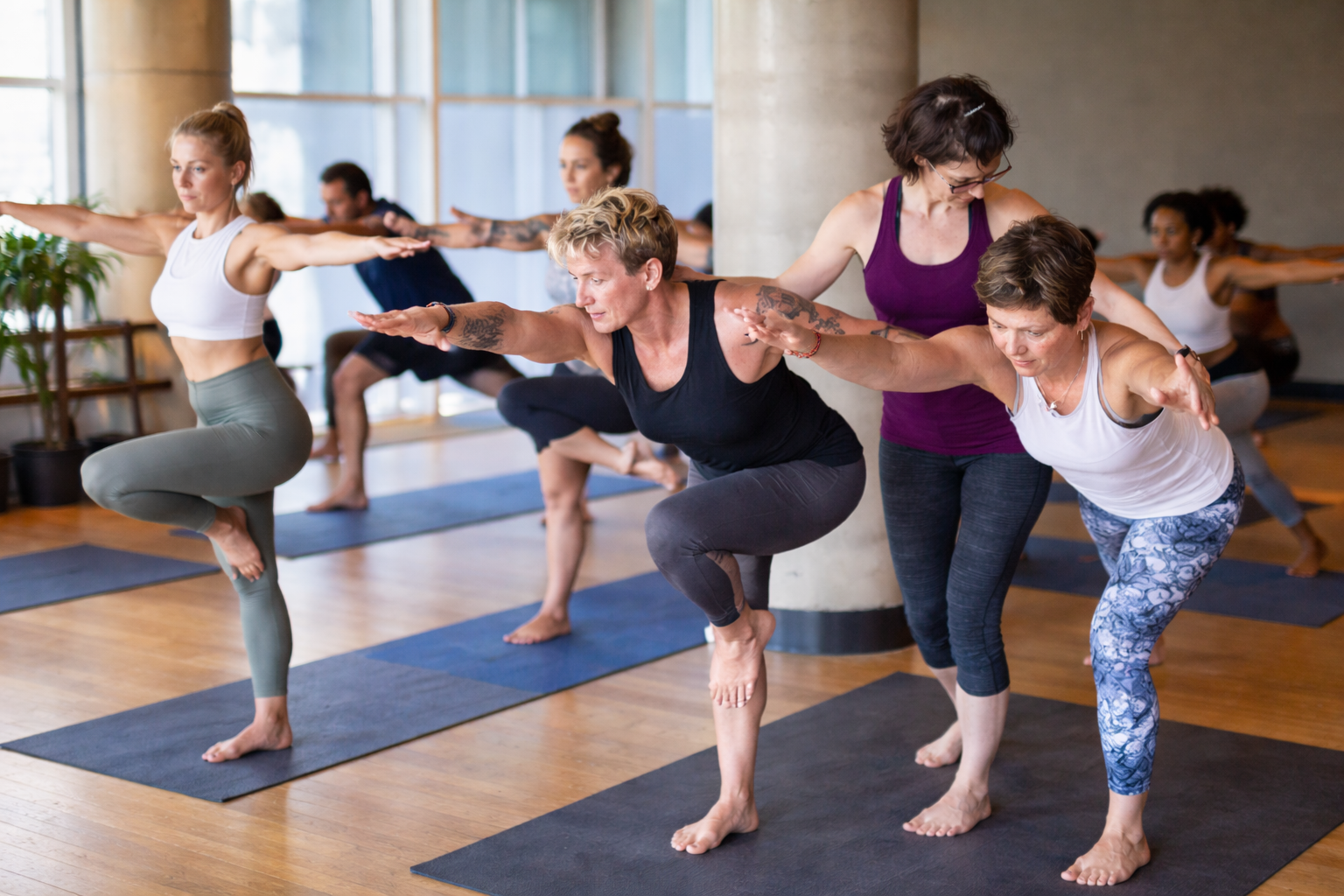
Yes. Many working professionals across Metro Vancouver have completed a 200-hour yoga teacher training while keeping their jobs, their routines, and their financial stability intact. The key isn’t finding extra hours that don’t exist in your week. It’s choosing a format, whether weekend immersion, hybrid, or evening-based, that aligns with the life you’re already living, and then protecting that commitment the way you’d protect any other important obligation.
The structure is fairly simple. There are 200 core curriculum hours, spread across four to nine months depending on format, with some portion completed independently around your existing routine. Add realistic planning on top of that: block your calendar early, talk with your employer before issues arise, budget for the full cost, and watch for signs of overload. Do that, and the path from “curious about yoga teacher training” to “certified RYT-200” becomes a lot less abstract.
You don’t need to quit your job. You don’t need a perfectly empty schedule. You need a program format that fits the life you already have, and a plan to follow it through.
If everything above sounds manageable rather than overwhelming, that’s exactly the point. A 200-hour YTT is a significant commitment, but it’s one that can fit around a real life, including a full-time job, a daily commute, and weekends you’d rather not give up entirely.
If you’re ready to take the next step, explore our 200-Hour YTT program in Vancouver to see upcoming start dates, training formats designed with working professionals in mind, and a full breakdown of what’s included. We’re happy to talk through how the schedule fits around your job before you commit to anything.