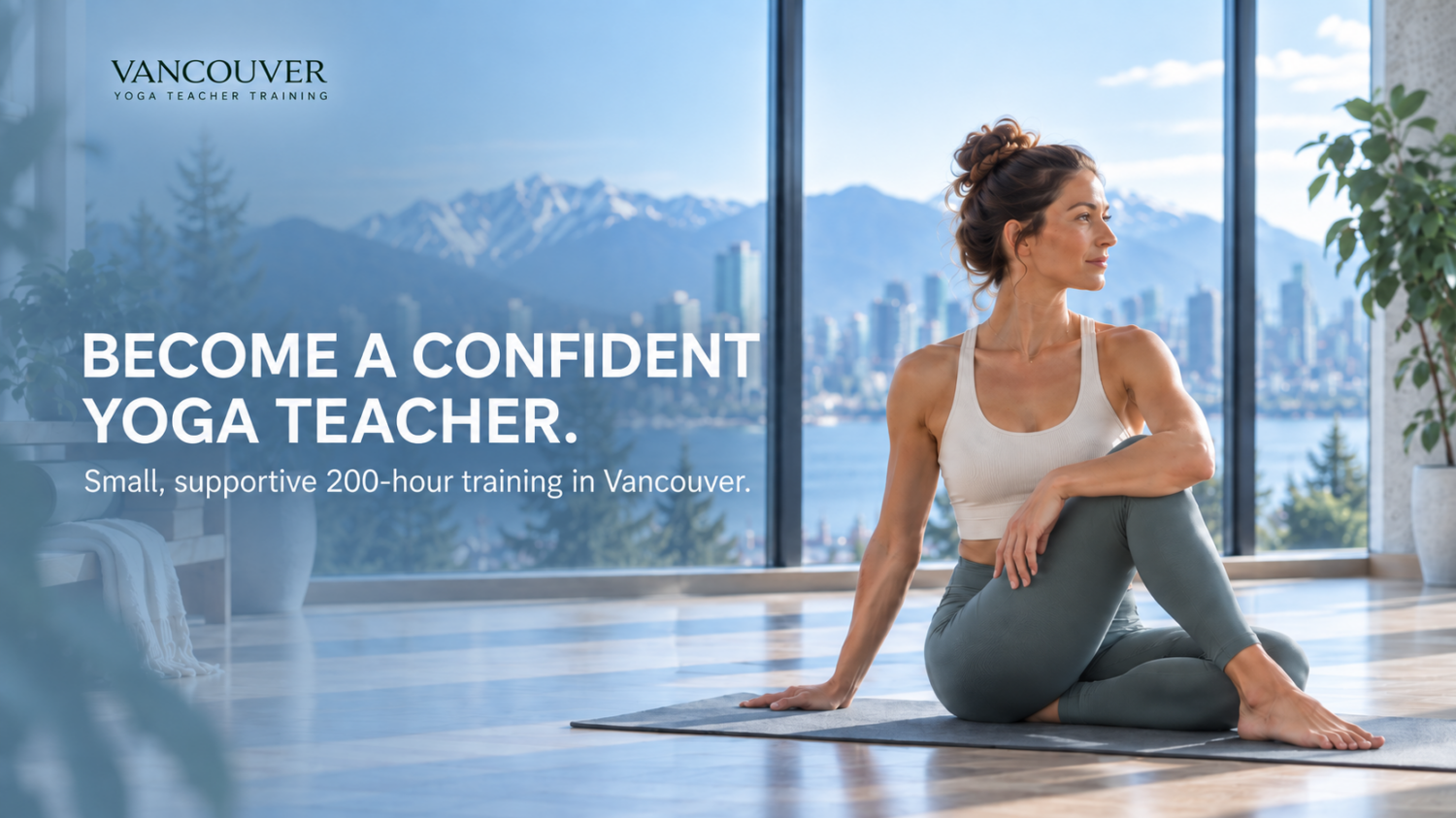
 The Future of Yoga Teacher Training in Vancouver
The Future of Yoga Teacher Training in Vancouver is being shaped by technology, changing student expectations, evolving wellness science, and the realities of modern urban life. Vancouver has long been one of North America’s most yoga-aware cities. It blends outdoor culture, multicultural influence, and a strong health-conscious population. These conditions make it an ideal place to examine how yoga teacher training is changing.
Yoga teacher training is no longer only about learning poses and memorizing sequences. It now includes education in nervous system regulation, trauma awareness, business skills, online teaching methods, and inclusive communication. Students want practical tools. They want careers, not just certificates. They want training that fits into real lives filled with work, housing costs, and digital schedules.
Vancouver sits at the intersection of tradition and innovation. What happens here often reflects broader global trends. Understanding the direction of teacher training in this city offers insight into where yoga education everywhere is heading.
A Shift From Certification to Education
In the past, many students enrolled in yoga teacher training to deepen their personal practice. Teaching was optional. Today, students expect education that prepares them for real-world application. They want to know how to teach safely. They want to understand anatomy in a meaningful way. They want to work with diverse populations, including beginners, older adults, and people managing stress-related conditions.
This shift reflects a broader cultural change. Wellness is no longer seen as a luxury. It is viewed as a necessity for mental and physical resilience. As a result, teacher training programs must deliver knowledge that holds up outside the studio.
Vancouver’s environment reinforces this demand. Students often balance demanding careers with active lifestyles. They look for training that explains why practices work, not just how to perform them. Programs that emphasize biomechanics, breath science, and nervous system regulation are gaining traction because they provide practical relevance.
The future will likely see fewer “one-size-fits-all” trainings and more specialized education tracks. These may include therapeutic yoga, mobility-focused yoga, or stress management programs rooted in evidence-informed practice. The certificate becomes a milestone, not the final goal.
Hybrid Learning Is Becoming the Standard
Online education expanded rapidly during the pandemic. That change did not disappear when studios reopened. Instead, hybrid learning became the new model.
In Vancouver, where commuting time and cost of living are significant factors, students value flexibility. They appreciate being able to study philosophy lectures online while attending in-person practicum sessions on weekends. This blended approach allows programs to maintain human connection while offering accessibility.
Hybrid formats also allow for deeper learning. Students can revisit recorded lectures. They can absorb anatomy lessons at their own pace. In-person time can focus on hands-on teaching skills rather than passive listening.
The future of teacher training in Vancouver will likely involve modular education. Students may complete foundational coursework online, then attend intensive in-person labs focused on teaching methodology, observation, and feedback. This structure mirrors trends in higher education and professional certification programs.
Technology will not replace the teacher-student relationship. It will support it by allowing more intentional use of shared physical space.
A Stronger Emphasis on Science and Safety
Modern yoga students increasingly ask evidence-based questions. They want to understand injury prevention, mobility mechanics, and how stress affects the body. This has encouraged teacher training programs to incorporate more anatomy, physiology, and research literacy.
Vancouver’s population includes healthcare professionals, fitness specialists, and educated consumers who expect accuracy. Programs that rely only on tradition without explanation struggle to maintain credibility. Students want language they can use when working alongside physiotherapists, trainers, and wellness practitioners.
This does not mean yoga is becoming clinical. It means the field is learning to communicate more clearly about what it does well. Breathwork influences the autonomic nervous system. Slow movement improves joint health. Mindfulness practices support emotional regulation. These outcomes can be explained without losing yoga’s philosophical roots.
Future trainings will likely include collaboration with allied health disciplines. Graduates will be better equipped to work in multidisciplinary settings such as wellness clinics, corporate programs, and rehabilitation environments.
Inclusivity Is Expanding the Definition of Yoga Teaching
The image of a yoga teacher has changed. It no longer centers on a single body type, age group, or cultural presentation. Vancouver’s diversity is pushing teacher training programs to reflect a broader reality.
Students want to learn how to teach people of different abilities, backgrounds, and experiences. They want tools for accessible language. They want to understand how to create environments that feel welcoming rather than exclusive.
Teacher training now includes discussions about adaptability. How do you modify movement for someone with limited mobility? How do you structure a class for people managing chronic stress? How do you teach without assuming shared cultural references?
This evolution strengthens yoga’s relevance. It returns the practice to its core purpose: reducing suffering and supporting awareness. By expanding who yoga serves, teacher training becomes more aligned with contemporary urban life.
In Vancouver, where communities intersect across cultures and lifestyles, inclusivity is not an optional feature. It is a practical necessity for sustainable teaching.
Business Education Is Becoming Essential
Many graduates discover that teaching yoga requires entrepreneurial skills. Studios hire fewer full-time instructors than in past decades. Teachers often build independent careers through workshops, private sessions, or online offerings.
Future teacher training programs are responding by including business fundamentals. These may include marketing ethics, scheduling systems, digital platforms, and client communication. Students learn how to structure offerings that are sustainable rather than exhausting.
This shift reflects the realities of Vancouver’s economy. High living costs require teachers to approach their work professionally. Understanding pricing, branding, and audience needs allows graduates to build viable careers.
Programs that ignore business education risk leaving students unprepared. The future favors training that integrates teaching skill with practical livelihood strategies.
The Role of Community Is Being Reimagined
Traditional yoga studios served as central gathering spaces. While they remain important, community now forms in multiple ways. Outdoor classes, digital platforms, and small-group mentorship models are expanding how people connect.
Vancouver’s natural environment plays a role in this transformation. Parks, beaches, and mountain settings encourage teaching beyond studio walls. Teacher training programs increasingly incorporate outdoor education and experiential learning.
Community is no longer defined by a single location. It is defined by relationships, shared learning, and ongoing support networks. Graduates often stay connected through peer groups, continuing education, and collaborative teaching models.
The future of teacher training will likely emphasize mentorship over hierarchy. Instead of a one-time certification, education becomes an ongoing process supported by evolving communities.
Shorter, Modular Training Pathways Are Emerging
The traditional 200-hour format remains common, but it is being reexamined. Many students prefer incremental learning that fits into work schedules and financial realities.
Modular pathways allow participants to complete foundational segments first, then continue toward advanced study over time. This approach reduces barriers to entry while encouraging long-term engagement.
In Vancouver, where professional development is often continuous, modular education aligns with how adults already learn. It mirrors certificate stacking seen in other industries.
This model also encourages specialization. A teacher might begin with foundational training, then add modules in restorative yoga, mobility work, or mindfulness facilitation. Education becomes customizable rather than fixed.
Technology Will Support, Not Replace, Human Teaching
Artificial intelligence, video platforms, and digital tools are influencing education across fields. Yoga teacher training is no exception. Technology can assist with curriculum delivery, scheduling, and feedback analysis.
However, yoga remains an embodied discipline. Students must practice observation, communication, and presence. These skills require real interaction.
The likely future involves thoughtful integration. Digital tools handle information sharing. In-person environments cultivate teaching confidence and relational awareness.
Vancouver’s tech-friendly culture makes it an ideal testing ground for this balance. Programs that combine innovation with authenticity will shape the next phase of yoga education.
Continuing Education Will Define Professionalism
Yoga teaching is increasingly viewed as a profession requiring ongoing study. Graduates are expected to refine skills, learn new methods, and adapt to evolving knowledge.
This aligns with trends in healthcare, coaching, and fitness industries. Continuing education ensures relevance and ethical responsibility. It prevents stagnation and encourages reflective practice.
Future teacher training programs may include structured post-graduate mentorship, advanced certifications, and peer review systems. Rather than ending at graduation, education becomes cyclical.
In a city like Vancouver, where lifelong learning is valued, this model supports both teachers and students.
Conclusion
The Future of Yoga Teacher Training in Vancouver is defined by integration. It blends tradition with science, flexibility with rigor, and personal growth with professional development. Training is moving away from static certification toward adaptable education that evolves with modern life.
Hybrid learning models, inclusive teaching approaches, and evidence-informed curriculum are shaping how new teachers are prepared. Business skills and modular pathways make the profession more sustainable. Technology enhances access while preserving the human connection at yoga’s core.
Vancouver’s unique cultural and environmental landscape continues to influence these developments. The city acts as both a laboratory and a reflection of global change. As expectations shift, teacher training will remain dynamic, practical, and grounded in real-world application.
The central takeaway is clear: the future of yoga teacher training is not about producing more teachers. It is about preparing more capable educators who can meet the needs of a changing world.