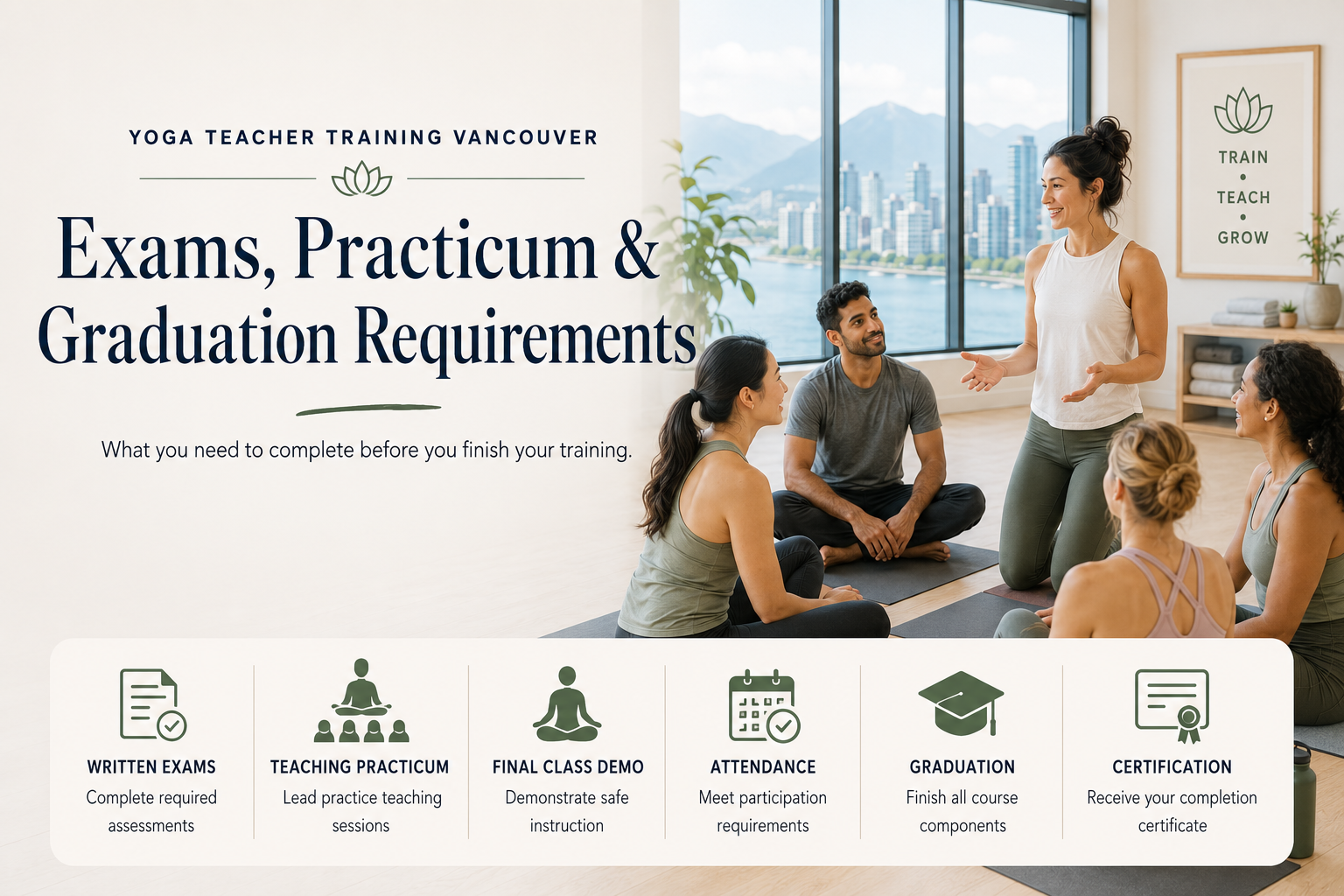
 Yoga Teacher Training Vancouver: Exams, Practicum & Graduation Requirements
Thinking about yoga teacher training in Vancouver? You probably have questions about what it actually takes to graduate. Most people focus on the poses and the philosophy. Fewer people ask about the exams, the practicum hours, and the paperwork that stands between you and your certificate.
This guide walks through all three. You’ll learn how exams work, what practicum teaching involves, and what graduation requirements typically look like. By the end, you’ll know exactly what to expect before you sign up for a program.
What Yoga Teacher Training Actually Certifies
A yoga teacher training (YTT) program teaches you how to lead a safe, effective yoga class. It also teaches you the theory behind the practice: anatomy, philosophy, and teaching methodology.
Most training programs in Vancouver follow standards set by Yoga Alliance, the largest nonprofit association for the yoga profession. Yoga Alliance doesn’t certify individual teachers directly. Instead, it registers schools as Registered Yoga Schools (RYS). When a school holds this status, its graduates can register with Yoga Alliance as a Registered Yoga Teacher (RYT).
This distinction matters. Your certificate comes from the school, not from Yoga Alliance itself. Yoga Alliance simply sets minimum hour requirements across five core categories: techniques training, teaching methodology, anatomy and physiology, yoga philosophy and ethics, and practicum.
A 200-hour program is the entry-level credential in the yoga industry. It qualifies you to teach general public classes. A 300-hour program builds on that foundation and leads to a 500-hour designation once combined.
Before you enroll, check that the school’s program is registered. You can search the Yoga Alliance school directory to confirm. This step protects your investment and ensures your hours count toward future certifications.
How Exams Work in Yoga Teacher Training
Exams in YTT programs look different from a typical academic test. They still matter, though. They confirm you’ve absorbed the material well enough to teach it safely to others.
Written Exams and Assessments
Most programs include a written component. This might be a single final exam or a series of smaller quizzes spread across modules. Topics usually include:
- Anatomy and physiology (muscles, joints, breath mechanics)
- Yoga philosophy (the Yoga Sutras, the eight limbs, key texts)
- Sanskrit terminology for postures and concepts
- Sequencing principles and class structure
- Safety, contraindications, and injury prevention
Written exams are rarely designed to fail students. They exist to confirm comprehension, not to create high-stakes pressure. Most schools allow you to retake sections if you don’t pass on the first attempt.
Practical Teaching Exams
This is the part that makes most trainees nervous. A practical exam usually means teaching a full or partial class to your peers, trainers, or sometimes members of the public. Assessors watch for:
- Clear, confident verbal cues
- Correct alignment instruction
- Ability to adapt a pose for different bodies
- Time management within a class structure
- Overall presence and voice projection
Practical exams reward preparation, not perfection. Trainers are looking for competence and safety awareness, not a flawless performance. If you’ve practiced teaching consistently throughout the course, this exam becomes a natural extension of work you’ve already done.
Open-Book vs. Closed-Book Formats
Some schools allow open-book exams for anatomy or philosophy sections, since teachers will always have access to references once certified. Others use closed-book formats to test memory retention, particularly for Sanskrit names or safety protocols. Ask your prospective school which format they use, since study strategies differ significantly between the two.
 The Practicum: Learning to Teach in Real Conditions
The practicum is where theory meets practice. It’s the requirement most students underestimate before they start, and the one many say matters most once they finish.
What Counts as Practicum Hours
Yoga Alliance defines practicum as hands-on teaching experience under supervision. This includes:
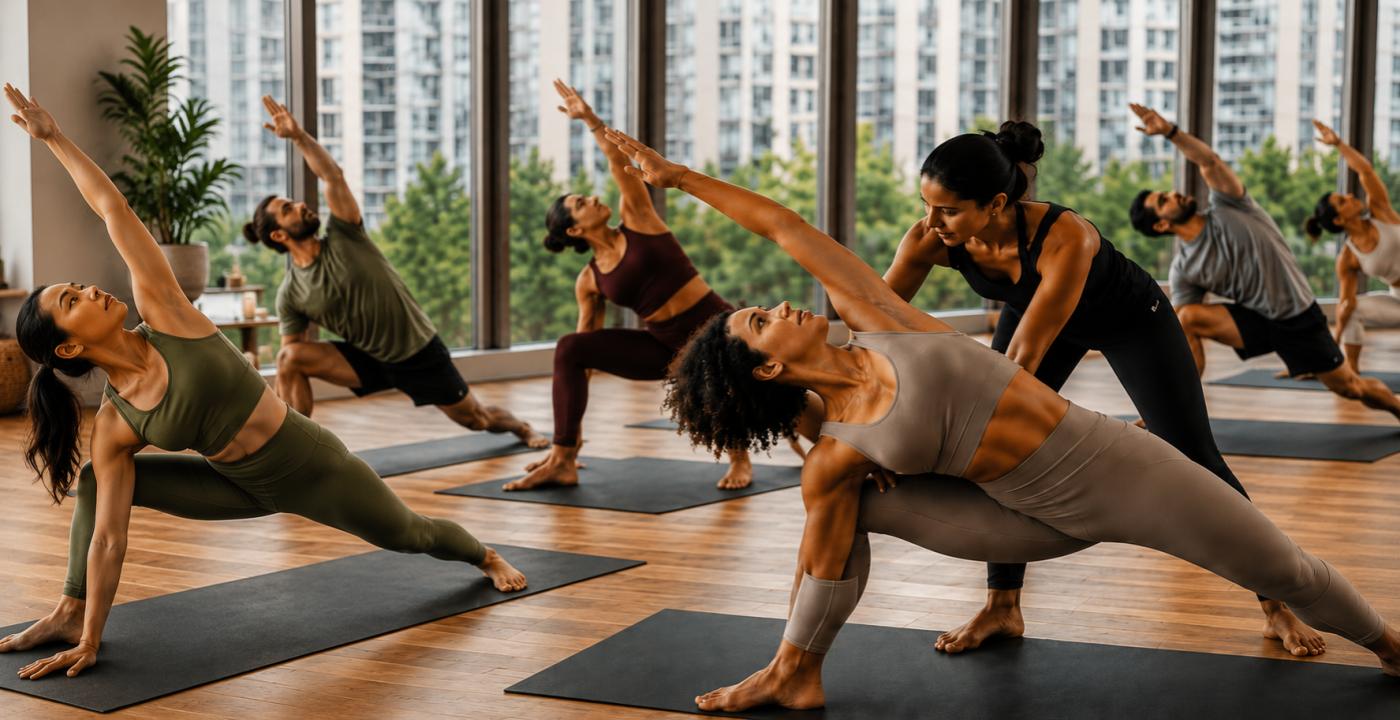
- Practice teaching to fellow trainees
- Receiving and giving feedback on teaching style
- Observing experienced teachers lead real classes
- Assisting a lead teacher during a live class
A 200-hour RYS program typically requires around 10 hours of practicum, though this can vary by school. That number sounds small, but it usually translates into multiple teaching opportunities spread across the training, not one isolated session.
Observation Hours Matter Too
Watching an experienced teacher work is not passive time. Observation hours train your eye to notice sequencing choices, verbal cueing patterns, and how a teacher manages energy in a room. Many schools require you to submit written reflections after each observed class. These reflections push you to articulate what you noticed, which deepens the learning far more than watching alone.
Feedback Loops Build Real Skill
Good practicum design includes structured feedback. After you teach a segment, your trainer or peers point out what worked and what needs adjustment. This loop, repeated many times, is what actually builds teaching competence. Reading a manual about cueing a warrior pose is not the same as saying the words out loud and hearing how they land.
If you’re evaluating schools, ask how many separate practicum sessions they offer, not just the total hour count. Ten hours delivered across two sessions teaches you less than ten hours spread across eight or ten shorter sessions.
Teaching Outside the Studio
Some Vancouver-based programs incorporate community teaching, such as leading a donation-based class at a local park or community center during warmer months. This exposes trainees to public teaching conditions: unpredictable group sizes, mixed skill levels, and less controlled environments than a studio setting. It’s valuable exposure for anyone planning to teach publicly after graduation.
Graduation Requirements: What You Actually Need to Complete
Graduation requirements combine attendance, assessment, and administrative steps. Missing any one of these can delay your certificate, so it helps to understand each part clearly.
Attendance Thresholds
Most Registered Yoga Schools require close to full attendance, often 90 percent or higher, of scheduled contact hours. This isn’t arbitrary. Yoga Alliance sets contact hour minimums specifically because teaching competence depends on being physically present for practice, discussion, and feedback. A missed weekend can mean missing an entire content module.
Ask upfront how a school handles absences. Some offer makeup sessions or recorded content for minor gaps. Others require you to join a future cohort to complete missed material. Both are common; the difference simply affects your timeline and, sometimes, your cost.
Passing All Assessments
Graduation typically requires passing both the written and practical components described earlier. Some schools use a pass/fail structure. Others use a rubric with minimum scores across specific skills, such as cueing clarity or sequencing logic. Either way, you’ll usually know the passing bar before you start, since reputable schools publish their assessment criteria in the syllabus.
Completing All Required Hours
Beyond attendance at live sessions, many programs assign homework: reading assignments, written reflections, or a final project such as designing your own class sequence. These deliverables count toward your total hours and are just as necessary as classroom attendance. A common final requirement is submitting a complete lesson plan that demonstrates you can independently structure a class from warm-up to final relaxation.
Financial and Administrative Requirements
Graduation also depends on administrative completeness: tuition paid in full, any required paperwork submitted, and liability waivers or program agreements signed. These steps are easy to overlook amid the excitement of finishing your practical work, so keep a checklist as your training nears its end.
Registering With Yoga Alliance After Graduation
Completing the program doesn’t automatically register you as an RYT. Once your school confirms you’ve met all requirements, they will issue a completion certificate. You then use this certificate to register directly with Yoga Alliance, which involves a separate application and membership fee. Many teachers skip this step accidentally, assuming graduation and registration are the same thing. They are not.
 Common Challenges Students Face During Exams and Practicum
Understanding common obstacles ahead of time helps you prepare realistically, rather than being caught off guard.
Public Speaking Anxiety
Many trainees are confident in their personal practice but nervous about speaking in front of a room. This is normal, and most programs build in gradual exposure: shorter teaching segments early on, longer ones later. If public speaking worries you, ask your prospective school how they structure this progression before you commit.
Retaining Sanskrit and Anatomical Terms
Sanskrit terminology and anatomical vocabulary is often the densest academic content in a YTT program. Flashcards, repetition, and teaching the terms aloud to a study partner tend to work better than passive reading. Some trainees find resources like Yoga Journal’s pose library useful for reinforcing pose names and alignment cues outside of class hours.
Balancing Training With Work or Family Commitments
Intensive formats, especially weekend or immersion-style trainings, can be demanding for people juggling jobs or family responsibilities. Part-time formats spread over several months exist specifically to address this. If your schedule is tight, ask whether a school offers a part-time track before assuming an intensive format is your only option.
Perfectionism During Practice Teaching
Trainees sometimes hold themselves to an unrealistic standard during practicum, expecting to sound like a ten-year veteran teacher on day one. Trainers don’t expect this, and neither should you. Practicum exists precisely because you’re still learning. Treat mistakes during practice teaching as information, not failure.
How to Prepare for Exam and Practicum Success
Preparation makes the biggest difference in how smoothly your training goes. A few habits consistently help.
Study Consistently, Not Just Before Exams
Spreading review across the full training, rather than cramming before a written exam, improves retention significantly. Set aside a short block of time each week specifically for reviewing anatomy terms or philosophy concepts.
Practice Teaching Outside of Class
Ask friends or family if you can practice cueing a short sequence on them. Teaching outside the formal practicum hours builds comfort with your own voice and cueing style, which reduces nerves when it’s time for a formal assessment.
Take Detailed Notes During Observation Hours
When observing an experienced teacher, write down specific phrases, transitions, or sequencing choices you find effective. These notes become a personal reference library you can draw from once you start building your own classes.
Ask Questions Early
If any requirement is unclear, ask your lead trainer directly rather than guessing. Reputable programs want you to succeed and will clarify expectations around attendance, assessments, or hour requirements without hesitation.
 What Happens After You Graduate
Graduation marks the beginning of your teaching career, not the end of your learning. Many new teachers start by assisting more experienced instructors, teaching donation-based community classes, or covering substitute classes at local studios. This is a natural progression and mirrors how most working teachers built their own experience.
Continuing education also matters. Yoga Alliance requires RYTs to complete continuing education hours periodically to maintain their registration. Staying involved in workshops, mentorships, or advanced trainings keeps your skills sharp and your certification active.
Consider joining a local teacher community too. Vancouver has an active yoga scene, and organizations like the Yoga Vancouver community calendar can help new teachers find substitute opportunities, workshops, and networking events.
Conclusion: Yoga Teacher Training Vancouver — Exams, Practicum & Graduation Requirements
Yoga teacher training in Vancouver involves more than mastering poses. Exams confirm your grasp of anatomy, philosophy, and safe teaching practices. Practicum hours give you real, supervised experience leading a class, with feedback that sharpens your skills over time. Graduation requirements tie it all together: attendance, passing assessments, completed coursework, and the administrative steps needed to register as a certified teacher.
The main takeaway is simple: a strong YTT program builds your competence gradually, through structured exams, hands-on practicum, and clear graduation standards, so that by the time you receive your certificate, you’re genuinely ready to teach.
If you’re ready to become a yoga teacher, check out our 200-hour YTT page to see how our program structures exams, practicum, and graduation requirements from day one.