 Do You Have to Be Flexible to Become a Yoga Teacher? What Vancouver YTT Students Should Know
If you’ve ever watched a yoga teacher fold effortlessly into a deep backbend or wrap their leg behind their head, you’ve probably asked yourself the same question hundreds of new students ask before signing up for training: do you have to be flexible to become a yoga teacher? What Vancouver YTT students should know is this — the answer is no, and the belief that flexibility is a requirement stops many capable, passionate people from ever starting their journey.
This myth is one of the most common reasons people delay or avoid yoga teacher training altogether. It’s also one of the least accurate. Teaching yoga is not a gymnastics competition. It’s a skill built on knowledge, communication, observation, and practice — not on how far your body can bend.
This article breaks down what yoga teacher training actually requires, why flexibility is not the gatekeeper it’s assumed to be, and what Vancouver students specifically should understand before enrolling in a 200-hour program.
The Biggest Myth in Yoga Teacher Training: Flexibility Equals Qualification
The idea that flexible people make better yoga teachers is a misunderstanding of what yoga actually is. Yoga is a practice that combines movement, breath, focus, and self-awareness. Flexibility is one physical trait that some students happen to have. It is not a teaching qualification.
Think about it this way: a personal trainer doesn’t need to bench press 300 pounds to coach someone through a strength program. A swim coach doesn’t need to break Olympic records to teach proper stroke technique. The same logic applies to yoga. A teacher’s job is to guide, cue, and support students safely through poses — not to demonstrate the most advanced version of every pose in the room.
This myth persists partly because of how yoga is marketed on social media. Advanced postures photograph well. They get shared, liked, and admired. But those images represent a tiny fraction of what yoga teaching actually involves. According to the Yoga Alliance International, the leading credentialing body for yoga teachers in North America, teacher training standards focus heavily on anatomy, teaching methodology, and safe alignment — not on a student’s range of motion.
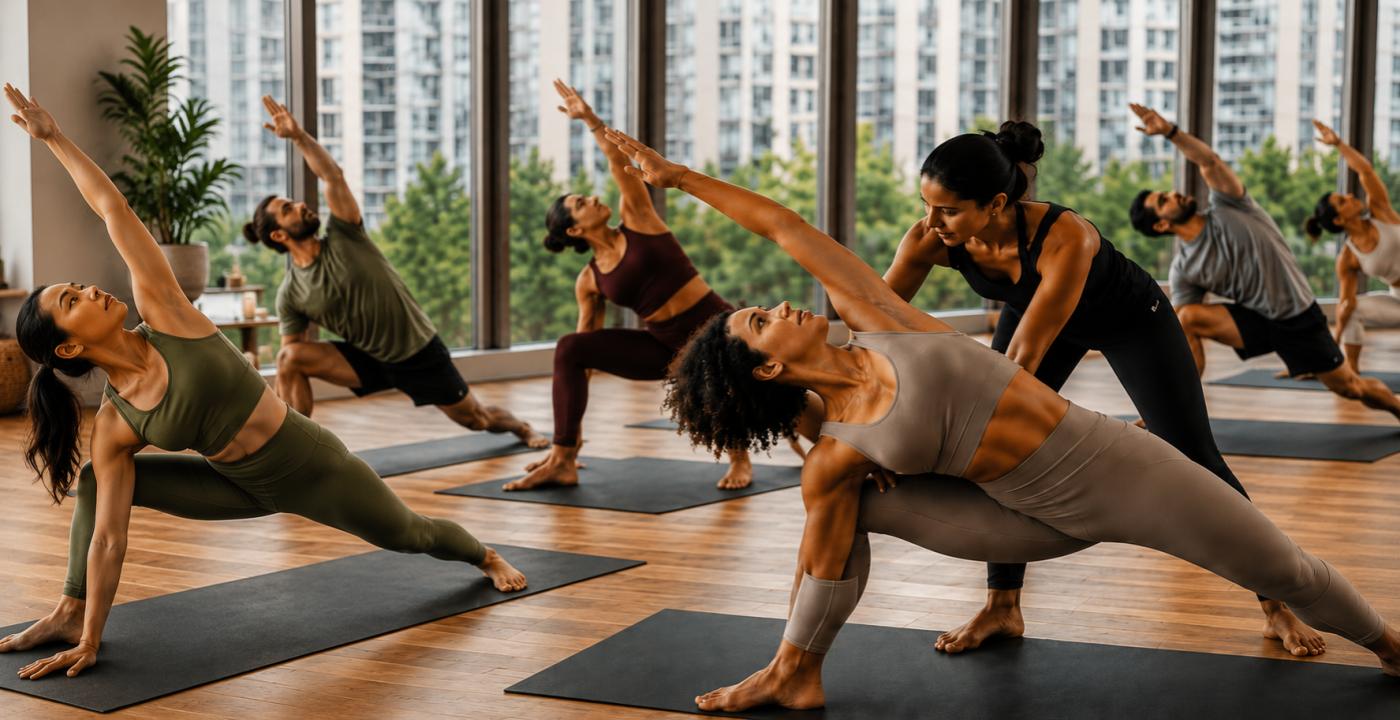
Vancouver YTT students often arrive at their first day of training worried they’ll be the “least flexible person in the room.” In reality, training programs are built for a wide range of bodies, and instructors expect students to enter with varying levels of mobility.
What Yoga Teacher Training Actually Requires
A 200-hour yoga teacher training program is designed to build competence across several core areas, not just physical performance. Most YTT curriculums, particularly those registered with Yoga Alliance International, are required to cover specific categories of study.
These typically include:
- Techniques, training, and practice — learning how to perform and cue postures, breathing techniques, and meditation
- Teaching methodology — communication skills, class sequencing, and how to create an inclusive classroom environment
- Anatomy and physiology — understanding how the body moves and where injuries commonly occur
- Yoga philosophy, ethics, and lifestyle — the historical and philosophical roots of the practice
- Practicum — supervised teaching practice with real feedback
Flexibility doesn’t appear anywhere on that list as a requirement. What does appear, repeatedly, is the ability to understand the body well enough to keep other people safe. This is a knowledge-based skill, not a physical one.
Many successful yoga teachers describe themselves as having average or below-average flexibility when they started training. What set them apart wasn’t their hamstrings — it was their ability to explain a pose clearly, notice when a student was compensating incorrectly, and offer modifications that made the practice accessible.
Training programs also spend significant time teaching students how to use props like blocks, straps, and bolsters. These tools exist specifically to help students of all flexibility levels access poses safely, and teachers need to know how to use them well. A teacher who has personally struggled with tight hips or a stiff spine often becomes better at teaching those modifications, simply because they’ve lived the experience themselves.
 Why Flexibility Is Not a Prerequisite
There’s a practical reason flexibility isn’t a prerequisite for teacher training: yoga classes are filled with students who aren’t flexible either. Most people walking into a beginner or general-level class have tight hamstrings, stiff shoulders, or limited hip mobility. A teacher who can only relate to students who are already flexible is at a disadvantage.
Research on flexibility supports this distinction between performance and instruction. Flexibility is influenced by a mix of genetics, joint structure, age, and consistent practice over time, according to health researchers at institutions like Harvard Health Publishing. Some people are naturally more flexible due to how their connective tissue and joints are built. Others develop flexibility slowly, over months or years of consistent practice.
This means two people practicing yoga with equal dedication and consistency can have very different flexibility outcomes. If flexibility were a requirement for teaching, it would exclude a huge portion of genuinely knowledgeable, dedicated practitioners for reasons entirely outside their control.
There’s also a safety argument. Teachers who are naturally hyperflexible sometimes have less appreciation for how a pose feels in a tighter body. This can occasionally lead to teaching cues that don’t translate well for the average student. A teacher who has worked through their own physical limitations often teaches with more empathy and more realistic expectations, because they understand what it feels like to modify a pose rather than push through it.
Vancouver’s yoga community, like many cities with a strong wellness culture, includes students of all ages, body types, and fitness backgrounds. A teacher trained to work with a range of bodies — not just flexible ones — is simply more prepared for the reality of teaching.
What Matters More Than Flexibility
If flexibility isn’t the deciding factor, what actually determines whether someone becomes a good yoga teacher? A few qualities matter far more.
Clear communication is at the top of the list. Teaching yoga requires the ability to explain a pose so that someone who has never done it before can follow along safely. This means using simple, direct language and avoiding overly technical jargon that confuses new students.
Observation skills matter just as much. A good teacher watches how students move, notices where they’re struggling, and offers real-time adjustments or modifications. This skill develops through practice and feedback during training, not through personal flexibility.
Consistency and discipline also play a major role. Teachers who show up to their own practice regularly, even imperfectly, tend to develop a deeper understanding of the practice over time. This consistency builds credibility with students, who can sense genuine experience versus performative expertise.
Empathy rounds out the list. Yoga students come to class carrying stress, injuries, self-doubt, and physical limitations. A teacher who approaches the room with patience and understanding creates a space where students feel safe to try, fail, and try again.
None of these traits require touching your toes. They require the willingness to learn, practice, and grow — the same qualities that define good teachers in any discipline. According to the National Center for Complementary and Integrative Health, yoga’s benefits extend across physical, mental, and emotional domains, which is part of why teaching it well requires more than physical skill alone.
The Role of Anatomy Knowledge in Teaching Safely
Anatomy education is one of the most heavily weighted components of any legitimate yoga teacher training program, and for good reason. Teaching yoga safely means understanding how joints move, where the body is vulnerable, and how to recognize the difference between productive discomfort and pain that signals injury risk.
Students spend a significant portion of their training studying the musculoskeletal system, joint mechanics, and common injury patterns associated with specific poses. This knowledge allows teachers to offer alternatives when a pose isn’t appropriate for a particular student’s body, whether due to an old injury, a structural limitation, or simply a tight or stiff area that needs a modified approach.
This is where flexibility becomes almost irrelevant to teaching competence. A teacher with limited flexibility who deeply understands anatomy can guide a student through a safe backbend far better than a naturally flexible teacher who doesn’t understand spinal mechanics. Knowledge protects students. Flexibility does not.
The Mayo Clinic notes that flexibility itself varies significantly between individuals and improves gradually with consistent, gentle practice rather than forced effort. This reinforces why teacher training programs emphasize gradual, informed instruction over demonstrating extreme range of motion.
Vancouver-based training programs typically dedicate multiple weekends or full training days specifically to anatomy study. Often bringing in guest instructors with physiotherapy or kinesiology backgrounds. This reflects an industry-wide understanding that safe teaching depends on scientific literacy about the body, not on personal physical achievement.
Students who feel intimidated by anatomy coursework should know that this material is taught progressively, with no prior medical or fitness background required. It’s designed to be accessible to complete beginners.
 How Vancouver YTT Programs Support All Body Types
Vancouver has a diverse and growing yoga community, and local teacher training programs generally reflect that diversity in how they structure their curriculum. Reputable programs build training around accessibility, not exclusivity.
This typically includes teaching students how to use props effectively, including blocks, straps, bolsters, and blankets. These tools aren’t beginner crutches; they’re standard equipment used by experienced teachers and advanced practitioners alike to adjust poses for individual anatomy.
Training programs also usually cover modifications for common physical limitations, such as tight hamstrings, limited shoulder mobility, lower back sensitivity, and knee issues. Students learn to recognize these limitations in themselves and in future students, then apply appropriate adjustments.
Many programs incorporate restorative or gentle yoga modules alongside more physically demanding styles like vinyasa or power yoga. This ensures graduating teachers understand a spectrum of approaches, rather than only the most physically intense end of the practice.
Vancouver’s training environment also tends to attract a wide age range of students, from people in their twenties exploring a career change to people in their fifties and sixties pursuing yoga as a second career or a meaningful personal milestone. This age diversity naturally creates a training culture where flexibility varies widely among classmates, normalizing the idea that everyone starts somewhere different.
Instructors leading these programs are typically experienced in working with beginner-level flexibility, since most incoming students haven’t been practicing yoga for years before their training begins. This means the training pace, pose selection, and physical expectations are calibrated for real-world student bodies, not idealized ones.
Common Fears New Students Have (and How They’re Unfounded)
Many prospective students carry specific fears that keep them from enrolling in teacher training. Addressing these directly helps separate real concerns from myths.
“I won’t be able to keep up physically.” Training programs are structured progressively, and instructors expect a range of physical starting points. Modifications are built into the curriculum from day one.
“Everyone else will be more advanced than me.” This fear is common but rarely matches reality. Training rooms typically include complete beginners, intermediate practitioners, and a few advanced students. The range is usually much wider than people expect.
“I’ll be judged for not being able to do certain poses.” Reputable training programs actively discourage comparison and competition. The culture in most Vancouver studios emphasizes personal growth over performance.
“I need to master advanced poses before I can teach them.” Teachers don’t need to personally perform every advanced variation to teach it safely. They need to understand the mechanics, risks, and appropriate progressions well enough to guide a student toward it gradually.
“My body type isn’t the ‘yoga body’ I see online.” This concern reflects social media bias, not teaching reality. Yoga is practiced and taught by people of every body type, age, and fitness background. The British Wheel of Yoga, a respected UK-based yoga organization, emphasizes that yoga’s core principles focus on breath, awareness, and mindful movement rather than physical appearance or extreme flexibility.
Recognizing these fears as common — and largely unfounded — helps prospective students approach training with realistic expectations rather than anxiety.
How Flexibility Actually Develops During Training
While flexibility isn’t a prerequisite, most students do notice improvements in their range of motion over the course of a 200-hour program. This happens naturally, as a byproduct of consistent practice rather than forced stretching.
Training programs typically involve daily or near-daily practice sessions over several weeks or months, depending on the schedule format. This consistency alone tends to improve flexibility gradually, since the body responds well to regular, moderate movement.
Students also learn proper alignment during training, which often reveals that some previous “flexibility limitations” were actually alignment issues. For example, a student who struggled with forward folds might discover that engaging their core and hinging correctly at the hips makes the pose more accessible, even without any change in hamstring length.
Breathing techniques taught during training also play a role. Deep, controlled breathing activates the parasympathetic nervous system, which can reduce muscular tension and support gradual increases in range of motion over time. The Cleveland Clinic notes that controlled breathing practices are linked to reduced physical tension and improved relaxation response, both of which support safer, more effective stretching.
It’s worth setting realistic expectations, though. Flexibility gains during a single training program are usually modest, not dramatic. Students shouldn’t expect to transform into contortionists in a matter of weeks. What typically happens instead is a noticeable improvement in comfort, ease of movement, and body awareness — often more valuable to future teaching than raw flexibility gains.
What to Expect in a 200-Hour YTT Program
For students specifically considering training in Vancouver, understanding the general structure of a 200-hour program helps set accurate expectations.
Most 200-hour programs run over several weeks or months, either through weekend-intensive formats or more spread-out evening and weekend sessions. This structure allows working professionals, parents, and students with other commitments to complete training without pausing their daily lives entirely.
Coursework typically balances physical practice with classroom-style learning. Students spend time on the mat practicing postures and teaching techniques, but they also spend considerable time in lecture-style or discussion-based sessions covering anatomy, philosophy, and teaching methodology.
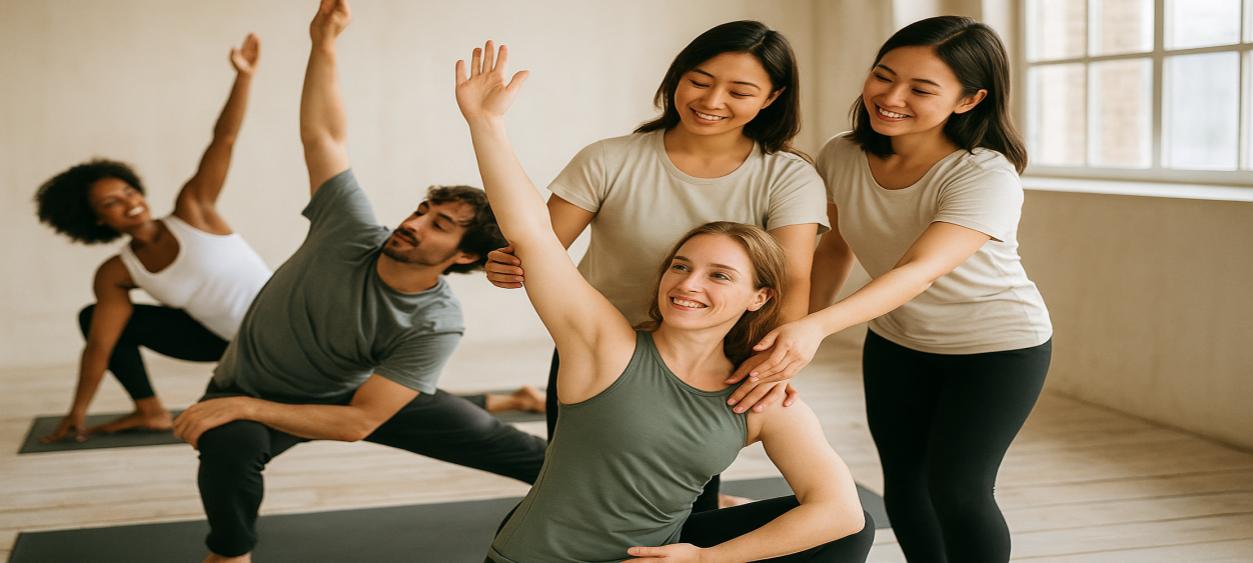
Practicum hours are a core requirement. Students practice teaching in front of classmates, receive feedback, and gradually build confidence leading a group through a sequence. This hands-on component is often where students realize teaching ability has little to do with personal flexibility and everything to do with communication and preparation.
Assessment in most programs focuses on demonstrated understanding rather than physical performance. Written reflections, teaching demonstrations, and anatomy knowledge checks are common evaluation methods. Programs registered with Yoga Alliance International must meet specific curriculum hour requirements across the core categories mentioned earlier in this article.
By the end of a 200-hour program, graduates typically feel equipped to teach beginner and general-level classes, with a foundational understanding of sequencing, safety, and classroom management. Many go on to pursue additional training in specialized areas like prenatal yoga, yin yoga, or therapeutic yoga as their teaching careers develop.
Tips for Inflexible Beginners Considering YTT
For anyone still hesitant about enrolling in yoga teacher training due to flexibility concerns, a few practical steps can help ease the transition.
Start attending classes regularly before training begins, even just a few months in advance. This builds familiarity with common poses and reduces the learning curve once training starts. It also helps students identify which styles of yoga feel most comfortable for their current body.
Talk to the training school directly. Most reputable Vancouver studios welcome questions from prospective students about physical expectations, and staff can offer honest, specific guidance based on the program’s actual structure.
Focus on consistency over intensity in pre-training practice. Frequent, gentle practice tends to build both flexibility and body awareness more effectively than infrequent, intense sessions.
Consider using props during personal practice, even outside of a class setting. Getting comfortable with blocks and straps beforehand builds confidence and normalizes their use, which mirrors how they’ll be taught and used during training.
 Finally, reframe the goal. The purpose of attending YTT isn’t to prove physical mastery. It’s to build the knowledge, confidence, and communication skills needed to guide others. Flexibility might improve along the way, but it was never the entry requirement in the first place.
Conclusion: Do You Have to Be Flexible to Become a Yoga Teacher?
So, do you have to be flexible to become a yoga teacher? What Vancouver YTT students should know, ultimately, is that flexibility is not a prerequisite, a qualification, or a predictor of teaching success. Yoga teacher training is built around anatomy knowledge, communication skills, safe teaching methodology, and consistent practice — not around how far a student can bend.
The most effective yoga teachers are the ones who understand the body, communicate clearly, and create a safe, welcoming space for students of all abilities. Flexibility often improves naturally during training, but it was never the entry point to begin with. If you’ve been holding back from pursuing yoga teacher training because you don’t feel flexible enough, that hesitation is based on a myth, not a real requirement.
If you’re ready to take the next step toward becoming a certified yoga teacher, explore our 200-hour Yoga Teacher Training program to see how our Vancouver-based training supports students at every level of flexibility and experience. Whether you’re just starting your practice or you’ve been practicing for years, our program is designed to help you build the knowledge and confidence to teach with skill and authenticity.