
 How to Become a Prenatal Yoga Teacher in Vancouver: Training, Certification & Career Opportunities
Pregnancy changes a body quickly. Many expecting parents want movement that feels safe, calm, and supportive. Prenatal yoga meets that need. It also gives yoga teachers a focused, rewarding career path.
If you want to know how to become a prenatal yoga teacher in Vancouver, this guide shows you each step. You will learn what the work involves, which training you need, how the Yoga Alliance credential works, and where graduates find jobs. Think of this article as a practical roadmap: How to Become a Prenatal Yoga Teacher in Vancouver: Training, Certification & Career Opportunities.
The short version is simple. You first complete a 200-hour yoga teacher training. Then you add specialized prenatal training. Finally, you gain teaching experience and register your credential. Each stage builds skills that protect your students and strengthen your career.
What a Prenatal Yoga Teacher Actually Does
A prenatal yoga teacher guides pregnant students through yoga that suits each stage of pregnancy. You teach breathing, gentle strengthening, mobility, relaxation, and positions that ease common discomforts. You also help students feel connected to their bodies and to other parents-to-be.
The job goes beyond adjusting a regular class. Pregnancy affects posture, balance, joints, circulation, and energy. A pose that feels fine at eight weeks may feel wrong at thirty-two. You need to understand these changes and offer clear options for every trimester.
You also teach a very mixed group. One student may be a lifelong yogi. Another may be trying yoga for the first time. A third may feel anxious about birth. Your cues must work for all of them.
A prenatal teacher does not diagnose, treat, or give medical advice. That boundary matters. You support healthy movement and encourage students to follow guidance from their own doctor or midwife. When something sounds unusual, you send the student back to their care provider.
Research supports the broader value of staying active. The 2019 Canadian Guideline for Physical Activity Throughout Pregnancy, developed by the Society of Obstetricians and Gynaecologists of Canada (SOGC) and the Canadian Society for Exercise Physiology (CSEP), recommends that pregnant people without contraindications accumulate at least 150 minutes of moderate-intensity activity each week. Prenatal yoga can fit into that routine, alongside walking, swimming, and strength work. Your role is to make movement approachable and safe.
Why Vancouver Is a Strong Place to Train and Teach
Vancouver has a large wellness community. Studios, community centres, physiotherapy clinics, and birth-support practices all serve families through pregnancy and early parenthood. That variety gives new teachers many ways to find students.
The region also has a culture that values active, outdoor, health-minded living. Many Vancouver parents-to-be already practise yoga. They want classes that respect their changing bodies instead of asking them to stop moving.
Provincial health organizations also shape the local landscape. Families receive care through midwives, family doctors, and obstetricians, and resources such as BC Women’s Hospital offer public information on pregnancy and birth. Understanding this network helps you refer students well and speak the same language as their care teams.
Training in the city has practical benefits too. You can learn in person, practise with local students, and build relationships with studio owners, doulas, and midwives before you graduate. Those connections often lead to your first classes.
One point deserves a clear statement. Yoga teaching is not a regulated health profession in British Columbia. No provincial licence is required to teach. That makes your training choices even more important. Employers, insurers, and students rely on recognized credentials to judge your quality.
Step 1: Complete a 200-Hour Yoga Teacher Training
Every prenatal yoga teacher starts with a strong foundation. Yoga Alliance requires teachers to complete at least a 200-hour teacher training before they can earn the Registered Prenatal Yoga Teacher (RPYT) credential. You can complete the 200-hour training and the prenatal training in either order. Most people start with the 200 hours, because it gives them the core teaching skills.
A good 200-hour program covers several areas:
- Yoga techniques and practice
- Anatomy and how the body moves
- Teaching methodology, including cueing and class structure
- Yoga philosophy and history
- Professional ethics and the business of teaching
Practice teaching matters most. You learn to lead a class by leading classes, receiving feedback, and improving. Programs that include repeated teaching practice prepare you better than programs that rely on lectures alone.
If you are still choosing a foundation course, our 200-hour yoga teacher training in Vancouver uses a monthly in-person weekend format and focuses on practical teaching skill. You can also review our teacher training overview and frequently asked questions to compare formats and schedules.
One detail needs attention if you plan to register as an RPYT. Yoga Alliance is the organization that issues the RPYT credential, and it requires your 200-hour training to come from a Yoga Alliance Registered Yoga School (RYS 200). Yoga Alliance International is a separate organization with its own recognition. Before you enrol anywhere, ask the school which registry its certificate connects to, and confirm that it matches the credential you want.
 Step 2: Take an 85-Hour Prenatal Yoga Teacher Training
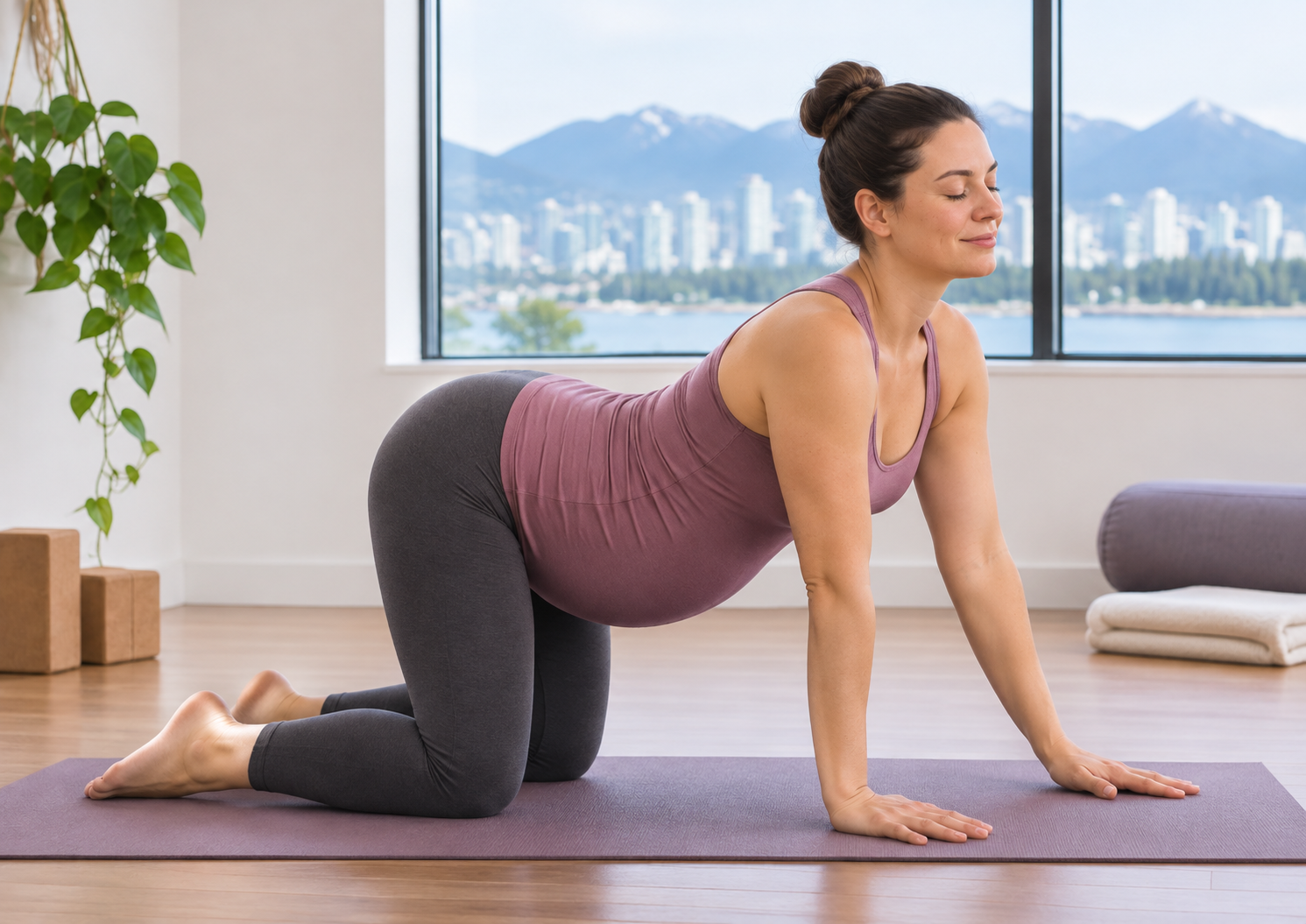
The 85-hour prenatal training is the heart of your specialization. A 200-hour certificate alone does not prepare you to teach pregnancy safely. The extra study gives you the knowledge to adapt poses, recognize red flags, and design classes by trimester.
Yoga Alliance sets the standards for these programs through its Registered Prenatal Yoga School requirements. The total curriculum runs 85 hours. At least 75 of those hours must be contact hours. Lead trainers must teach at least 36 of the 85 hours, and they must hold both the E-RYT and RPYT credentials.
The standards also require hands-on learning. Students observe experienced teachers leading prenatal classes for 10 hours, and they spend time teaching prenatal classes themselves. These requirements keep the training grounded in real practice.
Topics follow Yoga Alliance’s five educational categories: techniques, training and practices; teaching methodology; anatomy and physiology; yoga humanities; and professional essentials. Prenatal programs also include a section on the teacher’s relationship with health care professionals.
When you compare programs, check three things. First, confirm that the school is listed as a Registered Prenatal Yoga School. Second, ask about the lead trainers and their experience with pregnant students. Third, ask how much live interaction the course includes. Many schools offer online formats, but you still need the required contact hours and observation.
Step 3: Gain Teaching Experience and Register as an RPYT
Completing the training is not the final step. Yoga Alliance asks RPYT applicants to log at least 30 hours of prenatal yoga teaching after finishing the 85-hour training. You submit those hours when you apply.
This requirement is useful. It pushes you to teach real students soon after training, while the material is fresh. It also gives you a chance to notice what you still need to learn.
Here is the full path in order:
- Complete a 200-hour training with a Yoga Alliance Registered Yoga School and register as an RYT.
- Complete an 85-hour training with a Registered Prenatal Yoga School.
- Teach at least 30 hours of prenatal yoga after the prenatal training.
- Apply for the RPYT designation through Yoga Alliance.
You can read the official criteria on the Yoga Alliance teacher designations page. Requirements and fees can change, so always check the source before you apply.
Finding those first 30 hours takes some planning. You can offer free or low-cost community classes. You can partner with a friend who is pregnant. You can approach a studio that wants to add a prenatal session. Keep a simple log with dates, class lengths, and attendance, so your application is easy to complete.
What You Will Learn in Prenatal Training
A solid prenatal program covers much more than modified poses. It teaches you how pregnancy works and how yoga can respond to it.
Anatomy and physiology. You study how the body changes through each trimester. You learn about the growing uterus, shifting centre of gravity, increased blood volume, and hormones such as relaxin that soften connective tissue. You also look at common concerns such as back pain, pelvic girdle pain, swelling, and fatigue.
Trimester-specific teaching. Early pregnancy may bring nausea and tiredness. The second trimester often brings more energy. The third trimester calls for more support, rest, and preparation for birth. You learn to adjust class intensity, props, and sequencing for each stage.
Breath and relaxation. Many students come to prenatal yoga to feel calmer. You learn breathing practices, guided relaxation, and ways to support students during stressful moments. These tools can also help students prepare for labour.
Positions to avoid or modify. You learn why deep twists, lying flat on the back for long periods, closed-compression postures, and certain intense abdominal work usually need changes. You also learn how to offer alternatives without making students feel limited.
Labour, postpartum, and recovery. Many programs include birth basics, so you can speak confidently with students about what to expect. Some also cover the early postpartum period, since many students continue classes after delivery.
Communication and teaching skills. You practise creating a welcoming space, using inclusive language, and responding when a student shares something personal. You also learn to run intake conversations and to keep clear records.
The best courses blend theory and practice. They also teach you how to say, “I don’t know, please check with your doctor or midwife.” That sentence protects your students and builds trust.
Safety, Scope of Practice, and Working with Health Providers
Safety defines this specialty. Your students are growing a baby, and your decisions affect two people. Strong prenatal teachers respect their limits.
The SOGC and CSEP guideline notes that most pregnant people can be active, with exceptions for those who have contraindications. Examples include ruptured membranes, premature labour, persistent bleeding, placenta previa after 28 weeks, and pre-eclampsia. Other conditions call for individual medical advice. You do not decide who falls into those categories. Their health care provider does.
A simple intake process helps. Ask new students for their due date, any pregnancy complications, and whether their doctor or midwife has cleared them to exercise. You can also point them to the Get Active Questionnaire for Pregnancy from CSEP, which helps people decide whether to check in with a provider before they exercise.
Know when to stop a class or pause a student. Dizziness, shortness of breath that does not settle, abdominal pain, vaginal bleeding, fluid leakage, and regular painful contractions all call for stopping activity and contacting a provider. Teach students these signs in your first class.
Build respectful relationships with local professionals. Midwives, doulas, physiotherapists, and physicians often recommend trusted prenatal teachers to their clients. Organizations such as the Midwives Association of British Columbia and the Canadian Association of Midwives can help you learn how midwifery care works. Understanding their role makes your referrals more useful.
Finally, stay inclusive. Pregnancy looks different for every family. Use welcoming language for single parents, same-sex couples, surrogates, and people who have experienced loss. Kind, careful language makes your classes safer for everyone.
How to Choose the Right Training Program
Programs vary in quality, price, and format. A careful comparison saves time and money.
Start with credentials. For the RPYT, you need a Yoga Alliance Registered Prenatal Yoga School. Look for the school’s listing on the Yoga Alliance directory. Do not rely on marketing language alone.
Next, examine the trainers. Ask who teaches the course, how long they have taught prenatal yoga, and whether they work with pregnant students today. Real experience matters more than a long list of titles. You can see how we present our own educators on our staff page and read graduate feedback on our testimonials page.
Then compare the format. In-person training gives you direct feedback and time with real bodies. Online training offers flexibility. Some programs blend the two. Pick the format that fits your learning style and schedule, as long as it meets Yoga Alliance’s contact-hour requirements.
Check the total cost. Ask what tuition includes, such as manuals, practice teaching, and mentorship. Ask about payment plans and refund rules. Add the cost of Yoga Alliance registration and annual fees, which you can confirm on their website.
Finally, ask about support after graduation. Some schools help with job leads, practice-teaching opportunities, or mentoring. That support can shorten the time between certification and your first paid class.
 Career Opportunities for Prenatal Yoga Teachers in Vancouver
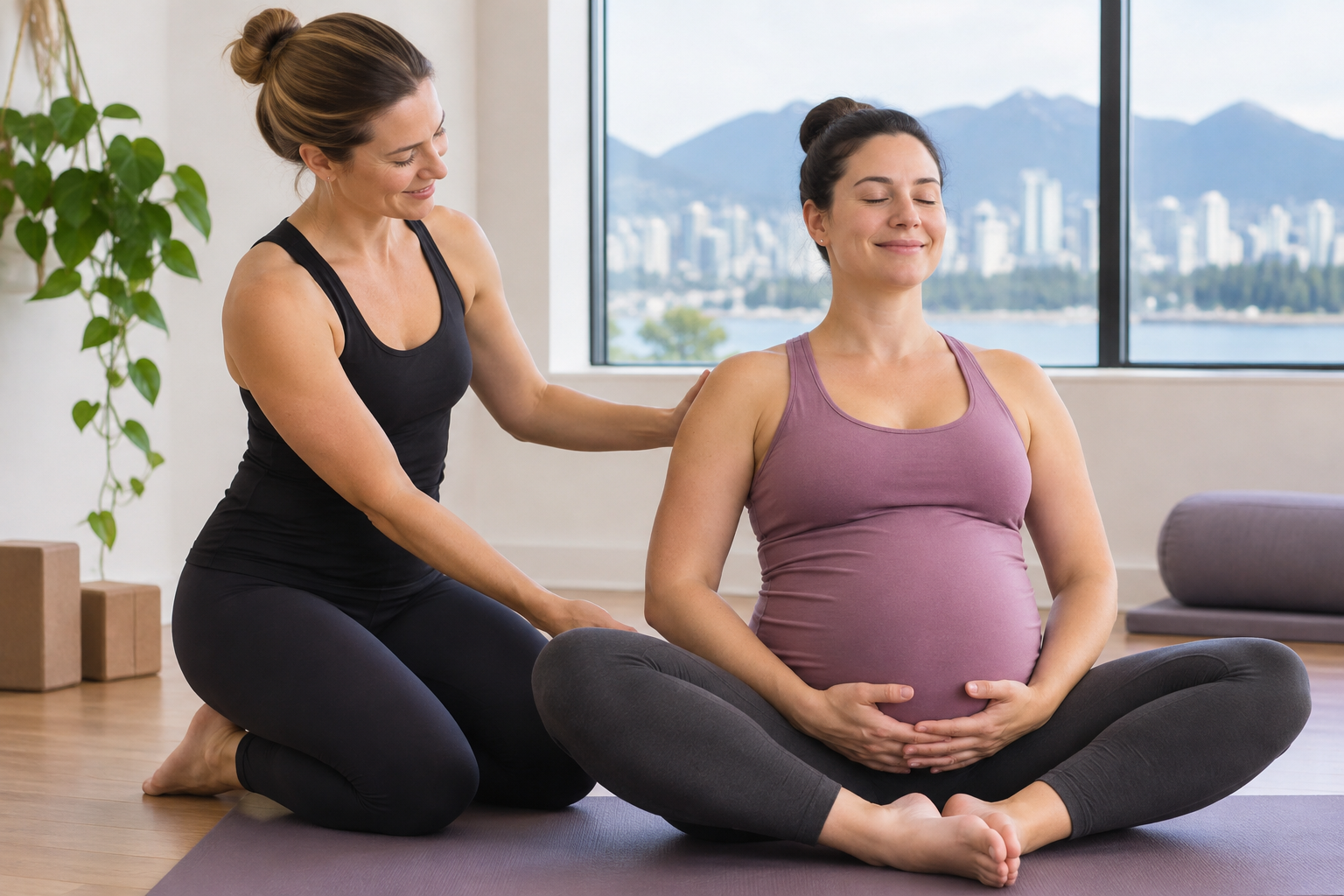
Prenatal yoga offers several career paths. Many teachers combine more than one.
Studio classes. Yoga studios often schedule weekly prenatal classes. These classes help studios keep students engaged through pregnancy. Studio work builds your teaching hours and your reputation.
Community and recreation programs. Community centres, health organizations, and family resource programs sometimes run prenatal movement sessions. These roles can reach students who do not attend studios.
Private sessions. One-on-one lessons let you tailor each session to a student’s needs. Private teaching often pays more per hour, but it requires more marketing and scheduling.
Workshops and series. Many teachers run four- to six-week prenatal series, birth preparation workshops, or couples’ sessions. A series builds community, because students move through pregnancy together.
Partnerships with birth professionals. Doulas, midwives, physiotherapists, and chiropractors may refer clients to you. In return, you can send students to them. These relationships grow slowly, so start early and stay professional.
Postnatal and parent-baby classes. Many prenatal teachers expand into postnatal yoga and “mom and baby” classes. Students often stay with a teacher they trust, so your first class can lead to years of work.
Mentoring and teacher training. With experience, you may assist in prenatal teacher trainings or mentor new teachers. Yoga Alliance requires prenatal lead trainers to hold E-RYT and RPYT credentials, so this path takes time and experience.
Income varies widely. It depends on your class size, location, number of hours, and whether you teach at studios or independently. Be cautious of any program that promises a specific salary. Instead, ask studios and working teachers what they realistically earn, and build your plan from real numbers.
Business Basics: Insurance, Taxes, and Pricing
Most yoga teachers work as independent contractors. That means you manage your own business, even if you teach at a studio.
Carry liability insurance. Many studios require it, and it protects you if a student claims an injury. Look for a policy that specifically covers prenatal yoga, because some insurers treat it as a specialty. Ask your insurer in writing before you start teaching.
Understand your tax duties. Self-employed teachers in Canada report their income and expenses, and they may need to register for GST/HST once they earn above the small supplier threshold. The Canada Revenue Agency explains the rules on its GST/HST registration page. An accountant can help you set up good records from the start.
Set clear prices. Decide on a drop-in rate, a class-pack rate, and a series rate. Review your prices once or twice a year. Consider offering a small number of discounted spots for students who need them.
Keep simple policies for cancellations, late arrivals, and attendance. Students appreciate clarity. Put your policies in writing and share them before the first class.
Building Experience, Trust, and a Reputation
Good teachers earn trust slowly. Several habits help.
Teach consistently. A weekly class at the same time and place builds a community faster than occasional sessions. Students return when they know what to expect.
Keep learning. Attend workshops, read current research, and join continuing education. The field changes as new studies appear. You can read the full 2019 Canadian Guideline for Physical Activity Throughout Pregnancy summary to see the evidence behind current recommendations.
Collect feedback. Ask students what helped and what confused them. Invite a trusted teacher to observe a class. Small changes can raise your teaching quality quickly.
Be honest about your experience. New teachers should say so. Students value sincerity more than a polished sales pitch. Share your credentials, your training school, and your approach on your website or studio profile.
Share useful content. Write short articles, post safe movement tips, or answer common questions. Avoid medical claims. Focus on helping people understand what to expect in class. For more ideas, browse the resources on our yoga teaching blog.
Frequently Asked Questions
Do I need to be pregnant or have children to teach prenatal yoga? No. Yoga Alliance does not require personal experience with pregnancy. You do need quality training, humility, and good listening skills.
How long does the whole process take? The training itself takes 285 hours in total, split between the 200-hour and 85-hour courses. Many people finish both within about a year, depending on format. You then need 30 teaching hours to apply for the RPYT.
Can I teach prenatal yoga with only a 200-hour certificate? Legally, nothing in BC stops you. Ethically and professionally, you should complete specialized training first. Insurers, studios, and students expect it.
Is online prenatal training acceptable? Many Registered Prenatal Yoga Schools offer online or blended formats. Confirm that the program meets Yoga Alliance’s contact-hour and observation requirements.
Conclusion: Your Path to Becoming a Prenatal Yoga Teacher in Vancouver
How to Become a Prenatal Yoga Teacher in Vancouver: Training, Certification & Career Opportunities comes down to a clear sequence. Complete a 200-hour training with a Yoga Alliance Registered Yoga School. Add an 85-hour training with a Registered Prenatal Yoga School. Teach at least 30 prenatal hours. Then apply for the RPYT credential.
The main takeaway is this: strong training and honest scope of practice protect your students and build your career. When you respect medical boundaries, keep learning, and form relationships with local birth professionals, you earn trust. That trust turns first classes into a lasting practice.
If you are ready to become a yoga teacher, explore our 200-hour yoga teacher training in Vancouver. You can meet the people behind the program on our about page, review common questions on our FAQ, or contact us with questions about dates and next steps. Then look at the Yoga Alliance RPYT requirements to plan your prenatal specialization.