 The Difference Between Yoga Teacher Training Programs in Vancouver
Vancouver offers a wide range of yoga teacher training options, but they are not interchangeable. Each organization has developed its own philosophy, structure, and learning environment. Prospective students often assume they are choosing between similar 200-hour certifications, when in fact they are choosing between very different educational experiences.
This article compares several of the most recognized providers in the Vancouver area — Karma Teachers, YYoga, Semperviva Yoga, Ajna Yoga, Vancouver School of Healing Arts (VSOHA), and Vancouver Yoga Teacher Training — and explains how their programs differ in delivery, intention, and student outcomes. The goal is not to rank programs, but to clarify what each one is designed to do so that students can make an informed decision based on learning style and professional goals.
Karma Teachers
Karma Teachers approaches yoga education through a community-centered and accessibility-focused lens. The organization has historically emphasized inclusivity and service, aiming to make yoga training available to individuals who may not see themselves represented in conventional wellness spaces. This philosophy shapes both the structure of the training and the culture students experience throughout the program.
Rather than positioning teacher training purely as a professional credential, Karma Teachers often frames it as a combination of personal development and community engagement. Students may encounter discussions around equity, accessibility, and the broader social role of yoga alongside traditional subjects like sequencing and anatomy. The learning environment is typically collaborative and discussion-oriented, encouraging reflection as much as technical mastery.
This model tends to resonate with students who want yoga to intersect with social values or community work. Graduates may go on to teach classes, but many are equally motivated by applying yoga in outreach settings, education, or personal transformation rather than building a conventional studio-based teaching career.
YYoga
YYoga represents a large, studio-driven model of yoga education rooted in an established brand ecosystem. Because YYoga operates multiple studio locations and serves a broad membership base, its teacher training programs are closely connected to the practical realities of running classes within a modern urban studio environment.
The training structure often reflects this operational context. Students learn sequencing, cueing, and classroom management in ways that align with the expectations of contemporary studio audiences. The environment can feel fast-paced and professionally oriented, mirroring the energy of the studios themselves. Trainees are exposed to real-world teaching scenarios and may envision transitioning into teaching roles within similar studio systems.
This approach appeals to students who are already practicing regularly in studio settings and want to deepen their involvement in that environment. The emphasis is less on alternative applications of yoga and more on preparing instructors to function confidently within the flow of public classes, memberships, and modern wellness culture.
Semperviva Yoga
Semperviva Yoga has long been associated with lineage-informed instruction and a strong emphasis on traditional yogic frameworks. Its teacher trainings often integrate philosophical study, historical context, and mentorship-based learning alongside physical practice. This creates an experience that blends contemporary teaching methods with a respect for classical influences.
Students frequently describe this type of program as immersive and relationship-driven. The training environment encourages close interaction with faculty and a gradual development of teaching voice. Rather than focusing exclusively on technical checklists, the program often invites students to explore how philosophy informs practice and how teaching can reflect personal authenticity.
This structure suits individuals who are drawn to yoga’s historical roots and want their teaching to reflect a continuity of tradition. Graduates may teach in studios, but they often carry forward a strong philosophical orientation that shapes how they present yoga to their communities.
Ajna Yoga
Ajna Yoga has positioned itself as an independent school dedicated primarily to education rather than operating as a large studio brand. Its training model typically balances flexibility with structure, offering students a pathway that integrates modern learning tools with in-person instruction.
Programs in this category often attract individuals who want clear curriculum design without feeling immersed in a single studio culture. The emphasis tends to fall on understanding alignment, anatomy, and teaching methodology in ways that are accessible to students with varied professional backgrounds. Because the organization functions primarily as a training provider, its schedule and course delivery are shaped around educational outcomes rather than ongoing studio operations.
This format can appeal to career-changers, wellness professionals, or students seeking a focused educational container that stands apart from the rhythms of a retail-style yoga environment. The experience is often described as practical, structured, and adaptable to adult learners balancing other responsibilities.
Vancouver School of Healing Arts (VSOHA)
Vancouver School of Healing Arts occupies a distinct niche by emphasizing therapeutic and specialized applications of yoga. Its programs extend beyond general teacher training into areas such as yoga therapy and integrative wellness education. As a result, the tone of study often feels more academic and clinically informed than in many general certification programs.
Students entering this pathway may already hold foundational credentials or professional experience in health, bodywork, or counseling. Coursework frequently explores anatomy, adaptation, and the use of yoga as a supportive modality for specific populations. The intention is less about preparing graduates to teach large public classes and more about equipping them to work in targeted or individualized settings.
This environment attracts students interested in yoga as part of a broader healing profession. The training demands careful study and application, and graduates often move into roles that intersect with therapeutic practice rather than mainstream studio instruction.
Vancouver Yoga Teacher Training
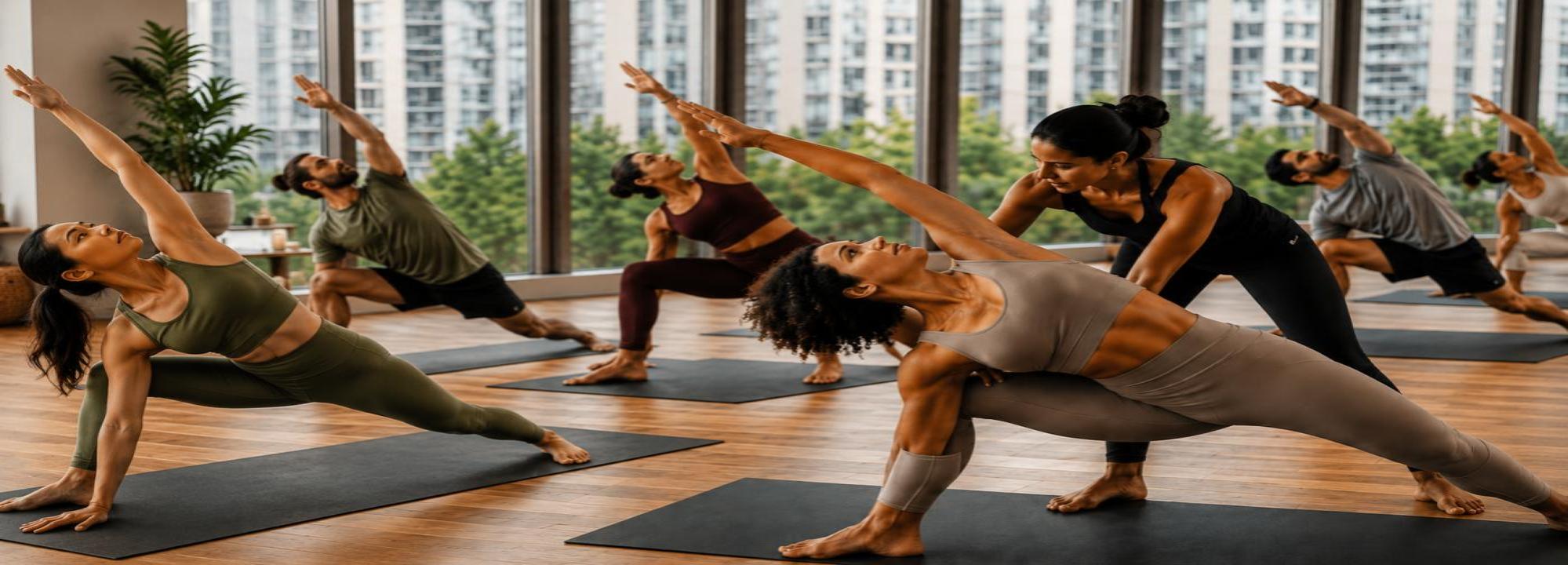
Vancouver Yoga Teacher Training represents an education-first model designed specifically to train teachers in a structured, in-person learning environment. Unlike studio-affiliated programs, this approach treats teacher training as its primary function rather than an extension of regular class operations. The curriculum is typically organized around progressive skill development, with students practicing teaching early and consistently throughout the program.
Because the focus remains on instruction rather than studio culture, the learning environment often resembles a classroom-based professional training. Cohorts move through material together, receiving direct feedback and repeated opportunities to refine their teaching. This structure prioritizes clarity, repetition, and applied methodology so that graduates leave with practical confidence in leading classes.
Students who choose this format often want a defined educational pathway and value face-to-face mentorship. The emphasis on fully in-person delivery reflects the belief that teaching is best learned through real-time interaction, observation, and guided practice rather than primarily through digital study.
How These Programs Differ in Learning Experience
Although all these organizations offer yoga teacher training, the student experience can vary significantly depending on which model they follow. Some environments feel like an extension of studio life, where trainees integrate into an existing yoga culture. Others function more like academic programs, with structured progression and clearly defined competencies. Still others emphasize service, philosophy, or therapeutic specialization.
These differences influence not only what students learn, but how they learn. A community-driven program may prioritize dialogue and reflection. A studio-based training may simulate the pace of teaching public classes. A therapeutic school may demand analytical study. An education-first model may emphasize repetition and supervised teaching practice.
Understanding this distinction helps explain why graduates from different programs can emerge with very different strengths, even when all hold a 200-hour certificate.
Choosing Between Them Depends on Your Goal
The most important factor in selecting a yoga teacher training is not which brand is most visible, but which structure aligns with your intention. Students seeking personal exploration may thrive in discussion-oriented environments. Those aiming to teach immediately may prefer programs centered on applied methodology. Individuals interested in wellness professions may look for therapeutic depth, while others want immersion in a studio culture they already love.
Each of Vancouver’s major training providers has evolved to meet one of these needs. None of them represents a universal solution, and none is designed to serve every type of student.
Conclusion: The Difference Between Yoga Teacher Training Programs in Vancouver
The difference between yoga teacher training programs in Vancouver lies not in the number of hours they advertise, but in the educational models behind them. Karma Teachers emphasizes community engagement and accessibility. YYoga reflects a modern studio-based pathway. Semperviva integrates lineage and philosophy. Ajna Yoga offers an independent education-focused structure. Vancouver School of Healing Arts specializes in therapeutic application. Vancouver Yoga Teacher Training concentrates on structured, in-person teacher development.
Understanding these distinctions allows prospective students to choose intentionally. The right training is the one whose philosophy, format, and learning environment match how you want to grow as both a practitioner and a teacher.