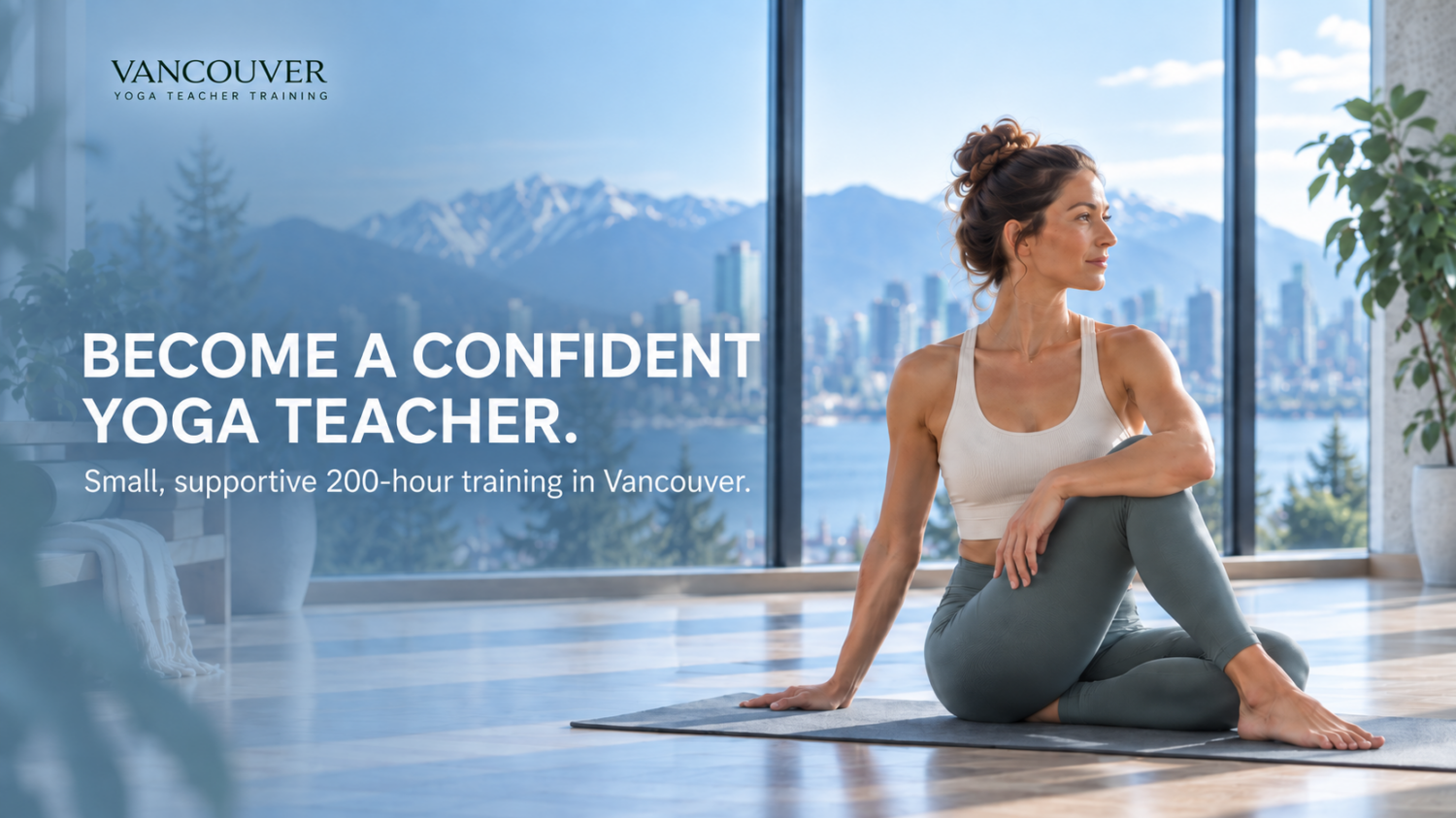
 The Landscape of Yoga Teacher Training in Vancouver Post-COVID
The landscape of yoga teacher training in Vancouver post-COVID has changed in visible and structural ways. Vancouver now holds a more selective, informed, and cautious yoga student population. Many prospective trainees approach programs with clearer expectations and stronger boundaries. COVID forced studios, teachers, and training providers to rethink delivery models quickly. That disruption permanently altered how training is structured, priced, and evaluated. Before COVID, volume mattered more than precision. After COVID, alignment matters more than speed. Students now assess safety, credibility, flexibility, and long-term value.
Vancouver reflects this shift clearly due to its educated and wellness-aware population. Hybrid learning models moved from fringe options to accepted standards. Online components now support rather than replace in-person training. Students expect transparent schedules and realistic workloads. They want clarity around certification outcomes and teaching readiness. The city also experienced a contraction of studios. Fewer spaces survived the pandemic period. Remaining studios now operate with tighter margins and sharper positioning. Teacher training programs must now justify their existence clearly. Marketing language that once worked now feels inflated or outdated. Students recognize vague promises quickly.
Vancouver trainees often research deeply before committing financially. Post-COVID anxiety also influenced learning preferences. Smaller groups now feel safer and more appealing. Weekend-based and modular formats attract working professionals. Vancouver’s cost of living increased during this period. That reality affects training affordability and time commitment decisions. The post-COVID environment favors grounded programs with realistic claims. The era of excess optimism faded. What remains is discernment, practicality, and demand for integrity.
Structural Shifts in Vancouver Yoga Teacher Training After COVID
Structural changes define the post-COVID yoga teacher training environment in Vancouver. Training formats no longer rely on intensive full-time immersion as the default. Weekend and modular formats now dominate enrollment interest. Many trainees balance work, family, and financial constraints more carefully. Programs that ignore these realities struggle to fill cohorts. Online theory components now support practical in-person learning.
This hybrid structure reduces burnout and increases retention. Vancouver trainees appreciate flexibility without sacrificing physical practice quality. Post-COVID trainees also expect predictable scheduling. Unclear timelines reduce trust quickly. Programs now require stronger operational clarity. Class size expectations shifted as well. Smaller cohorts now feel intentional rather than limiting. Trainees value access to instructors more than crowd energy. COVID also normalized recording and replay options. Students now expect access to missed material. This expectation changed instructor preparation standards. Teacher trainers must now communicate more clearly and concisely. Long, unstructured lectures feel outdated.
Vancouver programs increasingly emphasize embodied learning paired with applied theory. Trainees want to understand anatomy functionally, not abstractly. COVID heightened awareness of physical and mental health boundaries. Training now includes stronger consent language and trauma awareness. Vancouver students respond positively to grounded nervous system education. Programs that ignore this trend appear disconnected.
Certification timelines also shifted. Many trainees prefer extended programs over rushed formats. This pace allows integration and reflection. Post-COVID life feels less predictable overall. Programs that respect energy cycles perform better. Vancouver’s training landscape now rewards structure, empathy, and adaptability. Providers who adjusted intentionally gained credibility. Those who resisted adaptation lost relevance.
Student Expectations and Decision-Making in the Post-COVID Era
Post-COVID yoga teacher trainees in Vancouver approach decisions differently than before. They ask sharper questions earlier in the process. Many evaluate return on investment carefully. Training now competes with other professional development options. Students want transferable skills beyond teaching yoga classes. Communication, self-regulation, and leadership matter more now. COVID disrupted identity and career certainty for many people. Yoga training often serves as recalibration rather than escape. Vancouver trainees seek realism over fantasy. They want honest conversations about teaching income. Inflated earning claims damage trust quickly. Students now expect transparency around teaching pathways. They want to know where graduates realistically teach. They also value mentorship access post-graduation. One-time certification feels insufficient to many trainees. Post-COVID students prefer ongoing support structures. Vancouver’s market rewards programs that offer continuity. Students also scrutinize instructor experience more closely. They value lived teaching experience over celebrity status. Post-COVID skepticism reduced tolerance for performative branding. Authenticity matters more than polish. Students also prioritize emotional safety during training. COVID heightened sensitivity to group dynamics. Clear boundaries now feel essential. Vancouver trainees expect respectful facilitation styles. Programs that ignore power dynamics feel outdated. Decision timelines also shortened. Many students decide once trust is established. Overly aggressive sales tactics repel post-COVID buyers. Vancouver trainees reward calm confidence instead. Programs that respect autonomy convert better. The post-COVID student values clarity, maturity, and grounded delivery.
Studio Economics and Training Viability in Vancouver Post-COVID
Studio economics strongly influence yoga teacher training viability in Vancouver. COVID eliminated many marginal studios permanently. Surviving studios operate with leaner models. Rent, staffing, and insurance costs increased significantly. Teacher training often supports studio sustainability financially. However, post-COVID trainees resist feeling monetized. Training must feel educational, not extractive. Vancouver studios now balance financial survival with ethical positioning. Many studios limit cohort sizes intentionally. This approach aligns with safety and learning quality. It also limits revenue potential. Programs now rely on pricing clarity rather than volume. Vancouver trainees accept higher prices when value is clear. Hidden costs damage trust quickly. Studios also face scheduling limitations post-COVID. Evening and weekend availability matters more now. Daytime intensives attract fewer participants. Hybrid delivery reduces physical space strain. This flexibility helps studios manage costs. COVID also reshaped instructor availability. Many senior teachers left the industry. Remaining trainers often teach across multiple platforms. Consistency now matters more than prestige. Vancouver trainees value dependable instructors. Studio-based programs must now communicate stability clearly. Uncertain studio futures create hesitation. Programs that separate training identity from studio survival feel safer. Vancouver’s training landscape now favors financial realism. Romanticized studio narratives feel fragile. Sustainable programs align pricing, capacity, and delivery honestly. Post-COVID economics reward transparency and discipline.
Regulation, Credibility, and Market Maturity After COVID
Post-COVID Vancouver yoga teacher training reflects increased market maturity. Students no longer assume all certifications hold equal value. They research recognition, assessment methods, and instructional rigor. COVID exposed weaknesses in many fast-track programs. Graduates often felt unprepared to teach independently. This outcome reshaped expectations permanently. Vancouver trainees now value evaluation over attendance. Practical assessment feels more credible than hours logged. Programs that demonstrate competency build trust faster. COVID also increased skepticism toward unregulated claims. Students now seek clarity around standards and outcomes. Instructor bios receive closer scrutiny. Experience matters more than titles. Vancouver’s educated population accelerates this trend. Market maturity also reduced tolerance for vague spirituality. Grounded language now resonates more strongly. Programs that balance tradition with modern application perform better. COVID normalized evidence-based wellness discussions. Anatomy, nervous system regulation, and psychology gained relevance. Vancouver trainees appreciate practical integration. They want tools they can apply immediately. Post-COVID credibility also depends on ethical communication. Fear-based marketing feels inappropriate now. Calm authority builds confidence instead. Programs that overpromise feel misaligned. Vancouver’s post-COVID market rewards humility and precision. Training providers must demonstrate lived understanding. Teaching experience now outweighs theoretical alignment. The landscape favors educators who evolved intentionally. Maturity now defines success more than expansion.
Conclusion: The Landscape of Yoga Teacher Training in Vancouver Post-COVID
The landscape of yoga teacher training in Vancouver post-COVID reflects lasting transformation. COVID did not pause the industry temporarily. It reshaped priorities permanently. Vancouver now supports fewer but stronger training programs. Students arrive with clearer intent and higher standards. Flexibility, structure, and transparency now define success. Hybrid delivery remains an expectation, not a novelty. Smaller cohorts feel intentional and safe. Financial realism replaced inflated narratives. Studios and training providers must operate with discipline. Credibility now depends on assessment, not marketing volume. Vancouver trainees value maturity over charisma. Emotional safety and nervous system awareness matter deeply. Programs that respect autonomy perform better long-term. Post-COVID students reward honesty quickly. They disengage just as quickly when misalignment appears. The market now filters aggressively. Only grounded, adaptable programs remain viable. Vancouver’s yoga training environment reflects broader cultural shifts. People want skills that support real life. Teaching yoga now requires more than passion. It requires clarity, responsibility, and restraint. The post-COVID era favors educators who evolved consciously. The landscape will continue refining itself. Expansion will follow integrity, not trend chasing. Vancouver’s future yoga teachers will emerge more prepared, realistic, and resilient. That outcome benefits students, studios, and the wider community.