

 Trauma-Informed Yoga Teacher Training in Vancouver: What Every New Yoga Teacher Should Know
Yoga teachers meet people at their most open. Students arrive tired, stressed, grieving, or hopeful. Some arrive carrying painful history in their bodies. You will not always know who they are. That is why Trauma-Informed Yoga Teacher Training in Vancouver: What Every New Yoga Teacher Should Know matters to anyone who plans to lead a class.
This guide explains what trauma-informed teaching is, and what it is not. You will learn how trauma can show up in a yoga room. You will see how to adjust your language, your touch, your sequencing, and your space. You will also learn where your role as a teacher ends, and what to look for in a training program.
You do not need to be a therapist to teach with care. You do need to understand a few core ideas and practice them until they feel natural. Good training gives you those tools before you stand in front of your first class.
What “Trauma-Informed” Actually Means
Trauma-informed does not mean trauma treatment. It means you teach with an awareness that trauma is common and that it affects how people experience their bodies. You then build your classes to reduce the risk of harm.
Trauma is a response to an overwhelming event or long period of stress. Examples include abuse, assault, accidents, war, medical trauma, neglect, and discrimination. The event is only part of the story. Trauma is also about how the nervous system responded and what happened afterward. Two people can live through the same event and respond very differently.
Trauma is also common. Canadian research suggests that most adults experience at least one potentially traumatic event in their lives. Around 9 percent meet the criteria for post-traumatic stress disorder (PTSD) at some point. The National Institute of Mental Health offers a clear overview of PTSD symptoms and treatment. Many more people live with trauma-related stress that never earns a formal diagnosis.
So a trauma-informed teacher assumes that someone in the room has a trauma history. You do not ask anyone to prove it. You simply teach in a way that protects everyone.
It helps to separate three terms. A trauma-informed teacher understands trauma and avoids causing harm. A trauma-sensitive program is usually designed for a specific group, such as a clinic or shelter. Trauma therapy is delivered by licensed clinicians. A yoga teacher does not provide therapy. Keeping these roles clear protects your students and protects you.
Trauma-informed teaching is also not a style of yoga. You can apply it to vinyasa, yin, hatha, or restorative classes. It is a set of habits that shapes how you invite, speak, and respond.
Why New Teachers Need This Training
Many new teachers learn postures, anatomy, and sequencing first. These skills matter. But a class is more than a series of shapes. It is a room full of nervous systems.
Yoga draws people who want to feel better. Many also hope it will help with anxiety, grief, or old pain. That hope is reasonable. Research suggests yoga can help some people. One well-known 2014 randomized trial published in the Journal of Clinical Psychiatry studied women with chronic, treatment-resistant PTSD. The group that took a trauma-sensitive yoga class showed larger drops in PTSD symptoms than the comparison group. The results were promising. Still, they came from one modest study. Researchers continue to explore the topic.
The same practices that help one person can overwhelm another. Holding a pose in silence can feel calming to one student. It may bring up frightening sensations for another. Closing the eyes can feel restful or terrifying. A hands-on adjustment can feel supportive or violating.
New teachers also tend to carry pressure. You want to be liked. You want your class to flow. You may feel tempted to push through a moment of discomfort in the room. Training teaches you to slow down instead. It gives you language and a plan for those moments.
There is also a professional reason. Teachers who understand trauma respond better to difficult situations. They protect students and reduce the chance of complaints or injury. They also build trust, which keeps students coming back.
Finally, this knowledge protects you. Teaching without it can lead you to overstep, to give advice you are not qualified to give, or to carry more than you should. A solid foundation keeps your boundaries healthy.
How Trauma Can Show Up in a Yoga Class
You cannot diagnose trauma by looking at someone. You can learn to notice signs that a student may feel overwhelmed. Treat these as clues, not conclusions.
The nervous system responds to perceived threat. Most people know the fight-or-flight response. Some people also freeze or collapse. In class, a student in a stress response might breathe fast, sweat, or shake. They might leave the room suddenly. They might stare ahead, seem far away, or stop responding to cues. Another student may become very still and quiet. Quiet does not always mean calm.
Psychologists often describe a “window of tolerance.” This is the range in which a person can feel their emotions and sensations without becoming overwhelmed or shutting down. Trauma can narrow that window. A mild trigger might push someone out of it quickly. Your goal as a teacher is to help students stay inside their window. You do this by offering choice, pacing the class, and avoiding intense demands.
Common triggers in a yoga room include:
- Sudden loud sounds or music changes
- Dim or dark lighting
- Hands-on touch without clear consent
- Lying face-down or on the back with eyes closed
- Poses that expose the chest, hips, or belly
- Long, silent holds with no guidance
- Commands such as “surrender” or “let it all go”
Triggers are personal. A pose that disturbs one student may feel fine to another. You cannot remove every possible trigger. You can, however, reduce surprise and increase choice. Those two changes lower risk for nearly everyone.
If a student seems overwhelmed, stay calm. Speak quietly. Remind them that they can adjust, rest, open their eyes, or leave the room. Do not rush over, grab them, or demand an explanation. After class, check in privately and briefly. Offer support without pressing for details.
The Core Principles in Practice
Trauma-informed care has a recognized framework. The U.S. Substance Abuse and Mental Health Services Administration (SAMHSA) describes six principles in its guidance on trauma and trauma-informed approaches. The principles are safety, trustworthiness and transparency, peer support, collaboration and mutuality, empowerment with voice and choice, and attention to cultural, historical, and gender issues. Yoga teachers can apply each one in simple ways.
Safety. Students need to feel physically and emotionally safe. Start on time, explain the plan, and show students where the exits and restrooms are. Keep the room tidy and the lighting steady.
Trustworthiness and transparency. Say what you will do before you do it. If you plan to end with a guided relaxation, name it. If you offer touch, explain when and why. Keep your promises about class length and content.
Peer support. Community can heal. You can encourage a welcoming atmosphere without forcing sharing. Greet students by name. Avoid ranking or comparing bodies.
Collaboration and mutuality. Teach with students, not at them. Ask for feedback. Invite questions. Let students shape their own experience.
Empowerment, voice, and choice. This principle matters most in a yoga room. Offer options in every pose. Let students decide how far to go, when to rest, and what to skip. Trauma often involves a loss of control. Choice helps restore a sense of agency.
Cultural, historical, and gender awareness. Recognize that people carry different histories. Learn how racism, colonialism, homophobia, and gender-based violence affect health and trust. In Vancouver, this includes learning about the Indigenous peoples of this land. The city sits on the unceded territories of the Musqueam, Squamish, and Tsleil-Waututh Nations. Respectful teaching acknowledges this history and avoids careless use of cultural symbols.
Many yoga approaches also build on the work of the Trauma Center at Justice Resource Institute. This program developed Trauma Center Trauma-Sensitive Yoga (TCTSY). You can read about its methods at traumasensitiveyoga.com. TCTSY focuses on invitations, interoception, and choice-making. Many teacher trainings draw on similar ideas.
 Language and Cueing That Support Safety
Your words shape how students feel. Small changes make a big difference.
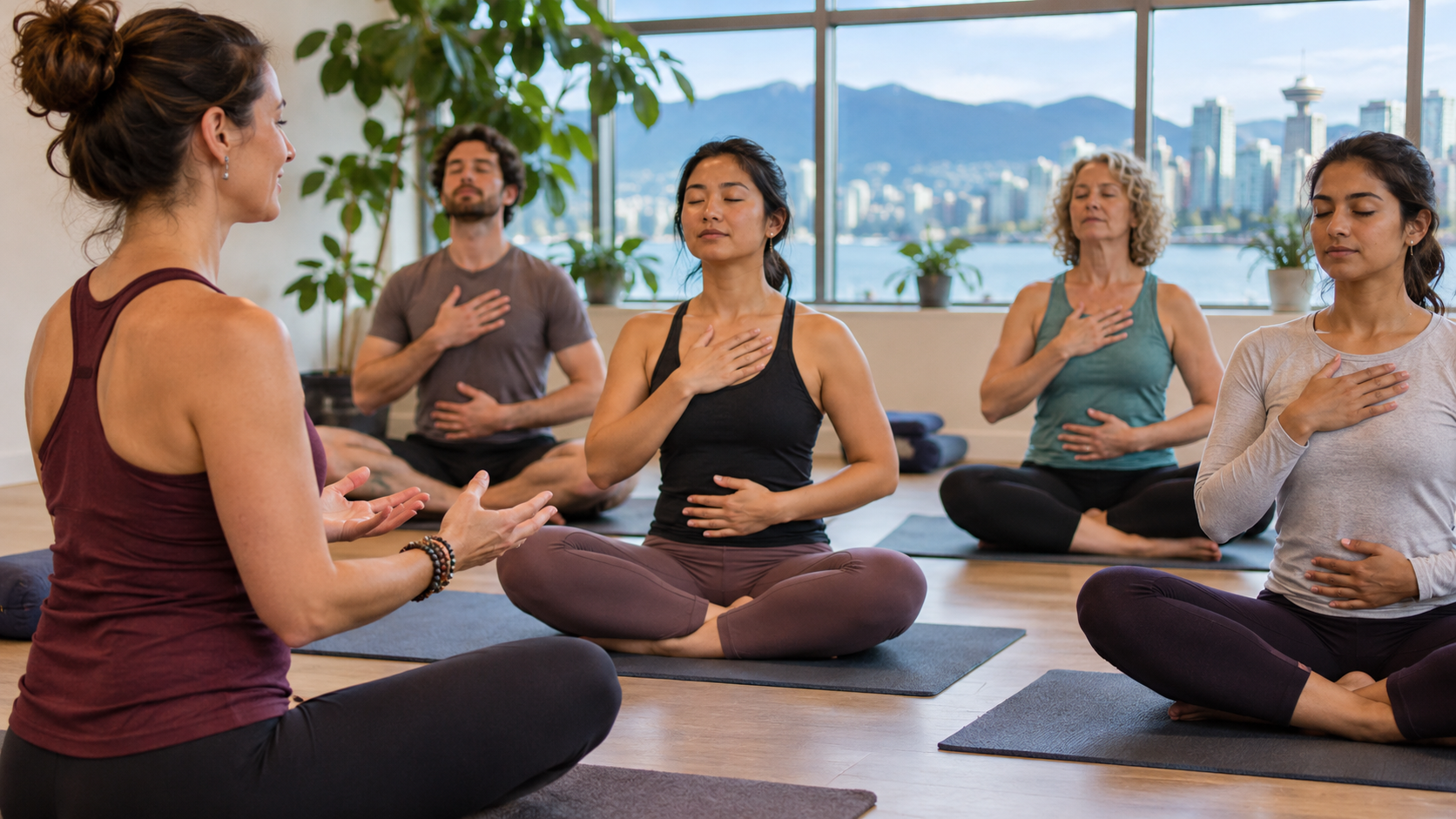
Use invitations instead of commands. Compare “Close your eyes” with “You may close your eyes, or rest your gaze on the floor.” The second version gives a choice. It also tells students that either option is acceptable.
Here are more examples:
- Say “if it feels right for you” instead of “you must.”
- Say “notice” instead of “feel” or “release.”
- Say “find a shape that works” instead of “go deeper.”
- Say “take a break whenever you like” instead of “hold it.”
Avoid language that assumes an outcome. Phrases like “let go of everything that hurts you” can stir up painful material. Students may not want to release anything today. Avoid pushing emotional breakthroughs. You do not need students to cry, surrender, or heal in your class.
Be careful with body-focused cues. “Open your heart” or “open your hips” can feel invasive. Anatomical, neutral language usually works better. Try “Lift your chest” or “Spread your feet wide.” Describe actions instead of feelings.
Keep your tone steady and calm. Speak at a moderate pace. Pause often. Silence is not a problem, but long silence with no guidance can leave anxious students alone with their thoughts. A short, grounding cue every few breaths helps.
Offer sensory anchors. Invite students to feel their feet on the floor, notice the sounds in the room, or name an object they can see. These tools bring attention to the present. They can help someone who feels pulled into a memory.
You will not get every phrase right. Good teachers repair mistakes. If you realize a cue was unhelpful, adjust. “Let’s try that differently” works well. Practicing this language during teacher training helps it become habit.
Touch, Adjustments, and Consent
Hands-on assists were once standard in many yoga classes. Today, many trauma-informed teachers use them rarely or not at all. Touch carries risk. It can cross boundaries, even when your intention is kind.
Some students welcome touch. Others do not. Many have reasons they will never tell you. A student may freeze rather than refuse. That makes silence a poor sign of consent.
If you choose to offer touch, follow these steps:
- Ask before every adjustment. Ask each time, not only at the start of the series.
- Ask in private or in a way that allows a quiet “no.” Avoid putting someone on the spot in front of the class.
- Explain what you plan to do. Say where your hand will go and why.
- Use a consent system. Some studios hand out small cards or tokens that students flip to show whether they want assists.
- Respect the answer with no follow-up. Do not ask again or look disappointed.
- Stay ready to stop. If a student tenses or pulls away, remove your hands immediately.
Many teachers replace touch with other tools. You can demonstrate a pose, use props, or give a verbal cue. You can place a block under a student’s hand or offer a strap. These choices support the pose without crossing a boundary.
Also consider power. As the teacher, you hold authority in the room. Students may feel unable to say no to you. Be mindful of that dynamic. Do not rely on touch to show care or to fix a posture. Most alignment issues have non-contact solutions.
Training programs should practice consent skills. Role-playing and peer feedback build confidence. You want asking to feel natural, not awkward.
Designing Classes and Spaces That Feel Safe
A trauma-informed class begins before the first breath. The space, the structure, and the pacing all matter.
Set up the room with care. Keep lighting soft but not dark. Make sure students can see the door. Let them choose where to place their mats, including near the back or the wall. Avoid facing students directly toward a closed door. Keep clutter off the floor.
Be predictable. Share an outline at the start. Tell students what comes next. If the plan changes, say so. Predictability reduces anxiety.
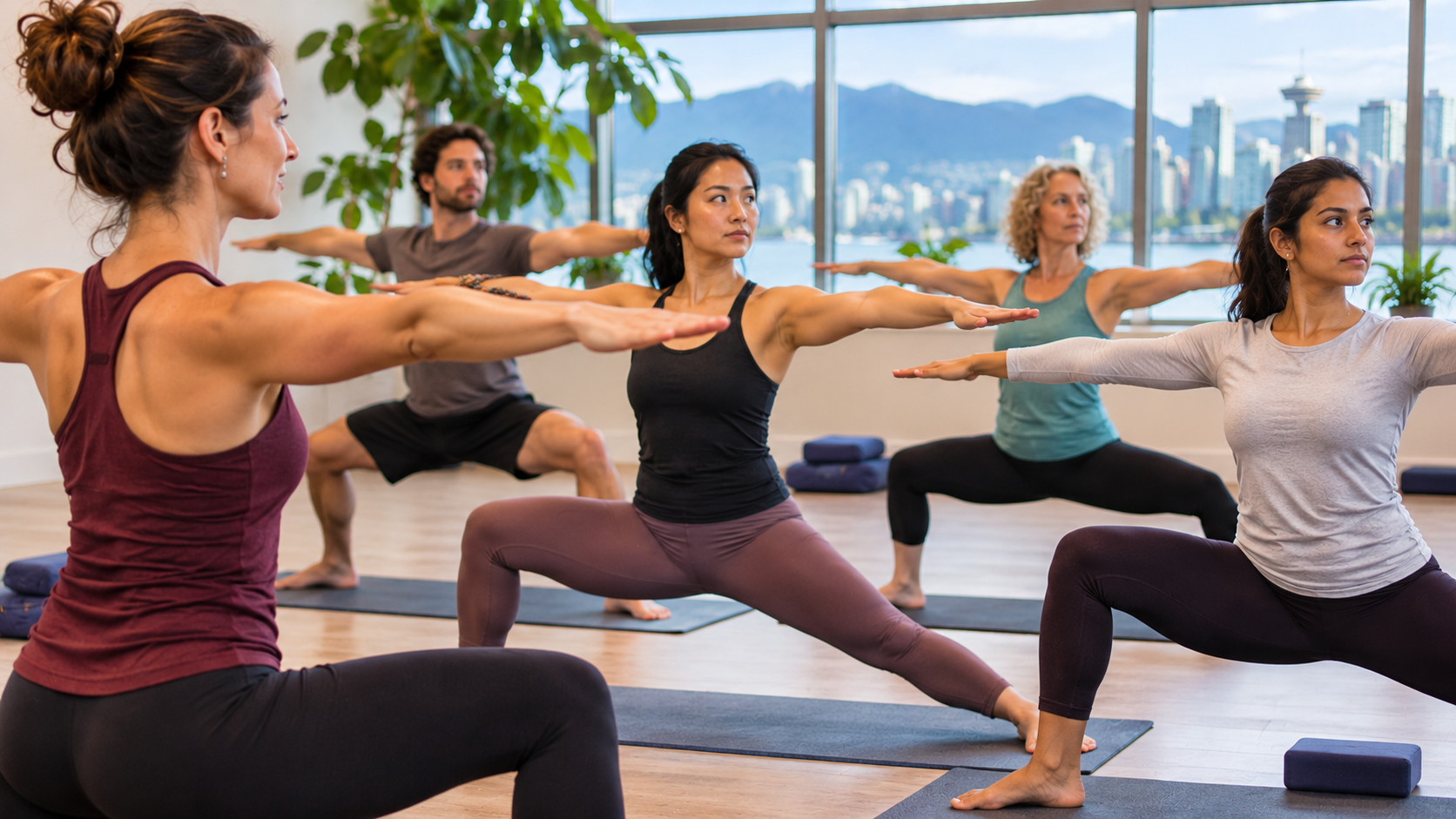
Offer options in every pose. Teach a basic version, a more supported version, and an alternative. Include rest postures such as child’s pose or a simple seated position. Remind students that rest is always valid.
Choose sequences thoughtfully. Many trauma-informed teachers use gentle, steady movement. They avoid fast transitions or extreme intensity. They may limit long holds in vulnerable positions. They often keep the pace grounded and the instructions clear.
Use breathwork carefully. Breath practices can affect the nervous system in strong ways. Intense techniques, such as breath retention or rapid breathing, may cause dizziness or distress. Start with simple, natural breathing. Invite students to skip any practice that feels uncomfortable.
Handle relaxation with care. Final rest can feel vulnerable. Offer variations, such as lying on the side, sitting upright, or keeping the eyes open. Give a clear ending, and bring students back with gentle cues.
Plan for noise and music. Avoid sudden sounds. Keep volume low and consistent. Tell students if you will use a bell or singing bowl.
Also think about access. Offer sliding-scale or community classes where possible. Consider mobility, body size, and neurodiversity. Trauma-informed teaching and inclusive teaching often overlap, because both aim to make people feel respected.
Knowing Your Scope of Practice
This section may be the most important. A yoga teacher is not a therapist, counsellor, or doctor. In British Columbia, yoga teaching is not a regulated profession. That makes personal ethics and clear boundaries even more important.
Your role is to teach yoga. It is not to diagnose, treat, or counsel. If a student tells you about trauma, listen with kindness. Then guide them toward qualified support. You do not need to probe, interpret, or offer therapy.
Here is how to handle common situations:
- A student discloses trauma. Thank them for trusting you. Keep your response short and calm. Avoid asking for details.
- A student seems in distress. Check in quietly. Offer water, a break, or a chance to leave.
- A student mentions thoughts of self-harm. Take it seriously. In Canada, anyone can call or text 988, the national suicide crisis helpline, at any time. You can learn more at 988.ca. In British Columbia, the Mental Health Support Line is 310-6789, with no area code needed. If someone is in immediate danger, call 911.
- A student asks for medical advice. Suggest they speak with their doctor or a regulated health professional. HealthLink BC at 8-1-1 can help people find services.
Referral resources help too. Keep a short, printed list of local options, such as community mental health services, counselling organizations, and crisis lines. The Canadian Mental Health Association, BC Division is one place to start.
Protect confidentiality. Do not share a student’s disclosure with others unless safety requires it. Keep clear records if you run a business, and follow privacy rules that apply to you.
Remember that yoga is a complement, not a replacement, for professional care. Avoid claims such as “yoga will heal your trauma.” Honest language builds trust and keeps you ethical. It also aligns with the standards set by professional bodies. Yoga Alliance International publishes a code of conduct that covers scope of practice and professional behaviour. Read it before you teach.
Caring for Yourself as a Teacher
Teaching with care takes energy. When you hold space for others, you absorb some of the weight. Over time, this can lead to fatigue, stress, or burnout. Trauma-informed teachers pay attention to their own well-being.
Start with your own practice. Keep a personal routine that you do not teach. Let yourself be a student. Attend other teachers’ classes. Notice what makes you feel safe, and what does not.
Build boundaries. Decide how and when you respond to messages. Do not give private counselling. Say no to requests that fall outside your role. Boundaries protect both you and your students.
Seek mentorship. Talk with an experienced teacher about difficult moments. Share concerns without breaching privacy. Mentors can offer perspective and reduce isolation.
Consider your own history. Many people come to yoga teaching because of personal healing. That is a strength, but it needs care. If you carry unresolved trauma, consider working with a therapist. Teaching can bring old material to the surface. Support makes it easier to stay steady.
Rest matters too. Take breaks between classes. Sleep well. Spend time outside. Vancouver offers plenty of options, from the Seawall to the North Shore trails. Small habits add up over a long teaching career.
Finally, keep learning. Trauma research continues to evolve. Take continuing education courses. Read books and studies from reliable sources. Stay open to feedback. No teacher stops growing.
 What to Look For in a Vancouver Training
Not every yoga teacher training covers trauma in depth. Some include a single lecture. Others weave the topic through the entire program. Ask questions before you enroll.
Look for these qualities:
- Clear trauma-informed content. Ask how many hours cover trauma, consent, and scope of practice. Ask what materials the program uses.
- Experienced, qualified teachers. Ask about lead trainers’ credentials, years of teaching, and ongoing education. Look for trainers who work with mental health professionals or have extra training.
- Practical teaching practice. You need time to teach, receive feedback, and refine your language. Observation alone is not enough.
- Recognition by Yoga Alliance. A school registered with Yoga Alliance as a Registered Yoga School (RYS) meets that organization’s standards for curriculum and contact hours. Registration is voluntary, but it can make your credential easier to recognize.
- Small group size. Smaller groups often allow more feedback and discussion.
- Respect for culture and history. The program should teach yoga’s roots with honesty and respect. It should also address the Indigenous context of the land where you train.
- Transparency. The school should share its schedule, cost, requirements, and policies in plain terms.
Practical matters count as well. Check the schedule, location, and payment options. Ask about class size, assessments, and support after graduation. If possible, attend a class or speak with recent graduates.
At Vancouver’s own training programs, the learning environment matters as much as the curriculum. A school that models consent, choice, and respect teaches those values by example. If a program makes you feel safe, you can offer the same to your future students.
Our 200-hour yoga teacher training in Vancouver is built on these principles. You can also explore the rest of our site at Yoga Teacher Vancouver to learn more about our teachers and approach.
Conclusion: Teach With Awareness and Care
Trauma-Informed Yoga Teacher Training in Vancouver: What Every New Yoga Teacher Should Know comes down to one idea. Teach as though trauma is part of the room, because it often is. You do this by offering choice, using invitational language, asking before touch, building predictable classes, and respecting the limits of your role.
You do not need to be perfect. You do need to be willing to learn and adjust. Each class gives you a chance to practice. Over time, these habits become part of who you are as a teacher.
The main takeaway is simple. Safety and choice come first. When students feel in control of their own bodies, they can explore yoga on their own terms. That is the heart of trauma-informed teaching.
If you are ready to become a yoga teacher, explore our 200-hour yoga teacher training in Vancouver. You will build strong teaching skills in a supportive, thoughtful setting. Visit Yoga Teacher Vancouver to meet our team, read more guides, and take the next step toward teaching with confidence.