
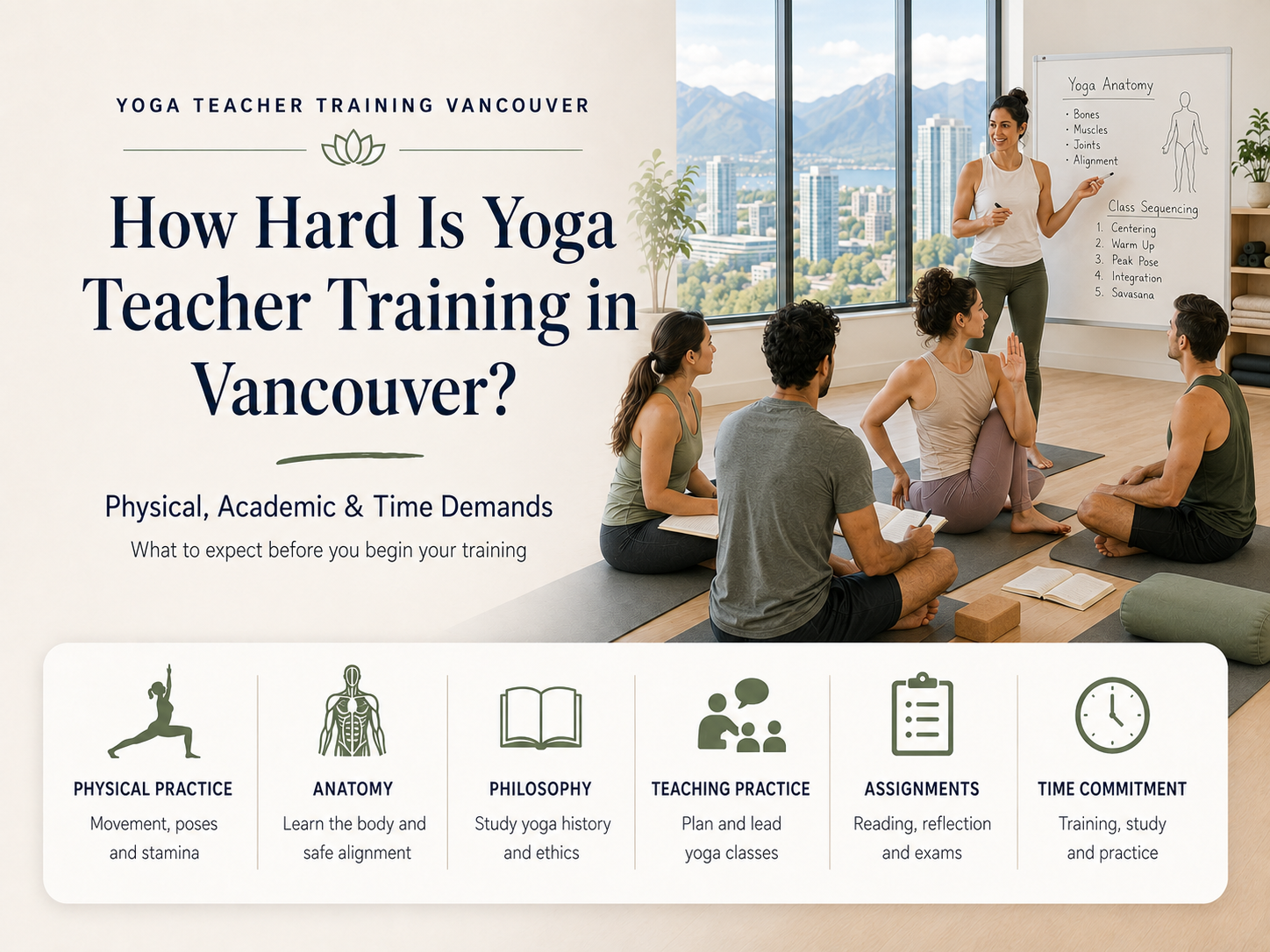
 How Hard Is Yoga Teacher Training in Vancouver? Physical, Academic & Time Demands
If you’re thinking about signing up for a yoga teacher training (YTT) program, you’ve probably asked yourself one question more than any other: how hard is it, really? How Hard Is Yoga Teacher Training in Vancouver? Physical, Academic & Time Demands is the question this article sets out to answer honestly, without the marketing gloss you’ll find on most training websites.
The short answer is that YTT is demanding, but not in the way most people expect. It’s less about touching your toes and more about stamina, discipline, and mental endurance. You don’t need to be the most flexible person in the room. You do need to be ready for long days, dense study material, and a level of self-reflection that catches many students off guard.
This guide breaks down the real physical, academic, and time demands of yoga teacher training in Vancouver, so you can walk in prepared instead of surprised.
What Yoga Teacher Training Actually Involves
Most yoga teacher training programs in Vancouver follow the 200-hour standard set by Yoga Alliance, the main credentialing body for yoga teachers worldwide. This isn’t an arbitrary number. It reflects a curriculum built around four core areas: techniques and practice, anatomy and physiology, yoga philosophy and ethics, and teaching methodology.
According to Yoga Alliance’s published standards, a 200-hour program must include roughly 75 hours of techniques training and practice, 30 hours of anatomy and physiology, 30 hours of yoga humanities (philosophy, history, and ethics), and 50 hours of professional essentials, which covers teaching methodology and practicum time. The remaining hours are distributed at each school’s discretion. You can review the full breakdown of Yoga Alliance’s 200-hour requirements if you want to see exactly how the hours are structured.
That means a 200-hour training isn’t 200 hours of doing yoga poses. It’s closer to a part-time academic program layered on top of a physical practice. Students read textbooks, write essays or reflections, memorize anatomical terms, practice teaching in front of peers, and receive detailed feedback on their cueing and sequencing. Many programs also require homework between sessions, including personal practice logs, observation hours, or written assignments.
In Vancouver specifically, most schools run either an intensive format (four to six weeks, full-time) or a weekend format (spread across three to six months). Both paths lead to the same certification, but they demand very different things from your schedule and your body.
The Physical Demands: Can Your Body Handle It?
This is where most prospective students focus their worry, and it’s worth addressing directly. You do not need advanced flexibility or years of practice to start a 200-hour YTT. Reputable programs are designed for a range of body types and experience levels. What they do require is consistency and the ability to move your body for extended periods, several days in a row.
A typical training day includes two to three hours of asana (posture) practice, sometimes split into a morning and evening session. Over a weekend or intensive block, that adds up to a level of physical repetition your body may not be used to, even if you’ve practiced yoga casually for years. Muscles you rarely engage, wrists, hip flexors, shoulders, get worked hard and often. Soreness in the first week is common. So is fatigue.
The National Center for Complementary and Integrative Health (NCCIH) notes that yoga is generally low-impact and safe for healthy people when practiced appropriately, but injuries can still happen, especially with repetitive strain or pushing past your limits. Sprains and strains are the most common issues, and serious injuries remain rare according to NCCIH’s review of the research. Still, the risk rises when students try to keep up with more advanced classmates instead of listening to their own bodies.
The physical demand isn’t really about achieving deep backbends or perfect handstands. It’s about endurance: staying present and engaged through hours of movement, day after day, while your body adapts to new demands. Students who prepare with a few weeks of regular practice beforehand, even just three or four sessions a week, tend to find the physical side far more manageable.
 The Academic Workload: Anatomy, Philosophy, and Teaching Methodology
The academic component surprises far more students than the physical one. Yoga teacher training is not just movement, it’s a real curriculum with real coursework. You’ll study skeletal and muscular anatomy, learn how joints move safely through different postures, and cover physiological topics like breath mechanics and the nervous system.
Alongside anatomy, most programs teach yoga philosophy, drawing on foundational texts and concepts that shape how yoga is taught and understood. You’ll likely study ethical principles for teachers, classroom management, and the history of the practice. None of this requires a science or philosophy background going in, but it does require reading, note-taking, and genuine study time outside of class hours.
Then there’s teaching methodology, arguably the most demanding academic piece. You’ll learn how to sequence a class from warm-up to cool-down, how to cue postures clearly and safely, how to modify poses for different bodies, and how to project your voice and manage a room. Most programs require you to practice-teach in front of your peers multiple times, followed by direct feedback. For many students, this is more intimidating than any physical pose. Public speaking anxiety, self-consciousness about your voice or teaching style, and the pressure of being watched all surface here.
Written assignments are common too: reflection essays, quizzes on anatomy terms, a final written or practical exam, and sometimes a capstone project like designing a full class sequence. If you haven’t been in a structured learning environment in a while, budget extra time to adjust to that rhythm again. The academic workload is genuinely comparable to a condensed college course, just delivered over weeks instead of a semester.
The Time Commitment: Balancing Training with Life in Vancouver
Time is often the demand that catches people most off guard, especially those juggling work, family, or both. An intensive 200-hour program compressed into four to six weeks typically means full days, often six to eight hours, five or six days a week. That’s essentially a full-time job for a month or more, with homework layered on top of the in-class hours.
Weekend-format programs spread the same 200 hours across three to six months, which sounds more manageable on paper. In practice, it means giving up most weekends for half a year. Vancouver’s weekend programs commonly run Friday evening through Sunday, once or twice a month, which can conflict with family commitments, social plans, or a demanding work schedule.
Either format also includes hours you won’t see on the class schedule: required reading, written homework, personal practice time, and often a set number of hours observing or assisting other yoga classes before certification. Yoga Alliance’s standards on instructional hours per training day cap the number of hours a school can count toward the 200-hour total, but they don’t cap the outside work most schools still assign.
If you commute in Vancouver traffic, work irregular hours, or have caregiving responsibilities, be realistic about which format fits your life. Talk to the school directly about weekly time expectations before you commit, and ask current or former students how much homework they actually did each week, not just what the syllabus says. Underestimating the time commitment is one of the most common reasons students burn out mid-program or fall behind.
The Emotional and Mental Side of Training
Nobody warns you about this part enough: yoga teacher training tends to bring up more emotionally than expected. Spending weeks immersed in breathwork, self-reflection, and close group dynamics has a way of surfacing feelings you didn’t plan on processing during a “yoga course.”
It’s common for students to cry during a class, feel unexpectedly raw after a breathwork session, or experience friction with the intensity of group living or group learning, especially in intensive formats where you spend eight-plus hours a day with the same 15 to 25 people. Vulnerability is part of the process. Good training programs build in space for this, with instructors trained to hold that space responsibly, but it’s still real work.
There’s also the mental load of learning to teach in public. Standing in front of a room, giving instructions, and receiving critique on your delivery pushes many students outside their comfort zone. Confidence dips are normal partway through most trainings, right around the point when the initial excitement wears off and the workload piles up. This is sometimes called the “messy middle,” and nearly every graduate describes going through it in some form.
None of this means training is emotionally unsafe. It means it’s genuinely transformative in ways that go beyond flexibility or teaching skills. Going in with that expectation, rather than assuming it’s purely physical or academic, makes the harder moments easier to move through.
Common Struggles Students Face (and How to Prepare)
Certain challenges come up again and again across yoga teacher trainings, regardless of the school. Knowing them ahead of time gives you a real head start.
Physical fatigue compounding over multiple days. The first two or three days of an intensive rarely feel bad. It’s day five or six when accumulated fatigue hits. Prioritize sleep, hydration, and simple, nourishing meals during training more than you normally would.
Falling behind on reading. Anatomy terminology and philosophy texts pile up fast if you don’t keep pace weekly. Set aside dedicated study blocks rather than trying to cram before exams or practicums.
Comparing yourself to classmates. Someone in the room will always seem more flexible, more confident, or further along. This comparison trap derails more students emotionally than the actual coursework does. Training is about your own growth as a teacher, not a competition.
Underestimating the cost of practice teaching. Many students feel confident about their own yoga practice but freeze when asked to lead others. Practicing cueing out loud at home, even alone in your living room, builds real comfort before you’re in front of a group.
Financial and schedule strain. Tuition for 200-hour programs commonly runs from $1,500 to $5,000 or more, depending on format and school. Combined with reduced work hours during an intensive, the financial planning matters as much as the academic prep.
Preparing for these specific pain points, rather than generic “be ready to work hard” advice, makes the actual experience far less overwhelming.
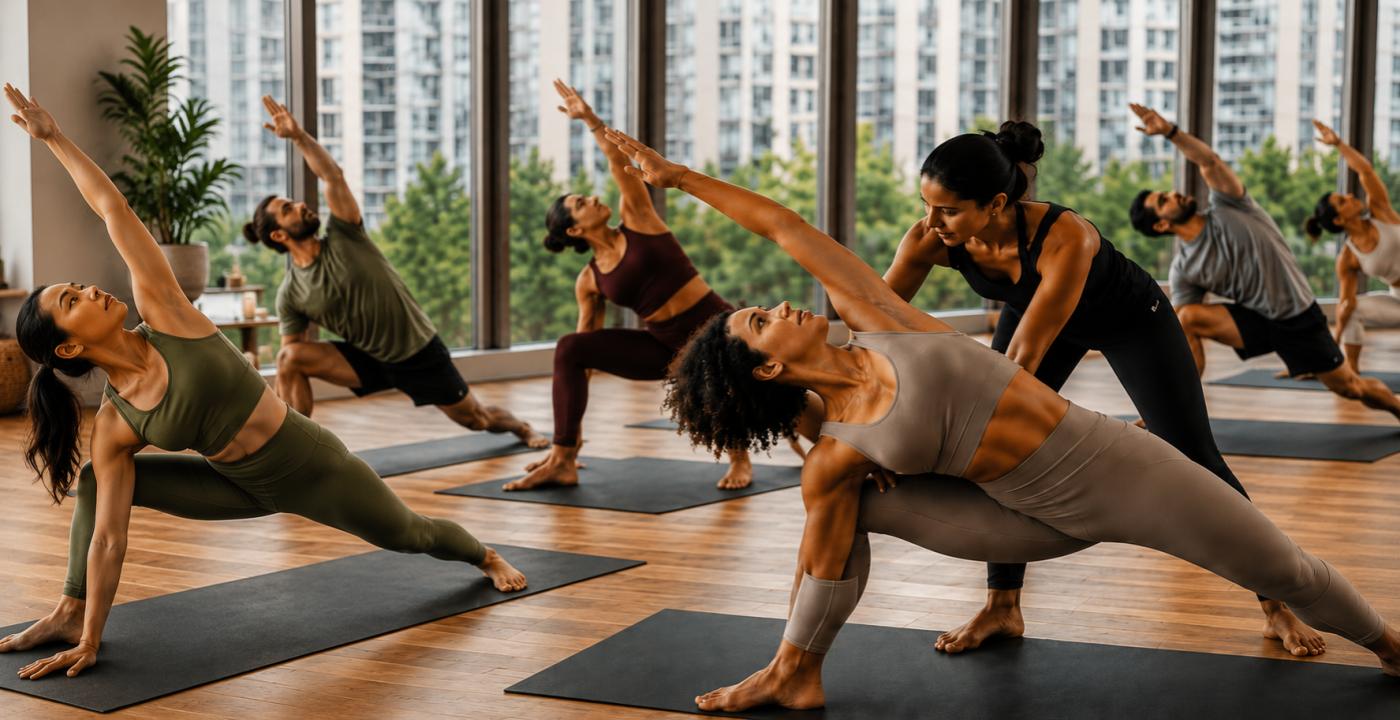 Is Vancouver a Good Place for Yoga Teacher Training?
Vancouver offers a genuinely strong environment for YTT, for a few concrete reasons. The city has a dense, established yoga community, which means more experienced teachers, more studios to observe and practice in, and more opportunities to find a mentor once you’re certified. That density also means healthy competition among schools, which tends to push training quality up.
The city’s access to nature is a real, practical advantage too. Many students use the ocean, mountains, and forest trails around Vancouver as a way to decompress between intensive training days, something that matters more than it sounds like it would when you’re deep in a demanding program. A short walk on a beach or through a park between sessions makes a measurable difference in how sustainable the pace feels.
Vancouver’s training market also tends to attract programs with a strong anatomy and alignment focus, partly due to the concentration of physiotherapists, kinesiologists, and movement professionals in the city who cross over into yoga teaching. That can mean a more rigorous, evidence-informed anatomy component than you’d find in some other markets, which raises the academic bar but also produces better-prepared teachers.
The one real downside is cost of living. Combining tuition with Vancouver’s higher cost of housing and food means the total financial commitment of training here runs higher than in many other cities. Factor that into your planning alongside the tuition number itself, especially if you’re considering an intensive format that limits your ability to work during training.
Who Thrives in Yoga Teacher Training — and Who Struggles
Not every personality type experiences YTT the same way, and that’s worth being honest about before you enroll.
Students who thrive tend to share a few traits: they’re comfortable with structure and homework, they can tolerate physical discomfort without panicking, and they’re genuinely curious about the “why” behind the poses, not just the poses themselves. People who’ve held any kind of consistent practice, even something unrelated like running or strength training, often adapt well to the discipline required. A willingness to be a beginner again, even if you’ve practiced yoga for years, also predicts success. Teaching asks you to unlearn some habits and rebuild your practice from a teacher’s perspective.
Students who struggle more often share different traits: expecting the training to be purely physical and relaxing, avoiding academic study in other areas of life, or entering with unresolved perfectionism that makes public teaching practice especially stressful. That doesn’t mean these students can’t succeed, but they typically need to consciously prepare for the parts of training that don’t come naturally.
If you’re unsure where you fall, a useful exercise is to imagine your hardest week at work or school in the past two years, then imagine six weeks of that intensity focused entirely on one subject. If that sounds exciting rather than terrifying, you’re likely well suited to an intensive format. If it sounds exhausting, a spread-out weekend program may serve you better.
How to Prepare Before You Start
A few weeks of intentional preparation meaningfully changes how manageable training feels.
Build a consistent practice first. Three to four yoga sessions a week for a month before training begins conditions your body for the physical repetition ahead, without needing advanced skill.
Get comfortable speaking out loud. Practice cueing a simple sequence to a friend, a pet, or an empty room. The awkwardness fades faster than you’d expect once you’ve done it a few times.
Start reading ahead if your school allows it. Even a general anatomy primer or an introductory philosophy text takes the edge off the academic ramp-up.
Plan your schedule realistically. Block out the actual hours, including homework and observation time, not just class time, and check that plan against your other commitments before you enroll.
Take care of the basics. Sleep, hydration, and simple meal prep matter more during training than almost any other single factor. Students who show up rested consistently report an easier experience than those who don’t.
 Conclusion
So, how hard is yoga teacher training in Vancouver? Physical, academic, and time demands all come into play, and none of them should be underestimated. The physical side asks for stamina and consistency more than flexibility. The academic side is a genuine, structured curriculum covering anatomy, philosophy, and teaching methodology. The time commitment, whether intensive or spread across months, requires real planning around work, family, and finances. And running underneath all of it is an emotional and mental process that surprises most students, in a good way, once they’re through it.
None of this is meant to scare you off. It’s meant to help you walk in with clear eyes, realistic expectations, and a plan that fits your life. Students who prepare for the real demands of training, not just the Instagram version of it, consistently report a more grounded, less overwhelming experience, and come out the other side as more confident, capable teachers.
If you’re ready to become a yoga teacher, we’d love to help you get there. Check out our 200-hour yoga teacher training page to see upcoming dates, formats, and what to expect from day one.