
 A 200-Hour Yoga Teacher Training Vancouver: Class Size & Student-to-Teacher Ratio
Choosing a yoga teacher training is a significant commitment of time, money, and energy. You will spend hundreds of hours learning anatomy, philosophy, sequencing, and teaching methodology. The quality of that experience depends heavily on one factor most prospective students overlook: class size. This guide, A 200-Hour Yoga Teacher Training Vancouver: Class Size & Student-to-Teacher Ratio (What to Ask Before You Enroll), walks you through exactly what to look for, what questions to ask, and why the numbers matter more than the marketing photos.
Vancouver has a vibrant yoga community. You will find dozens of studios offering 200-hour certifications. Some run intimate programs with eight students. Others pack thirty or more bodies into a single room. Both can be registered with Yoga Alliance. Both can advertise the same credentials. But the day-to-day experience inside those two rooms is dramatically different.
This article will help you tell them apart.
Why Class Size Matters More Than You Think
Class size shapes everything about your training. It affects how much personal feedback you receive on your asana practice. It influences how often you teach in front of peers. It determines whether your lead trainer knows your name, your goals, and your physical limitations by week two.
In a small cohort, your trainer can watch you move. They can correct your alignment before bad habits form. They can offer modifications tailored to your body. They can pull you aside when you struggle with a philosophical concept. None of that happens reliably in a room of thirty students with one teacher pacing the perimeter.
Research on adult education consistently supports smaller learning environments. Studies summarized by organizations like the National Education Association show that smaller groups improve engagement, retention, and skill acquisition. Yoga teacher training is no exception. You are learning a physical skill, a verbal craft, and an ethical practice all at once. That requires direct observation and timely correction.
Large trainings have advantages too. You meet more peers. You see more body types and teaching styles. The energy in the room feels electric during chants and meditations. The financial model also allows schools to offer lower per-student tuition. But these benefits come with trade-offs that affect your readiness to teach when the program ends.
The right size depends on what you want. If you simply want the certificate and the experience, a larger program may suit you. If you want to walk out confident enough to lead a class on day one, smaller is almost always better.
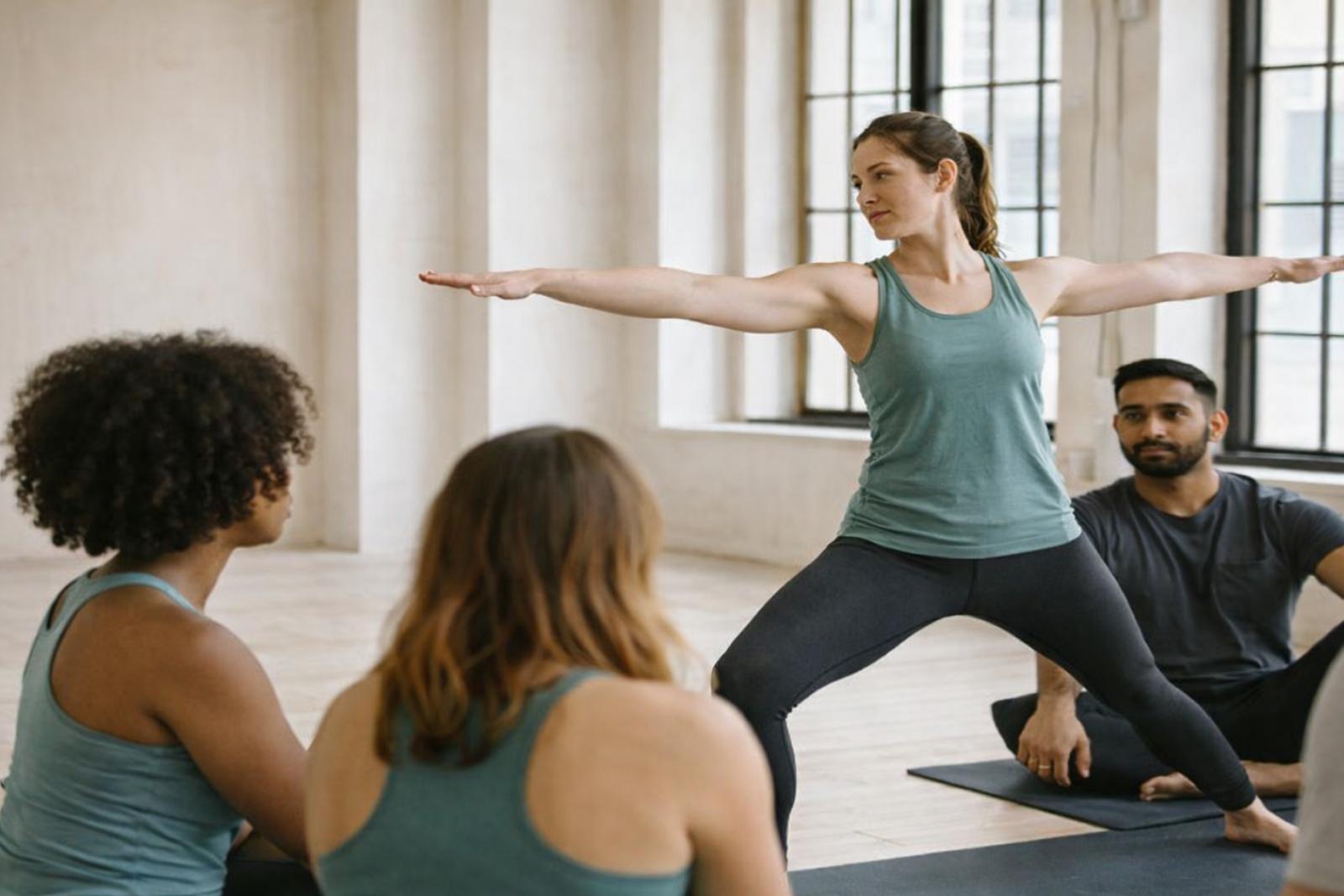 Understanding Yoga Alliance Standards for 200-Hour Trainings
Before evaluating class size, you need to understand the baseline. Yoga Alliance sets the international standard for 200-hour teacher training programs. Their requirements cover five core areas: techniques and practice, teaching methodology, anatomy and physiology, yoga philosophy and ethics, and a practicum component.
Yoga Alliance requires a minimum of 180 contact hours with lead trainers. Contact hours mean real-time interaction, not pre-recorded videos. The standards also specify that at least 65 hours must come from a senior-level trainer, called an E-RYT 500. This is important because lead trainer hours directly intersect with class size considerations.
Imagine a training with thirty students and only one E-RYT 500. The lead trainer must divide their attention thirty ways across every contact hour. A school with twelve students and the same lead trainer can offer roughly two and a half times the per-student attention during the same session.
Yoga Alliance does not currently cap class size. This is a notable gap in the standards. Schools can technically enroll any number of students as long as they meet the contact hour minimums. That puts the burden on you, the prospective student, to evaluate ratios before enrolling.
The Canadian context adds another layer. While Yoga Alliance is the dominant credentialing body, organizations like Yoga Association of Alberta and provincial wellness bodies also influence professional standards. Always verify which credential your school offers and what hours that credential includes. Ask for a printed schedule that shows lead trainer hours, assistant hours, and any self-study components. The schedule reveals far more than any brochure.
The Vancouver Yoga Landscape: What to Expect
Vancouver supports one of the densest yoga communities in North America. The city hosts established schools, boutique studios, and destination-style retreats. You will find programs ranging from immersive month-long intensives to weekend formats spread across nine months. Each format affects class size differently.
Intensive immersions tend to attract more students because they appeal to travelers and people on sabbatical. A typical Vancouver immersion might run twenty to thirty participants. The energy is high. The bonding is intense. But the per-student attention can be limited unless the school staffs multiple senior trainers.
Weekend and evening programs usually run smaller. Local students fit training around work and family. These cohorts often range from eight to sixteen people. The slower pace allows for more individualized feedback and deeper integration. You also get time between sessions to absorb material and notice questions.
The BC Health Regulation Branch does not regulate yoga teacher training as a profession. There is no provincial license required to teach yoga. This means the quality control falls to credentialing bodies and to consumers. You must do your own due diligence. Vancouver studios vary widely in approach, lineage, and rigor.
Studios in neighborhoods like Kitsilano, Mount Pleasant, and Commercial Drive tend to draw different demographics. Some emphasize Ashtanga and traditional lineages. Others focus on vinyasa flow, yin, or therapeutic applications. Class size norms can vary by style. Traditional Iyengar-influenced programs often cap enrollment lower than power vinyasa programs because of the alignment emphasis. Ask about the school’s typical cohort size for the last three trainings, not just the current one.
 Ideal Student-to-Teacher Ratios for Yoga Teacher Training
There is no universal perfect number. But experienced trainers and graduates generally agree on workable ranges. A ratio of one lead trainer to eight students offers excellent individual attention. One trainer to twelve students remains manageable with strong assistant support. One to sixteen begins to stretch the lead trainer’s capacity. Anything above one to twenty starts to compromise hands-on adjustments and individualized feedback during practicum sessions.
The International Association of Yoga Therapists sets stricter ratios for therapeutic yoga trainings, often capping at one to ten. While that standard applies to therapy-focused programs, it reflects a broader principle. Physical practices that involve assessment and adjustment require small groups.
Consider what happens during a practicum. Each student must teach segments to peers. The lead trainer must observe, take notes, and offer feedback. In a group of eight, every student can teach multiple times per week with substantial verbal critique. In a group of twenty-four, that same opportunity shrinks by two-thirds. You might only receive detailed feedback two or three times across the entire training.
Anatomy and adjustment workshops are even more affected. Schools demonstrate adjustments on volunteers. Students then pair up and practice. The lead trainer circulates. With twelve students, the trainer can observe most pairs in a single round. With thirty, many students practice incorrect technique without correction. Bad habits get reinforced rather than addressed.
If a school assigns assistant teachers, ratios improve. A program with one lead and two qualified assistants serving sixteen students offers a functional one-to-five ratio during hands-on work. Ask exactly how many assistants attend each session and what their qualifications are. Some assistants are recent graduates with limited experience. Others are seasoned E-RYT 200 or E-RYT 500 teachers. The difference matters.
Red Flags: Warning Signs of Overcrowded Trainings
Certain signals indicate a program prioritizes enrollment over quality. Watch for unlimited or undefined enrollment caps. A school that cannot tell you the maximum class size has not thought carefully about the educational experience. Reputable programs publish caps clearly and stick to them.
Be wary of marketing that emphasizes community size and energy without mentioning teacher access. Photos of crowded rooms full of smiling students sell well. They do not always reflect quality education. Ask to see images or videos of actual practicum sessions, not just opening ceremonies.
Watch for rolling enrollment with no clear cohort structure. Some schools allow students to join modules at any time. This sounds flexible. In practice, it disrupts group cohesion and makes it impossible for trainers to track individual progress. Cohort-based learning where you start and finish with the same group produces better outcomes.
Pay attention to how the school describes its assistant teachers. Vague language like “supported by our amazing team” usually means assistants are unpaid recent graduates. Reputable schools name their assistants, describe their credentials, and specify which sessions they attend.
Another warning sign is the absence of a recommended student-teacher ratio anywhere in the school’s materials. Quality programs talk about ratios openly. They use the numbers as a selling point. Schools that avoid the topic likely run higher ratios than they want prospective students to consider carefully.
Finally, beware of trainings that compress significant content into very short windows. A 200-hour program crammed into three weeks with thirty students leaves no room for individual feedback. The math simply does not work. Healthy programs either reduce enrollment or expand the schedule.
 Questions to Ask Before You Enroll
Asking the right questions reveals everything. Schools that value transparency will answer directly. Schools that hedge or deflect are telling you something important.
Start with cohort size. Ask: “How many students do you cap each cohort at, and how many are enrolled in the upcoming training?” Follow up with: “What was the size of your last three trainings?” Patterns matter more than promises.
Ask about lead trainer involvement. “How many hours per week does the lead trainer personally teach?” “Will the lead trainer observe my practicum and provide individual feedback?” “What happens if the lead trainer is sick or traveling?”
Inquire about assistants. “How many assistant teachers attend each session?” “What are their credentials and years of teaching experience?” “Are assistants compensated, or are they trading work for credit?”
Ask about feedback structures. “How many times will I teach during the program?” “Do I receive written feedback after each practicum?” “Will I have one-on-one meetings with the lead trainer during the course?”
Get specific about adjustments. “How are hands-on adjustments practiced and supervised?” “What is the trainer-to-student ratio during alignment workshops?”
Verify the schedule. “Can I see a sample week with hours assigned to each instructor?” “How much of the 200 hours is self-study versus contact time?”
Ask for graduate references. “May I speak with three recent graduates about their experience?” Reputable schools provide names willingly. The Yoga Alliance directory also lets you verify a school’s registration and read public reviews. Cross-check the reviews against the school’s own testimonials.
Finally, ask about the refund policy. Schools that overfill cohorts often have restrictive refund terms. Generous, transparent policies suggest a school confident in its delivery.
How Class Size Affects Hands-On Adjustments and Personalized Feedback
Hands-on adjustments are one of the most important skills a yoga teacher develops. They require sensitivity, precision, and ethical awareness. They cannot be learned from a textbook or a video alone. You need to feel the practice in your own body. You need to receive adjustments. You need to give them under supervision.
In a small training, every student gets adjusted often. The lead trainer demonstrates on different bodies. Students learn how the same posture feels in a tight hamstring, an open hip, an injured shoulder, a long torso. The variety builds intuition that no curriculum can teach in the abstract.
The Yoga Journal and other established publications have written extensively about the ethics of hands-on adjustments. Consent, communication, and competence are central. None of those skills develop reliably in oversized cohorts. When trainers cannot observe every pair, students improvise without feedback. Mistakes go uncorrected.
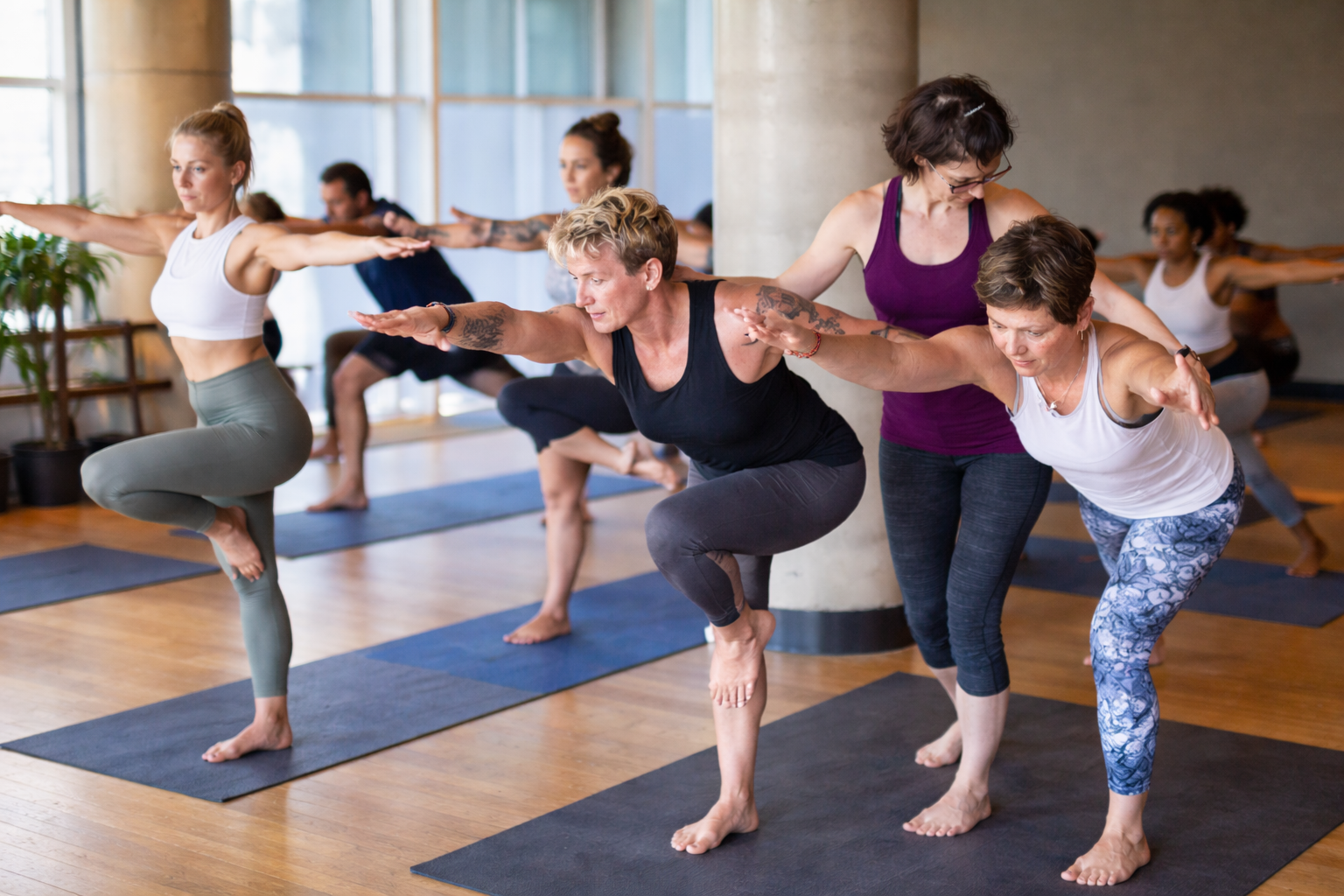 Personalized feedback during teaching practicums is similarly affected. A skilled mentor watches you teach, notes your verbal cues, your pacing, your spatial awareness, your tone of voice, your ability to read the room. They write detailed observations. They sit with you after class and walk through what worked and what to refine.
In a small program, you might receive ten or twelve detailed feedback sessions over the course of the training. In an oversized program, you might get two. The difference shows up the first time you teach a real class. Graduates from small, feedback-rich programs walk in prepared. Graduates from large programs often spend their first six months teaching learning what their training should have taught them.
This is not a knock on large schools. It is a structural reality. Time is finite. Attention is finite. Class size determines how much of each you receive.
The Role of Lead Trainers Versus Assistants
Understanding the difference between lead trainers and assistants matters when evaluating ratios. A lead trainer carries primary responsibility for curriculum, philosophical teaching, and overall direction. They typically hold an E-RYT 500 designation through Yoga Alliance and have years of full-time teaching experience.
Assistants support the lead trainer. They might guide warm-ups, demonstrate poses, assist with adjustments, and answer logistical questions. Their qualifications vary widely. Some assistants are seasoned teachers themselves. Others are recent graduates of the same program, working in exchange for tuition credit or a stipend.
When schools quote ratios, they sometimes include all staff in the numerator. A program might advertise a one-to-six ratio that actually means one E-RYT 500, two assistants, and eighteen students. The lead trainer ratio is still one to eighteen. The assistant support is helpful but not equivalent.
Ask specifically about the lead trainer ratio. Then ask separately about total staff ratio. Both numbers matter. A program with a one-to-twenty lead trainer ratio and three well-qualified assistants can deliver excellent training. A program with a one-to-twenty ratio and one inexperienced assistant cannot.
Pay attention to which sessions the lead trainer teaches personally. In some programs, the lead trainer handles the philosophical material and senior asana sessions but delegates anatomy, teaching methodology, and practicum supervision to assistants. This is not necessarily bad. Specialists can deliver better instruction in their areas. But you should know who teaches what before enrolling.
The relationship you build with the lead trainer often matters for years after graduation. Mentorship and ongoing guidance flow from that relationship. In oversized programs, lead trainers rarely have time to know students well enough to mentor them afterward. Small programs build lasting connections that support your teaching career long after the certificate prints.
Cohort Dynamics: How Group Size Shapes Your Experience
The social dimension of teacher training is often underestimated. You will spend hundreds of hours with the same group of people. You will share meals, practice, struggle, breakthrough moments, and difficult conversations. The cohort becomes a community. Group size shapes that community profoundly.
Small cohorts of eight to twelve people typically develop deep trust. Everyone learns everyone’s name in the first week. You see each other’s growth in real time. Vulnerability comes more easily. People share honest reflections during philosophy discussions. You make friendships that often last for years.
Mid-size cohorts of fifteen to twenty offer broader social variety. You meet more people, encounter more perspectives, and benefit from diverse practice partners. But it becomes harder to know everyone deeply. Some students inevitably fade into the background. Group discussions can feel less safe because trust is harder to build in larger circles.
Large cohorts of twenty-five or more produce a different experience entirely. The energy of chanting together is unforgettable. The collective practice is powerful. But sub-cliques form quickly. Quieter students often disengage. Discussions tend toward surface-level sharing because real vulnerability requires smaller containers.
None of these is inherently better. The right cohort size depends on your personality and goals. Introverts often thrive in smaller groups. Extroverts may prefer the energy of larger ones. People recovering from social isolation might want community. People processing personal material might need intimacy.
Vancouver schools often promote cohort culture as a selling point. Visit if you can. Observe a practice or attend an open house. Pay attention to how students interact with each other and with the teachers. The feeling you get tells you something the website cannot.
 Hybrid and Online Components: How They Affect Ratios
Since 2020, Yoga Alliance has permitted online and hybrid training formats. Many Vancouver schools now blend in-person sessions with virtual components. This shift affects how you should evaluate class size.
Online sessions can feel intimate or impersonal depending on facilitation. A skilled trainer running a Zoom session of twelve students can engage everyone meaningfully. The same trainer running a session of thirty struggles to maintain personal connection. Cameras off, multitasking, and passive listening become more common as group size grows.
Hybrid programs typically reserve in-person time for asana practice, hands-on adjustments, and practicums. Theory, philosophy, and lectures often move online. Ask how the school divides content between formats. Then ask about ratios in each setting separately. The in-person ratio might be one to eight while the online ratio is one to twenty-four. The total experience reflects both.
Self-paced online modules raise additional questions. Yoga Alliance still requires significant synchronous contact hours. But schools fill non-contact hours differently. Some assign substantial reading and reflection. Others rely heavily on pre-recorded videos. Ask what self-study looks like and whether it includes accountability checkpoints with a trainer.
Online components offer flexibility, which can make training accessible to people who could not otherwise attend. That is a real benefit. But flexibility comes with responsibility. You must manage your own learning more actively. Smaller cohorts make this easier because trainers can notice when students fall behind. Larger cohorts often lose students who silently struggle.
If you are considering a hybrid program, ask about retention rates. Schools that track and share this data tend to design their programs more carefully.
Cost Versus Quality: Why Smaller Often Means Better
Tuition for 200-hour teacher trainings in Vancouver typically ranges from $2,800 to $5,500 CAD. Some intensive immersions cost more. Some weekend formats cost less. The price often correlates loosely with class size, but not in the way you might expect.
Larger programs sometimes charge less per student because the economics work at scale. A school with thirty students paying $3,000 each generates significant revenue with relatively fixed costs. Smaller programs must charge more per student to pay qualified senior trainers and cover space rental.
Cheaper does not always mean worse. But it can. A program that significantly undercuts market rates may be cutting corners. Look for what the tuition includes. Quality programs cover materials, mentorship hours, retreats, and post-graduation support. Bare-bones programs include only the contact hours.
Consider the per-hour cost of personal attention. A $3,500 program with twenty students offers one student’s attention for the same lead trainer hours that a $4,500 program with ten students provides. The hourly cost of teacher attention is actually lower in the more expensive program when calculated per student.
Investment in your training pays off through your career. Graduates from rigorous, small-cohort programs often command higher rates as new teachers because they walk in genuinely prepared. They build clientele faster. They make back the additional tuition within their first year of teaching.
If finances are tight, smaller does not always mean unaffordable. Some Vancouver schools offer payment plans, scholarships, or work-trade arrangements. Ask about financial accessibility before assuming a quality program is out of reach. Organizations like KARMA Teachers and various nonprofit yoga collectives also offer accessibility-focused trainings worth investigating.
Making Your Final Decision
After all the research, the decision comes down to fit. Numbers and credentials matter. So does the feeling you get when you step into the space and meet the people. Pay attention to both.
Visit the studio if possible. Take a class with the lead trainer. Notice how they teach. Watch how they interact with students. Ask if you can sit in on a portion of a current training session. Reputable schools welcome this kind of due diligence.
Talk to graduates. Not just the testimonials on the website, but people you find independently. The Yoga Alliance directory and local Vancouver yoga social media groups can connect you with recent graduates willing to share honest perspectives.
Trust your instincts about the lead trainer. You will spend hundreds of hours learning from this person. Their philosophy, communication style, and presence will shape your teaching for years. If something feels off, listen to that signal.
Match the program to your goals. If you want to teach professionally and need to graduate ready to lead classes confidently, prioritize small cohorts with extensive practicum time. If you primarily want a personal deepening experience, larger cohorts with strong community energy may suit you well.
Do not let scarcity tactics rush your decision. Schools sometimes pressure prospective students with limited-time pricing or shrinking enrollment counts. A good program will be just as good in six months. Take the time you need to choose well.
Conclusion
The right yoga teacher training transforms how you move, think, and teach. The wrong one leaves you with a certificate but not the skills or confidence to use it. As this guide, A 200-Hour Yoga Teacher Training Vancouver: Class Size & Student-to-Teacher Ratio (What to Ask Before You Enroll), has shown, class size and student-to-teacher ratio sit at the heart of that difference.
The main takeaway is straightforward. Ask specific questions about cohort caps, lead trainer hours, assistant qualifications, and feedback structures before you enroll. Verify the numbers in writing. Cross-check with recent graduates. Visit the space. Trust schools that talk openly about ratios and walk away from those that do not.
Vancouver offers excellent training options across many styles and formats. The best fit for you depends on your goals, learning style, budget, and personality. But across all of those variables, smaller cohorts with experienced lead trainers consistently produce better-prepared teachers. The investment of a few extra weeks of research now will pay off for the entire career that follows.
Choose the program that knows your name by week two, watches you teach, and prepares you to walk into your first class ready to lead.