
 Yoga Teacher Training Vancouver: How Much Teaching Practice Should a 200-Hour YTT Include?
If you’re comparing programs for Yoga Teacher Training Vancouver: How Much Teaching Practice Should a 200-Hour YTT Include?, you’ve probably noticed something. Most schools talk about philosophy modules, anatomy hours, and inspiring retreats. Almost none of them tell you, in plain numbers, how much time you’ll actually spend teaching a class out loud, in front of real students, while someone corrects you.
That gap matters. You’re not paying for 200 hours of information. You’re paying to walk out able to lead a class with confidence. And confidence isn’t built by listening. It’s built by doing the thing, getting it wrong, and doing it again.
This article breaks down what Yoga Alliance actually requires, why the legal minimum often isn’t enough, and what a genuinely useful amount of teaching practice looks like in a 200-hour program. It also gives you a short checklist to use when you’re comparing schools here in Vancouver.
What Yoga Alliance Actually Requires
Most 200-hour programs in Vancouver are registered with Yoga Alliance, the main credentialing body for yoga schools in North America. Its standards set the floor, not the ceiling, for what a training has to include.
Yoga Alliance organizes the 200 required hours into broad educational categories. Two of these matter most for this discussion: Teaching Methodology and Practicum. Teaching Methodology covers things like cueing, class structure, communication skills, and how to work with different student needs. Practicum is the category that specifically requires supervised practice teaching, where you lead real segments of a class and receive feedback on your delivery.
Here’s the part that surprises a lot of new students: the minimum required practicum time under Yoga Alliance standards is relatively small compared to the full 200 hours. Schools are free to allocate additional hours toward practice teaching, and many do. But a program can technically meet the certification requirements while giving you only a modest amount of live teaching time.
This isn’t a loophole schools are exploiting maliciously. It’s simply how the standards are written, to allow flexibility across very different teaching styles and traditions. The problem is that “meets the minimum” and “prepares you to teach a real class” are two different things, and a glossy brochure won’t tell you which one you’re getting.
Why the Legal Minimum Isn’t Enough
Passing a certification and being ready to teach are not the same milestone. You can attend every session, complete every reading, and pass every written assessment, and still freeze the first time you stand in front of ten strangers on their mats.
Teaching yoga is a performance skill. It combines verbal cueing, spatial awareness, timing, voice projection, and the ability to read a room and adjust on the fly. Skills like these don’t develop through observation. They develop through repetition under real conditions, followed by specific feedback, followed by another attempt.
Public speaking anxiety is extremely common, and teaching a yoga class is, at its core, a form of public speaking combined with physical demonstration. If your only exposure to “teaching” during your 200-hour program is a handful of short practice segments in front of classmates who already know you, you haven’t built the specific skill you’ll need on your first real gig: staying composed and clear in front of people who are watching you for guidance, not judging your friendship.
This is also why some students finish a technically compliant YTT and still feel unprepared to apply for their first teaching job. The certificate says they can teach. Their nervous system says otherwise. Our article on whether yoga teacher training in Vancouver is worth it goes deeper into this gap between certification and actual readiness, and it’s worth reading if you’re still deciding whether to enroll at all.
What Genuine Teaching Practice Actually Looks Like
Not all “practice teaching” is created equal. Before you commit to a program, it helps to know what strong practicum design actually involves, so you can ask specific questions instead of taking a school’s word for it.
Repetition, not a single attempt. One 10-minute practice teach, done once, teaches you almost nothing about improvement. Real skill-building happens when you teach the same or similar sequences multiple times across the training, so you can apply feedback from the last attempt to the next one.
Full-class segments, not just cueing one pose. Leading a single pose is a small, easier task. Structuring and running a 15 to 30 minute segment, including transitions, timing, and verbal cueing from start to finish, is a much closer simulation of the real job.
Feedback that’s specific and actionable. Vague praise (“great job!”) doesn’t help you improve. Useful feedback names exactly what worked, what didn’t, and what to try differently next time, ideally from a trainer with real teaching experience rather than only from peers.
Teaching people who aren’t your usual training group. Practicing on classmates who already understand yoga terminology is easier than teaching a mixed group of real students with different bodies, goals, and experience levels. The best practicum experiences build in at least some exposure to teaching outside the training bubble.
Progressive difficulty. A well-designed practicum doesn’t throw you into a full class cold. It builds from smaller components, like leading a short breathing exercise or a single pose, up to running an entire class independently by the end of the training.
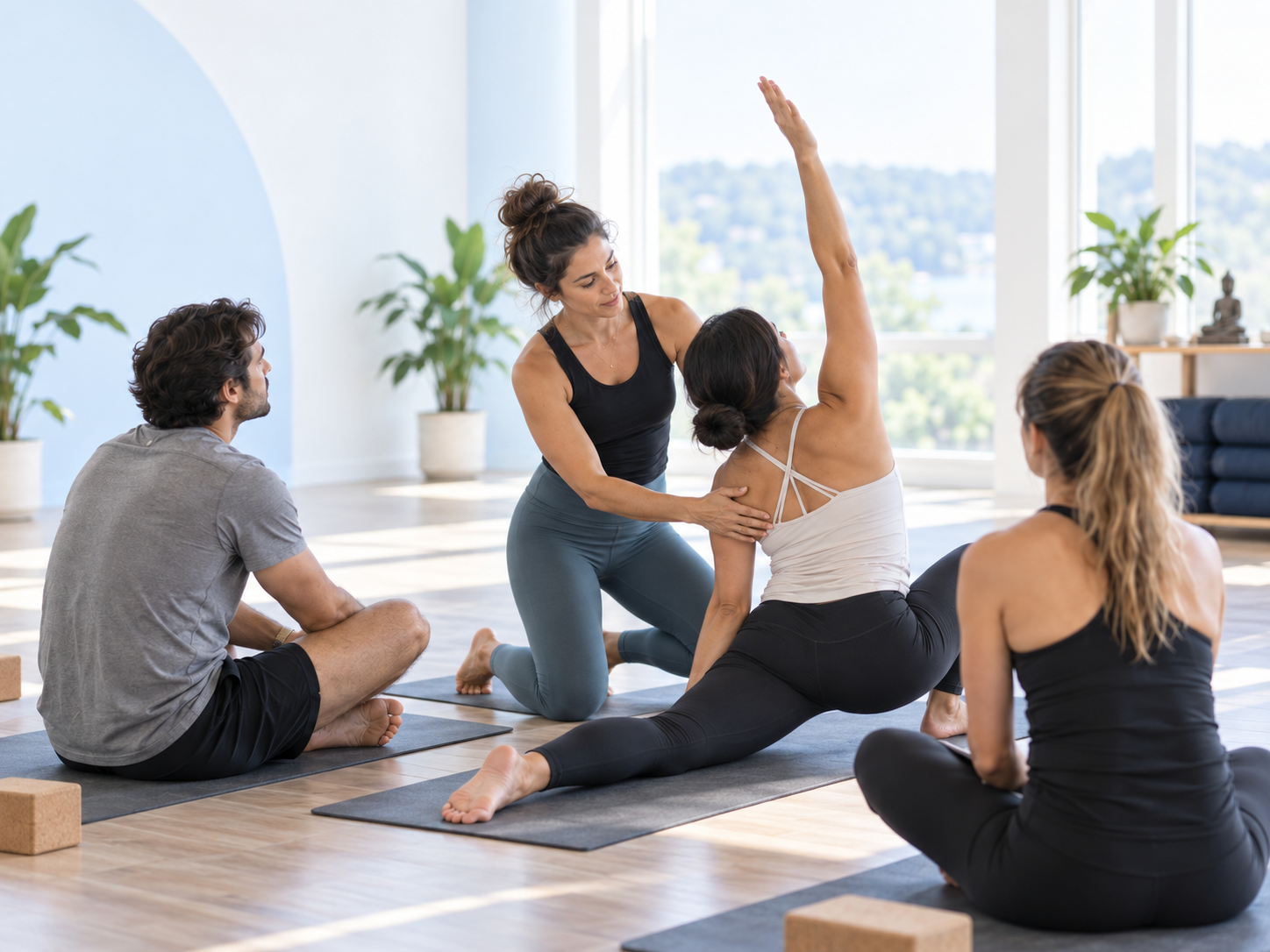 How Many Hours of Teaching Practice Should You Actually Look For
There’s no single number that fits every learning style, but a useful benchmark for evaluating a 200-hour program is this: teaching practice, in some form, should be a recurring weekly activity, not a one-off event near graduation.
If a program’s practicum time totals somewhere in the range of 20 to 40 hours across the full training, spread consistently through the weeks rather than crammed into a final weekend, that generally signals a strong emphasis on actual readiness to teach. Some competency-focused programs push this figure even higher by folding additional structured teaching repetitions into what’s officially labeled Teaching Methodology, effectively increasing your live teaching time beyond the Practicum category alone.
What matters more than any single hour count is the pattern. Ask a prospective school: how many separate times will I lead a class segment in front of others during this training? If the honest answer is “two or three,” treat that as a caution flag, regardless of how the marketing describes the program. If the answer is “every session, in some form, from week one to graduation,” that’s a program built around competency rather than attendance.
Our own 200-hour Yoga Teacher Training Vancouver program was built directly around this principle. Instead of treating practicum as a single required category to check off, we structure the training so that repeated, feedback-driven teaching practice runs through nearly every weekend, not just the categories Yoga Alliance labels as Practicum.
Practicum vs. Peer Teaching: Know the Difference
Schools sometimes use “practicum” loosely, so it’s worth understanding what the term should mean versus how it’s sometimes used in marketing.
True practicum, in the Yoga Alliance sense, is supervised practice teaching with structured feedback from a qualified trainer. It’s designed as a formal skill-building exercise, tracked as its own category of hours.
Peer teaching is when students take turns leading small portions of class for each other, often informally, without a trainer actively observing and giving detailed feedback. Peer teaching has value. It builds comfort with speaking in front of others and reinforces sequencing knowledge. But it isn’t a substitute for supervised practicum, because the quality of feedback is usually lower, and the stakes feel lower too, which changes how seriously most students take the exercise.
Some schools count generous amounts of casual peer teaching toward their advertised “teaching practice” totals, which can make a program look more practice-heavy than it really is. When you’re comparing schools, ask directly: how much of our teaching practice will be observed and corrected by a lead trainer, versus done independently among students? A program heavy on trainer-supervised practicum, even if the total hour count looks smaller on paper, will usually build stronger real-world skills than one padded with unsupervised peer sessions.
This distinction is one of the most overlooked details in program comparisons, and it’s a big part of why two “200-hour” trainings can produce very different levels of teaching readiness, even though both meet the same certification standard.
Why Feedback Quality Matters More Than Hours Alone
It’s tempting to treat teaching-practice hours as the whole story, but hours without quality feedback produce limited improvement. A student who teaches the same flawed cueing pattern ten times without correction simply gets better at repeating the mistake.
Strong programs pair practice with a feedback loop: you teach, a trainer identifies one or two specific things to adjust, you try again applying that adjustment, and the cycle repeats. This is closer to how deliberate, structured practice works in any skill-based field, from music to sport to medicine. Volume matters, but only when it’s paired with correction.
When you’re researching a Vancouver YTT, ask who delivers the feedback during practicum sessions. Is it always the lead trainer, or sometimes a teaching assistant, or occasionally just other students? Ask how specific the feedback tends to be. “You did great” tells you nothing you can act on. “Your transition cues came half a breath too late, try calling the next pose while students are still in the previous one” tells you exactly what to fix.
You can get a feel for this before you even enroll. Read testimonials carefully, and pay attention to whether past students mention specific feedback and visible improvement, rather than just general enthusiasm. Our testimonials page includes comments from graduates who speak directly to how the feedback process shaped their teaching, which is worth reading if you want a sense of what that experience actually feels like day to day.
Red Flags: Signs a Program Is Under-Teaching Its Students
A few warning signs tend to show up in programs that prioritize hitting the 200-hour total over building real teaching competence.
Practicum is scheduled only near the end. If practice teaching is concentrated into the final week or weekend, students don’t get the repeated cycles of feedback and improvement that build real skill. It becomes a formality rather than a training tool.
Group sizes are large and time per student is short. In a group of 25 or more, even a generous total practicum allocation might work out to just a few minutes of actual teaching time per student across the entire course.
Feedback is generic or absent. If trainers don’t circulate during practice teaching, or if feedback consists of a quick “good job” and nothing else, the hours on the schedule aren’t translating into skill development.
Marketing emphasizes retreat and self-discovery language over teaching competence. A focus on transformation and personal growth isn’t a bad thing, but if it dominates the program description and teaching skill is barely mentioned, that’s often a reflection of where the curriculum’s real emphasis sits. Our comparison of Vancouver-based training versus a destination retreat covers this trade-off in more detail, since retreat-format trainings sometimes lean harder into the immersive-experience side than the teaching-practice side.
No mention of teaching people outside your cohort. If every single practice session happens within the same small group of classmates, you’re missing exposure to teaching real students with different needs, which is a meaningfully different experience.
None of these signs alone disqualifies a program. But two or three together are worth a direct conversation with the school before you commit your tuition.
How to Evaluate a Program’s Teaching Practice Before You Enroll
You don’t need insider knowledge to vet this properly. A short list of direct questions, asked before you pay a deposit, will tell you almost everything you need to know.
Ask how many separate times you’ll practice-teach across the full training, and roughly how long each session runs. Ask whether a lead trainer observes and gives feedback every time, or only occasionally. Ask whether class sizes are small enough that you’ll get meaningful individual teaching time, not just a couple of minutes buried in a large group. Ask whether you’ll ever teach people outside your training cohort, even informally. And ask what the school considers the biggest difference between a graduate who feels ready to teach and one who doesn’t.
Good schools will answer these questions specifically, often citing exact hour figures or session counts, because they’ve thought carefully about how skill actually develops. Vague or deflective answers are themselves useful information.
It’s also worth reading a program’s full curriculum page rather than relying on ad copy alone. Look for how Practicum and Teaching Methodology are described, and whether the language emphasizes repeated live teaching or leans mostly on theory and demonstration. If you’re weighing whether hands-on teaching experience matters to you at all, our piece on taking YTT in Vancouver without intending to teach is a useful read, since not every student enrolls with the goal of leading classes professionally, and that changes what “enough” practice looks like for you personally.
What a Well-Balanced 200-Hour Breakdown Can Look Like
To make this concrete, here’s a general shape of how teaching practice can be woven through a competency-focused 200-hour training, without treating it as a single isolated module.
Early weeks typically focus on smaller building blocks: leading a single pose, cueing a breathing exercise, or guiding a short relaxation segment for a few minutes at a time. This lowers the stakes while still putting you in the teacher’s seat regularly.
Middle weeks usually expand into short full-segment teaching, where you structure and lead 10 to 20 minutes of a class, including transitions and verbal cueing, with a trainer observing and giving feedback immediately afterward.
Later weeks build toward leading longer, more complete class experiences, sometimes for your training cohort and sometimes, in stronger programs, for guests or a real public-facing class near the end of the course.
Throughout all of this, feedback should be a constant thread, not a one-time event. Each teaching attempt should build on specific notes from the last one. This is the structure we use in our 200-hour program, and it’s the structure worth looking for wherever you decide to train, because it treats teaching ability as something you build in layers, not something you demonstrate once and check off a list.
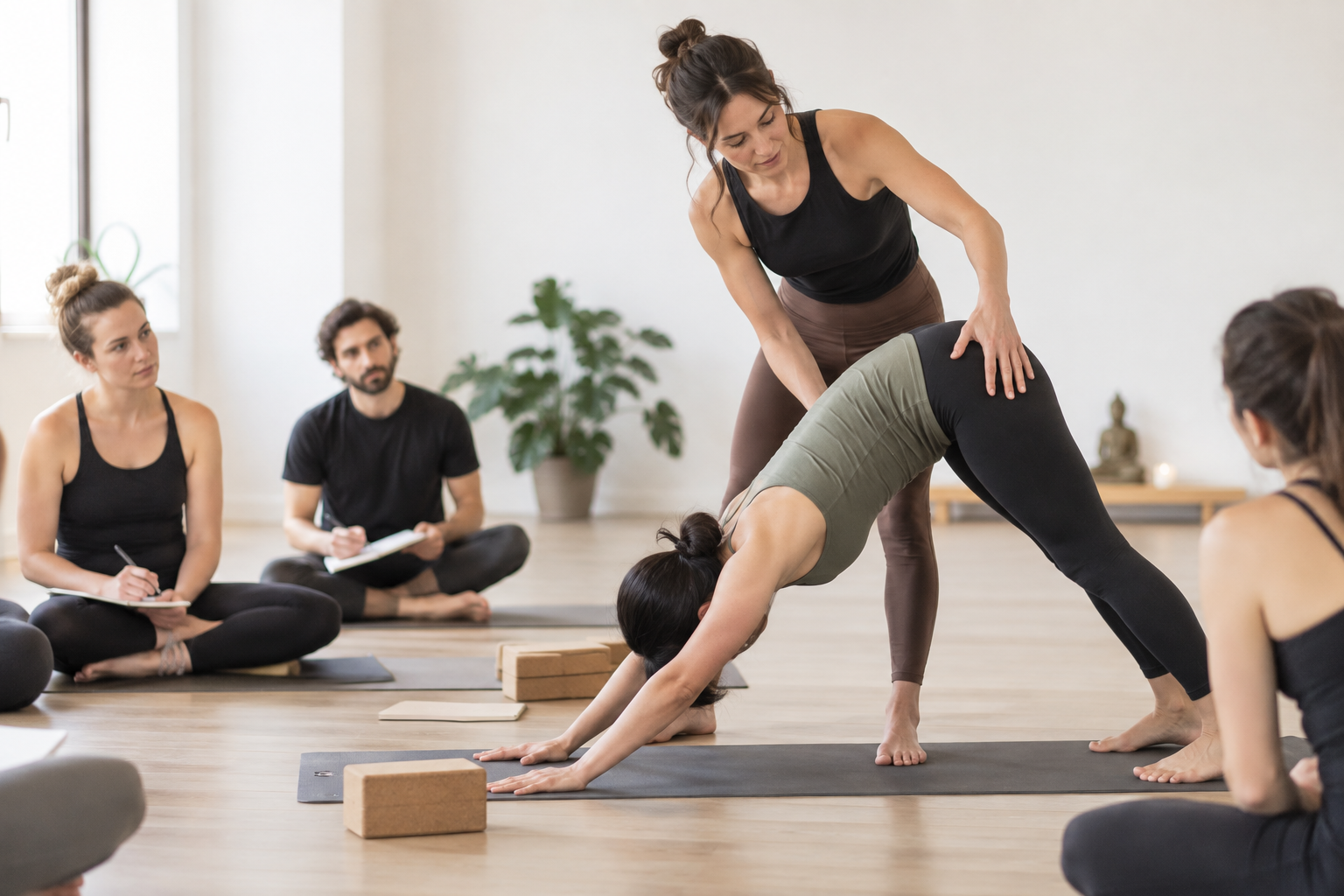 Why This Matters After Graduation, Not Just During Training
It’s easy to think of teaching practice as something that only matters while you’re still a student. In reality, the amount and quality of practice you get during your 200-hour program directly shapes how quickly you can start earning as a teacher afterward.
Graduates who leave a program with dozens of supervised teaching repetitions under their belt tend to apply for their first classes sooner, because they already know what running a full session feels like under pressure. Graduates who leave with only a few short practice segments often spend the first several months of their teaching career building that confidence on the job instead, sometimes through unpaid or low-paid trial classes, simply because their training didn’t give them enough reps beforehand.
This has practical downstream effects. If you plan to build income through private yoga clients or corporate yoga bookings soon after certification, you’ll be walking into rooms with no co-teacher, no trainer nearby, and no safety net. The comfort you need for that comes almost entirely from repetition you built during training. It’s also worth having your professional basics in order early, including appropriate liability insurance, since studios and corporate clients increasingly expect new teachers to have this in place from day one.
None of this means a lighter-practicum program will leave you unable to teach forever. Skill can still be built after certification, through workshops, mentorship, or simply teaching more once you’re out in the world. But it does mean the hours you get during your 200-hour training set your starting point. A program that invests heavily in supervised practice teaching is effectively compressing months of on-the-job learning into the training itself, so you graduate closer to job-ready rather than starting that clock from zero.
A Quick Comparison: What to Ask Before You Compare Programs
If you’re weighing two or three Vancouver programs side by side, it helps to standardize your questions so the comparison is fair. Ask each school the same five things: total hours of supervised practice teaching, group size during practicum sessions, whether feedback comes from a lead trainer every time, whether practice is spread weekly or concentrated near the end, and whether you’ll ever teach outside your immediate cohort.
Write the answers down. Programs that can give specific numbers and describe a clear weekly rhythm of practice and feedback are usually the ones that have actually designed their curriculum around teaching competence, rather than assembling 200 hours of content and calling it a training. That distinction is the single most useful filter you can apply while you’re deciding where to spend your tuition and your months of study.
Conclusion: How Much Teaching Practice Should a 200-Hour YTT Include?
Yoga Teacher Training Vancouver: How Much Teaching Practice Should a 200-Hour YTT Include? comes down to one central idea. Certification requirements set a floor, but your actual readiness to teach depends on how much you practice, how often you get specific feedback, and how consistently that practice is built into the training week by week rather than saved for the end.
A program that meets Yoga Alliance’s minimum standards isn’t automatically a program that prepares you to walk into a studio and lead a confident class. Look for frequent, supervised, feedback-driven teaching practice, ideally in the range of 20 to 40 hours spread across the full course, plus real exposure to teaching outside your immediate training group. Ask direct questions before you enroll, and treat vague answers as a signal to keep looking.
If you’re ready to train somewhere that treats teaching practice as the core of the program rather than a single checkbox, take a look at our 200-hour Yoga Teacher Training Vancouver page to see how the curriculum, feedback structure, and teaching hours actually fit together, and get in touch if you have questions about whether it’s the right fit for you.